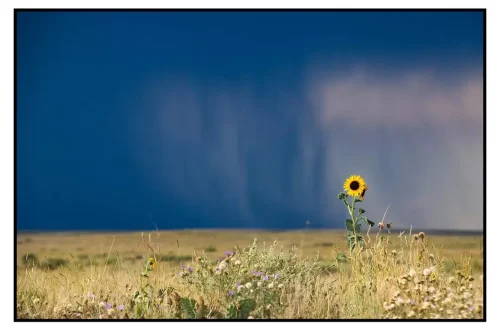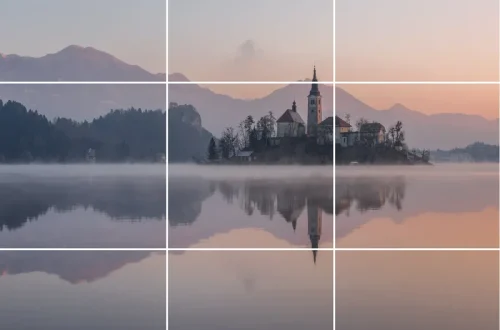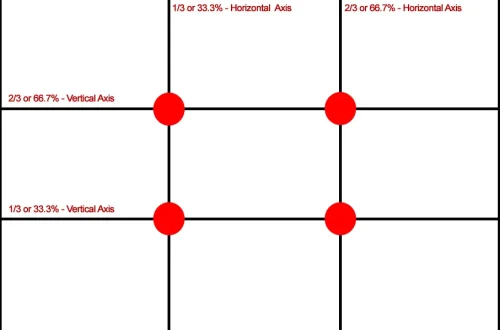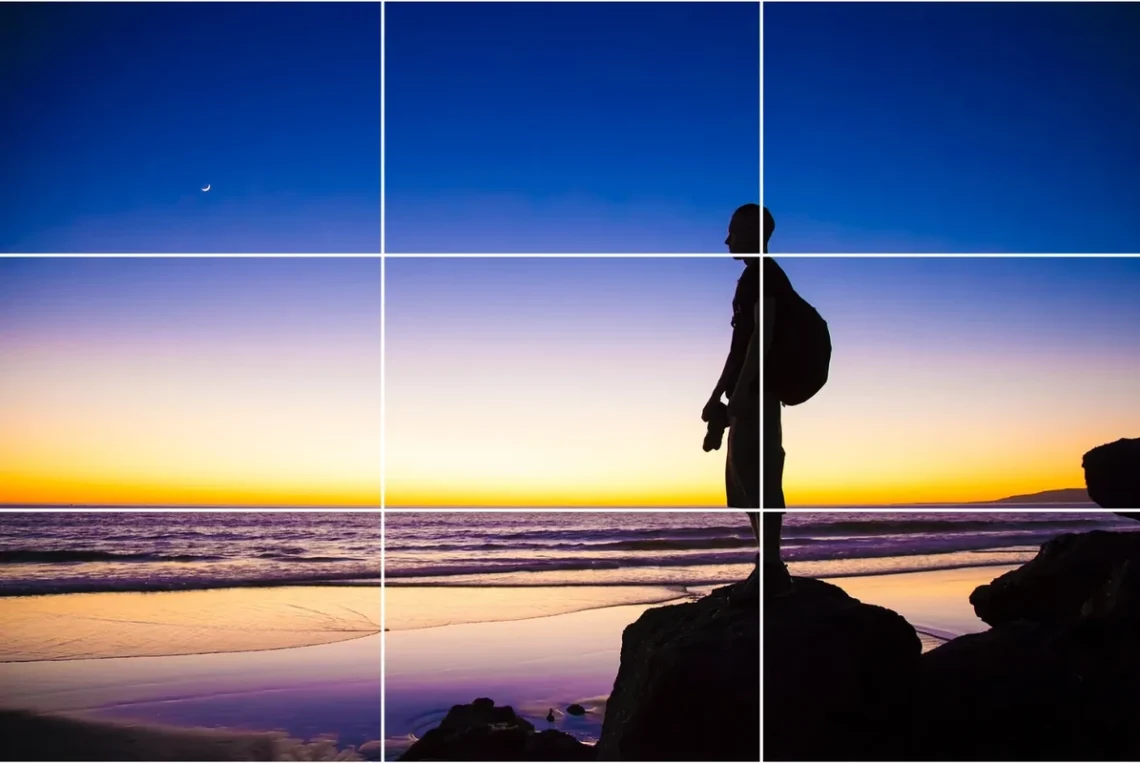
SnapRoamer.com – The rule of thirds is a compositional guideline that divides an image into a 3×3 grid of nine equal parts. By placing key subjects along these lines or at their four intersection points, photographers create more tension, energy, and visual interest than they would with a centered subject. The concept of the rule of thirds can be traced back to John Thomas Smith’s illustrated book published in 1797.
The Science of Sight: Why Our Eyes Prefer the Grid
The rule of thirds works because human ocular scan patterns naturally gravitate toward intersection points rather than the center of a frame. By aligning subjects with these ‘power points,’ you facilitate a visual journey that allows the viewer to appreciate a key element before exploring the rest of the scene.
Saccadic movements and intersection points
According to Digital Photography School, studies show that people’s eyes usually go to one of the intersection points rather than the center of the shot. This phenomenon is tied to how the human brain processes visual information. While many assume a centered subject is the most “stable” choice, centering often creates a static, stagnant image that lacks depth. Instead, by utilizing the grid, photographers tap into natural human viewing patterns to guide the eye more effectively.
Creating a visual journey vs. static centering
When encountering dynamic images, the viewer starts by appreciating a key element of the shot, then takes a visual journey throughout the rest of the scene. This movement prevents the viewer from simply “glancing and leaving” an image. A counterintuitive reality of composition is that a perfectly centered subject can sometimes feel “too easy” for the brain, leading to a lack of engagement. By shifting the focus to a 33.3% or 66.7% division, you force the eye to move, creating the sensation of a narrative unfolding within the frame.
Rule of Thirds vs. The World: A Compositional Decision Tree
The rule of thirds is a consequence of a more general theory of composition where elements work together to create a balance between harmony and disharmony. The choice of framework depends on the specific requirements of the moment. Speed and mathematical precision represent two different ends of the spectrum.
When to choose speed over precision
The rule of thirds is more practical for fast-paced work as the grid is ready instantly. In environments where subjects move rapidly, such as sports or wildlife photography, there is no time to calculate complex geometric ratios. For these scenarios, the 3×3 grid provides an immediate mental map. In contrast, the Golden Ratio offers more precision but demands more mental effort, as it relies on the mathematical constant of 1.618 rather than simple thirds.
The power of the center
Central composition can be the most powerful for a single, strong subject. If an object possesses intense symmetry or a commanding presence that demands total attention, placing it in the center can create a sense of monumental stability. As noted by Photographylife, this method is a distinct alternative to the more dynamic grid. The decision to use the grid or the center is a choice between dynamic energy and absolute authority.
| Composition Method | Best Use Case | Complexity | Visual Result |
|---|---|---|---|
| Rule of Thirds | Fast-paced/General | Low | Dynamic & Energetic |
| Golden Ratio | Fine Art/High Detail | High | Natural Harmony |
| Central Composition | Symmetry/Strong Subjects | Low | Stable & Powerful |
Photographers must select a method based on whether they prioritize the immediate 3×3 grid or the mathematical precision of the Golden Ratio.
Mastering the 3×3 Grid: Practical Applications
To achieve professional results, photographers implement specific placement strategies across different genres. These techniques help translate the grid into a functional tool for composition:
- Landscape and horizon placement: Place the horizon on the top or bottom line of the grid to avoid splitting the image in half.
- Portraiture and the ‘Eye Alignment’ technique: Ensure the subject’s eyes fall across the upper horizontal gridline. As Carli Davidson notes, “I’m always going for the eyes.”
- Action and Movement: Managing Lead Room: Put the subject on the intersection point they are moving away from to provide visual space in front of them.
- Vertical Subject Alignment: Line up vertical subjects like trees or buildings with one of the vertical gridlines.
- Power Points: Place important compositional elements along the grid lines or their four intersection points.
Rick McEvoy notes that placing a small subject on an intersection point can emphasize the scale and emptiness of a large environment.
The Failure Mode Diagnostic: Avoiding Visual Glitches
Using a guideline without understanding its purpose can lead to technical errors. The rule of thirds is a tool that can be misused if applied without regard for the specific subject matter.
Warning: Over-reliance on the grid can lead to “compositional blindness,” where the photographer prioritizes the grid over the actual soul of the subject.
The Symmetry Trap
A common failure occurs with subjects like reflections in water or symmetrical architecture. Rick McEvoy points out that when a subject is inherently symmetrical, forcing it onto a third-line can cause a loss of impact and create an off-balance feeling. In these cases, centering is often the correct choice.
The Tight Portrait Imbalance
Tight portraits present another risk. When applying the rule of thirds to very close-up shots of faces, the resulting composition can feel unbalanced. Rick McEvoy suggests that this mathematical division of the face may feel unnatural if the framing is too tight.
Technical Workflow: From Viewfinder to Post-Processing
Modern technology facilitates these rules during both capture and editing. This allows a photographer to align a subject in the field or correct a shot later in the studio.
To assist with real-time composition, most modern devices offer a Rule-of-thirds grid setting in the Camera/Phone Viewfinder. This visual overlay allows you to align your subject with the grid before pressing the shutter. If the composition is slightly off after the fact, you can use software like Adobe Lightroom to crop an image into a rule-of-thirds composition.
Shortcut: In many professional editing suites, using the Cropping tool allows you to toggle the grid overlay instantly to re-align your subject.
FAQ
Is the rule of thirds a strict law?
No. As stated by Digital Photography School, “The rule of thirds is not a strict rule that must be followed in every photo, it serves as a valuable guideline that rarely disappoints.” If you intend to break a rule, you should always learn it first!
How does the rule of thirds differ from the Golden Ratio?
The rule of thirds uses a 3×3 grid (33.3% divisions) for speed and practicality, whereas the Golden Ratio (1.618) offers more mathematical precision but requires more mental effort to implement during fast-paced shooting.
Can I fix a bad composition using the rule of thirds?
Yes. Adobe recommends using the cropping tool in software like Lightroom to re-align your subject to the grid lines after the photo is taken.