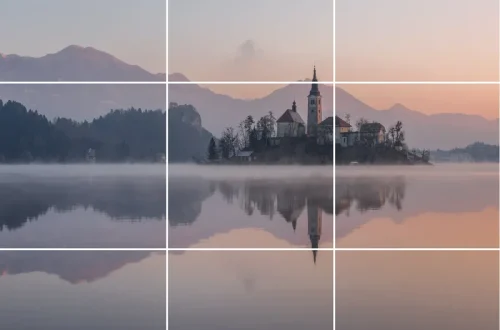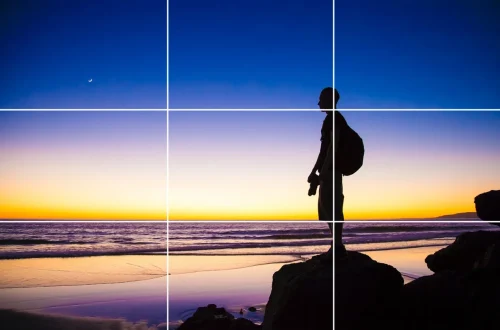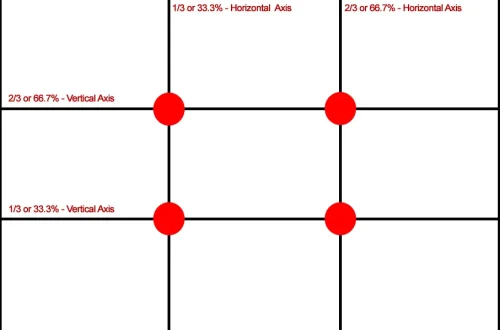
SnapRoamer.com – The rule of thirds is a compositional guideline that involves dividing an image into a 3×3 grid of nine equal sections. By placing key subjects along these lines or at their four intersection points, photographers create more engaging, dynamic images that leverage natural human eye movement. Studies show that people’s eyes usually go to one of the intersection points rather than the center of the shot, according to digital-photography-school.com/rule-of-thirds.
The Anatomy of a Mistake: Why Your Grid Fails
Applying rules without defining the subject can cause compositional breakdowns. As noted by Jay Patel, a large, dark foreground might become dead space or a dramatic sunset might compete for attention with the primary subject, disrupting the intended hierarchy of the frame.
The ‘Neck-Line’ Trap
One common failure mode occurs when a photographer forces the subject onto an intersection that doesn’t fit the anatomical or structural logic of the scene. In portraiture, placing a horizontal grid line directly across a subject’s neck creates an awkward visual break. Instead, intersections should align with significant features like eyes or shoulders to maintain natural flow.
Accidental Dead Space
Compositional failure also arises when the “empty” portions of the grid are not managed. If a subject is placed on a third line but the remaining two-thirds contain distracting or meaningless elements, the image feels unbalanced. This is not the same as intentional negative space; it is simply wasted real estate that fails to support the subject.
The Tight-Crop Error
Beginners often attempt to fix a poor shot by cropping too tight to “force” a subject onto a grid line. This specific mistake can result in a loss of context and a cramped feeling. It is often better to shoot wider initially to allow for flexibility during post-processing.
- Avoid placing subjects exactly on the center point unless seeking perfect symmetry.
- Never let a grid line bisect a face or a critical structural element.
- Ensure the “empty” thirds serve a purpose, whether as negative space or a secondary story.
The Safe Zone Guide: Composing for Multi-Platform Social Media
To ensure your rule-of-thirds subject survives various platform crops, compose with a wider margin. Account for the shift from 16:9 (YouTube) to 4:5 (Instagram) or 9:16 (TikTok) by keeping critical intersection points away from the extreme edges of your frame.
Managing Aspect Ratio Shifts
Digital content is rarely consumed in a single format. A shot composed perfectly for a 16:9 landscape display may lose its primary subject entirely when cropped to a 9:16 vertical format for mobile viewing. Photographers should aim to keep the “action” or the intersection points within the central 60% of the frame to provide a safety buffer for these various aspect ratio shifts.
The Wide-Angle Lens Factor
When using a 16-35mm wide-angle lens, perspective distortion can push subjects toward the edges of the frame. This makes the rule of thirds even more difficult to manage, as the edges of the image undergo more stretching. Keeping the subject closer to the center of the lens’s optical axis while still utilizing the 9 equal sections for background elements can mitigate this distortion.
How the Rule of Thirds Works: The Mechanics of Engagement
To create a visual journey, place important elements along the two horizontal and two vertical lines that create the 3×3 grid. This method encourages the viewer to move their eye across the image rather than fixing it on a static center.
The Science of Eye Movement
The mechanics of the 3×3 grid rely on human biology. Studies cited by jalbum.net/blog/entry/rule-of-thirds-in-photography indicate that people’s eyes usually go to one of the intersection points rather than the center of the shot. This increased “dwell time” occurs because the eye must actively scan the frame to find the subject, creating a more engaging experience than a centered, static shot.
Creating Negative Space
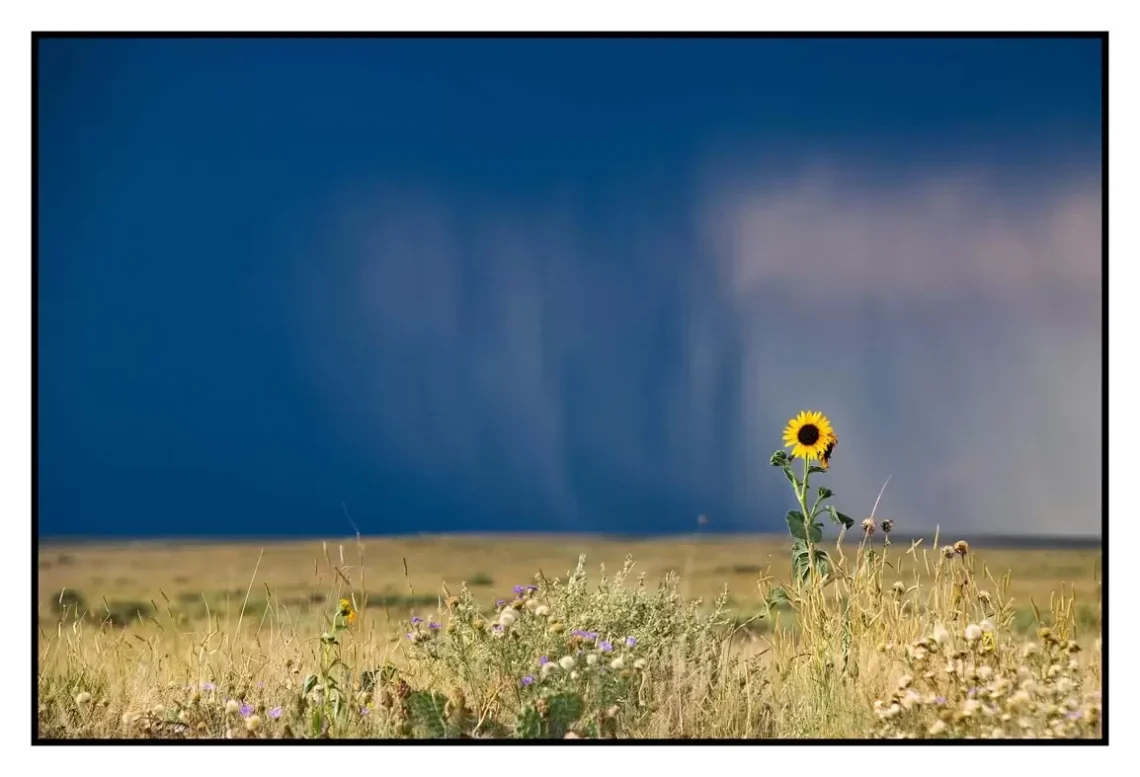
According to Zdeněk Macháček, placing a subject in one third of the image creates negative space in the other two thirds. This empty space provides necessary breathing room. It prevents the composition from feeling cluttered and allows the viewer to focus on the subject without visual competition.
Rule of Thirds vs. The Golden Ratio: Which to Use?
The rule of thirds is a simple principle based on a 1:1:1 division. In contrast, the Golden Ratio is a more complex, naturally occurring ratio of 1:1.618.
| Method | Complexity | Visual Logic | Key Ratio/Value |
|---|---|---|---|
| Rule of Thirds | Low | Simple 1:1:1 division | 3×3 Grid |
| Golden Ratio | High | Natural mathematical spiral | 1:1.618 |
| Phi Grid | Medium | Tighter center intersections | 38.2 / 61.8 |
The primary distinction lies in the placement of the intersections. The rule of thirds uses a straightforward division, whereas the Golden Ratio (1:1.618) creates a more complex, naturally occurring spiral. The Phi Grid, a variation of the Golden Ratio, places its intersection points closer to the center of the frame than the standard rule of thirds, offering a more subtle sense of balance.
Practical Application: Landscapes and Portraits
Compositional success depends on applying specific techniques to your chosen genre. For example, landscape photographers use different horizon placements than portrait photographers to guide the viewer’s eye.
- Sky-heavy composition: Place the horizon line on the lower third when dramatic clouds or sunset demand attention.
- Land-heavy composition: Place the horizon line on the upper third when foreground elements like rocks or water are the focus.
- Leading lines: Use roads or rivers to guide the eye from one power point toward your subject.
- Z-pattern composition: Arrange elements to create a “Z” flow, moving the eye from the top left to the bottom right.
In portraiture, the grid helps manage the “weight” of the person in the frame. Rather than centering the face, placing the eyes on an upper intersection point creates a sense of connection and presence. This technique, combined with leading lines, helps transition the viewer from the subject to the environment.
The Correction Tutorial: Fixing Composition in Post-Processing
If a shot was captured with poor alignment, modern software can often recover the composition. Professional tools like Lightroom, Photoshop, and Capture One all provide sophisticated tools to re-align your subjects with the grid.
Shortcut: In many desktop editors, pressing the ‘R’ key quickly activates the Crop Tool.
Using the Crop Tool
The most direct way to fix a composition is through the Crop Tool. By enabling the “Rule of Thirds” overlay within the tool’s settings, you can manually slide the frame until the subject aligns with the desired intersection. This is particularly useful for correcting slight tilts or fixing “dead” space that was captured during the shoot.
Re-aligning Intersections
When re-aligning, ensure the new intersections create a balanced distribution of weight across the 9 equal sections of your new crop. Avoid the mistake of cropping so aggressively that the subject feels as though it is falling out of the frame.
FAQ
Is the rule of thirds a strict requirement?
No, as Shawn Ingersoll notes, it is a guideline or best practice. Digital Photography School emphasizes that rules are meant to be broken and ignoring them doesn’t make an image bad.
How do I turn on the grid on my camera?
Most modern cameras and smartphones allow you to enable a 3×3 grid overlay by navigating to the “Settings” menu under the display or shooting options.
What is the difference between the Rule of Thirds and the Golden Ratio?
The Rule of Thirds is a simple 1:1:1 division, whereas the golden ratio (1:1.618) creates a more complex, naturally occurring spiral and tighter intersection points (Phi Grid).