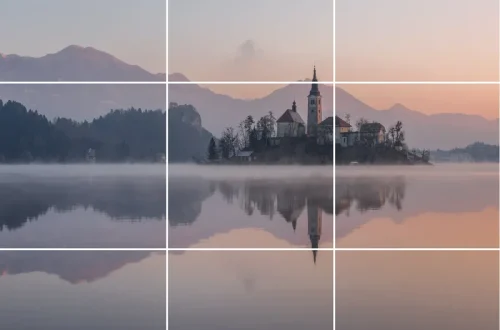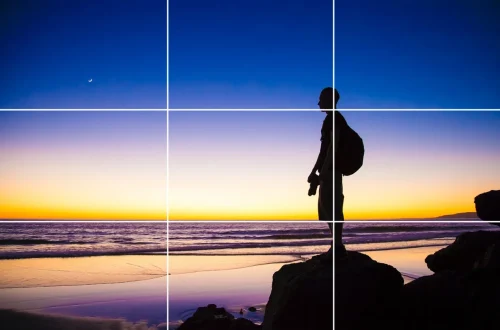
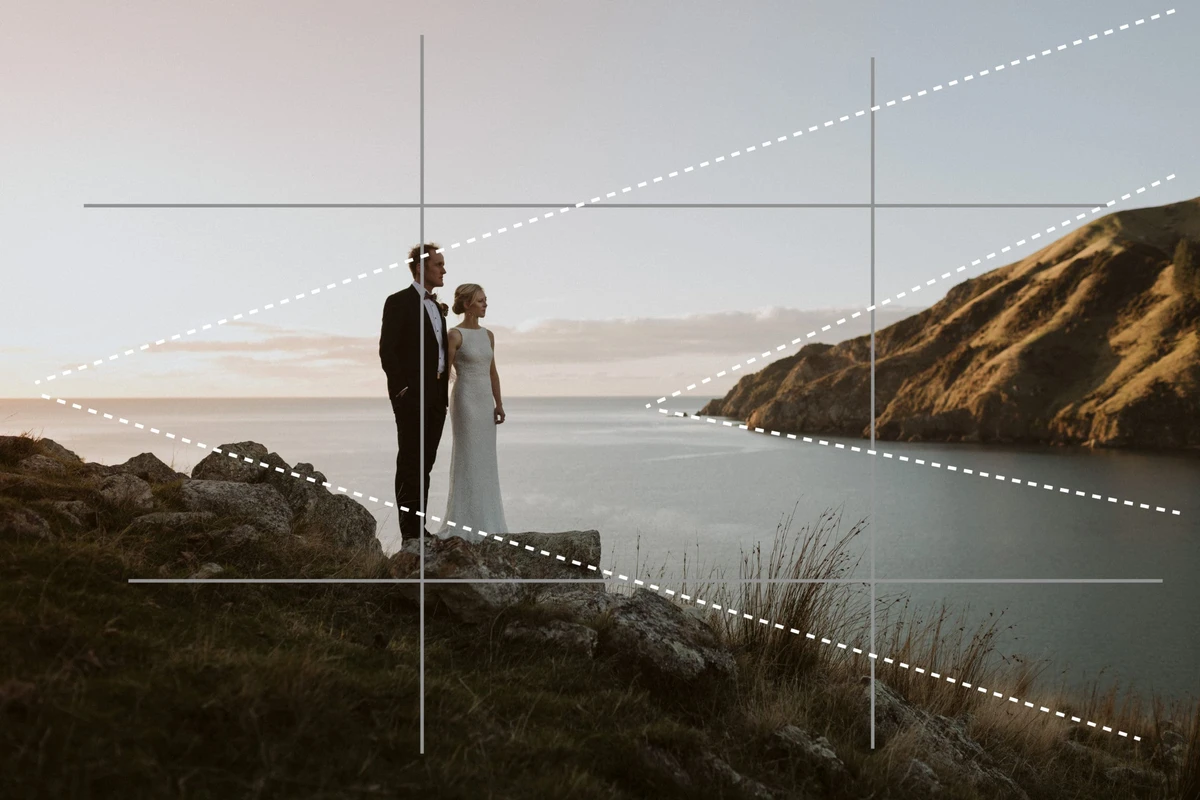
SnapRoamer.com – The rule of thirds is a photographic composition guideline that divides an image into a 3×3 grid consisting of two horizontal and two vertical lines, creating nine equal parts. Photographers place key elements along these lines or their intersections to achieve balanced, dynamic compositions. Digital Photography School describes it as a powerful and versatile method that can greatly enhance images, suitable for both beginners and professionals across various genres.
How can the rule of thirds be applied specifically to vertical mobile photography and social media formats?
For vertical mobile photography, especially on social media platforms like Instagram Stories or TikTok, the rule of thirds helps by using horizontal thirds to separate foreground, subject, and sky, and placing the subject in the middle or top third to maintain visibility and balance within the 9×16 aspect ratio.
Vertical mobile photography commonly uses a 9×16 aspect ratio, which significantly differs from traditional 3:2 or 4:3 orientations, requiring adaptation of the rule of thirds for effective composition. Frederic Paulussen, a photography guide author, recommends leveraging the horizontal thirds to distinctly separate elements such as foreground, subject, and sky to maintain balance in such tall frames.
Although it might seem counterintuitive, placing the main subject near the center horizontal third rather than strictly on the vertical lines can be effective. Frederic Paulussen notes this approach helps prevent the subject from appearing lost or awkwardly cropped on platforms like Instagram Stories, where screen height dominates, ensuring the subject remains prominent within the 9×16 vertical frame.
Smartphones like the iPhone have a built-in grid overlay accessible via Settings > Camera > Grid, which shows the 3×3 rule of thirds grid. This feature is vital for vertical shot composition, helping photographers position elements precisely. However, a common failure mode occurs when users rely too heavily on the grid without considering the subject’s size; small subjects placed strictly on intersections often appear insignificant or disconnected in vertical frames.
Vertical Composition Tips
When shooting vertically, separate the frame into three horizontal zones: bottom third for foreground or base, middle third for the primary subject, and top third for sky or negative space. This helps manage the elongated canvas effectively, as explained by Frederic Paulussen.
Use the grid overlay to align horizon lines or edges of objects along the horizontal thirds, ensuring balance. For instance, aligning the horizon with one of the two horizontal lines of the grid creates visually pleasing balance, as emphasized by Digital Photography School. Avoid centering subjects vertically unless symmetry or minimalism is intended.
Subject Placement in 9×16 Frames
Placing subjects on the middle or upper horizontal third maintains prominence within the vertical frame, which is especially important given the 9×16 aspect ratio constraints noted by Frederic Paulussen. This positioning keeps them visually accessible and balanced against the background, preventing awkward cropping when viewed on mobile devices.
Social media formats like Instagram and TikTok often crop or auto-zoom vertical images. To avoid losing key content, it is advised to maintain margins aligned to the thirds grid, especially near the top and bottom edges. Frederic Paulussen highlights that such placement reduces the risk of important subjects being cut off during automatic platform adjustments.
What are common mistakes photographers make when using the rule of thirds and how can they be fixed?
Common mistakes include placing the horizon line in the middle, rigidly following the rule leading to formulaic images, and applying it to very small subjects where it becomes ineffective. Fixes involve placing horizons on thirds lines, allowing creative rule-breaking, and adjusting composition for subject size.
- Horizon Placement Errors: Beginners often place horizons dead center, which cuts the image in half and produces boring compositions. PetaPixel highlights that moving the horizon to the upper or lower third line creates more dynamic and balanced images.
- Avoiding Formulaic Photos: Over-reliance on the rule can lead to predictable, uninspired shots. Digital Photography School advises photographers to learn the rule first but then break it deliberately to inject creativity and tension into their images.
- When Subject Size Limits Usefulness: The rule of thirds becomes less effective for very small subjects. Placing a tiny focal point on a grid intersection might highlight emptiness but can make the subject appear insignificant if not balanced with sufficient negative space, as noted by Digital Photography School.
Mistakes such as small, centered subjects or horizons bisecting the frame are common. Adjusting horizon placement to the top or bottom third and experimenting with off-grid subject positioning can resolve these issues, improving visual impact. Rick McEvoy, a photography educator, emphasizes that the rule of thirds is a good foundational guideline but warns against rigid adherence that stifles originality.
How does the rule of thirds relate to other compositional techniques like the golden ratio and Fibonacci spiral?
The rule of thirds is a simplified and accessible version of the golden ratio principle, dividing the frame into thirds rather than the more complex 0.62 ratio. Combining it with techniques like the Fibonacci spiral can enhance composition by adding natural flow and balance.
- Golden Ratio vs Rule of Thirds: The golden ratio divides a frame approximately into a 0.62:0.38 ratio, a more precise but complex compositional guide. The rule of thirds approximates this by dividing the frame into three equal parts of 0.66 each, making it simpler for practical use, as explained by Digital Photography School and Virtual Art Academy.
- Integrating Fibonacci Spiral: The Fibonacci spiral overlays a natural curve that guides the viewer’s eye through the image. Combining this spiral with the rule of thirds grid can direct attention from one intersection to another, enhancing the narrative flow and visual harmony.
Rick McEvoy notes that while the rule of thirds is easier to implement, pairing it with golden ratio overlays or Fibonacci spirals can elevate compositions, especially in landscape and fine art photography.
What practical steps can photographers take to use the rule of thirds effectively in diverse genres?
Photographers can divide their frame into nine equal parts using two horizontal and two vertical lines, then place subjects or points of interest along these lines or their intersections. Using leading lines, positioning eyes on the upper horizontal line in portraits, and placing horizons on thirds lines in landscapes are effective techniques.
- portrait photography: Aligning the subject’s eyes with the upper horizontal gridline creates natural engagement. Emily Lowrey describes this as “getting the eye composed correctly can make or break an image.”
- Landscape Photography: Placing the horizon on the upper or lower third line avoids splitting the image and adds dynamism. This technique keeps the viewer’s eye moving through the frame.
- Using Leading Lines: Incorporate leading lines that direct attention to subjects placed on thirds lines or intersections. This adds depth and narrative, as outlined by Digital Photography School.
Photographers can activate grid overlays on devices (e.g., iPhone Settings > Camera > Grid) to visualize thirds. Combining these compositional placements with lighting and subject interaction enhances image quality dramatically.
How do camera and phone grid overlays support mastering the rule of thirds?
Grid overlays built into cameras and smartphones display the 3×3 rule of thirds grid on the viewfinder or screen, helping photographers compose shots accurately. Enabling these overlays in settings assists beginners to visualize and apply the rule effectively during shooting.
Enabling grid overlays typically involves navigating to Settings > Camera > Grid on smartphones like Apple’s iPhone or Samsung Galaxy. Activating this option superimposes two vertical and two horizontal lines dividing the frame into nine equal parts.
This visual aid helps photographers place subjects or horizons precisely on thirds lines or intersections, reducing guesswork and improving composition during capture rather than relying solely on post-processing.
Shortcut: On many cameras, pressing the “Menu” button, then navigating to Custom Settings > Display > Grid Overlay activates the grid. On iPhones, it’s found under Settings > Camera > Grid.
Enabling Grid Overlays
Grid overlays are standard in most DSLR and mirrorless cameras, as well as smartphone apps. For example, Apple’s iPhone XS and newer models include this feature by default. Activating it before shooting ensures compositions adhere to thirds principles intuitively.
Benefits for Composition Practice
Using grid overlays accelerates learning by providing immediate visual feedback. Beginners practicing with this feature develop an intuitive understanding of balanced framing, reducing the need for cropping later.
When should photographers consider breaking the rule of thirds for creative effect?
Photographers may break the rule of thirds to create tension, minimalism, or emphasize symmetry. For example, centering symmetrical subjects or placing the focal point in the middle can produce stronger images, especially when aiming for a specific emotional or visual impact.
Breaking for Symmetry
Symmetrical subjects like round objects or architectural features often look better centered. PetaPixel highlights that perfectly centered compositions can emphasize balance and harmony, diverging from rule of thirds conventions effectively.
Creative Minimalism
Minimalist photography benefits from breaking the rule by centering negative space or lone subjects, which can intensify emotional impact. Digital Photography School advises that stepping away from the rule intentionally can generate tension or focus not achievable with thirds.
How can the rule of thirds be adapted for moving subjects and street photography?
In street photography, placing moving subjects on the vertical line opposite their direction gives them ‘lead room’ to move into the frame, enhancing dynamism and narrative flow. This use of the rule of thirds helps create balanced and engaging images.
Lead Room for Movement
Frederic Paulussen recommends positioning a walking person on the left vertical line if they are moving right, allowing space in the frame for anticipated movement. This technique improves storytelling and prevents awkward cropping of motion.
What historical context and expert perspectives shape the understanding of the rule of thirds?
The rule of thirds dates back to at least 1958 and is widely recognized by photographers and filmmakers like André Kertész and Steven Spielberg as a fundamental composition tool. Experts emphasize learning the rule before breaking it and acknowledge its role in creating balanced, unified images.
Historical Origins
The explosive rise in consumer and amateur photography popularized the rule of thirds during the mid-20th century. It became a foundational teaching tool in photography education and filmmaking.
Expert Quotes
André Kertész remarked in 1974, “I just walk around, observing the subject from various angles until the picture elements arrange themselves into a composition that pleases my eye.” This emphasizes the rule as a flexible guideline. Steven Spielberg’s use of rule of thirds in filmmaking demonstrates its cross-media influence.
Digital Photography School states, “If you intend to break a rule, you should always learn it first! That way, you can make sure you break it as effectively as possible.”
How does the rule of thirds influence viewer perception and why is it visually pleasing?
The rule of thirds creates balance and dynamism, avoiding the monotony of centered compositions. It aligns with psychological and cultural preferences for harmony, guiding the viewer’s eye naturally across the image and enhancing emotional engagement.
Balance and Dynamism
According to Digital Photography School, the rule of thirds focuses on two elements: balance and dynamism. It prevents static, boring images by offsetting the focal point, creating movement within the frame.
Psychological Impact
Photography Life explains that the rule of thirds is “a consequence of a more general theory of composition that the elements in your photo should work together to create a sense of balance between harmony and disharmony.” This subtle tension engages the viewer emotionally, making images more compelling than perfectly centered shots. In fact, perfectly centered compositions often feel less engaging because they lack this dynamic balance.
What are the best practices for teaching the rule of thirds to beginners?
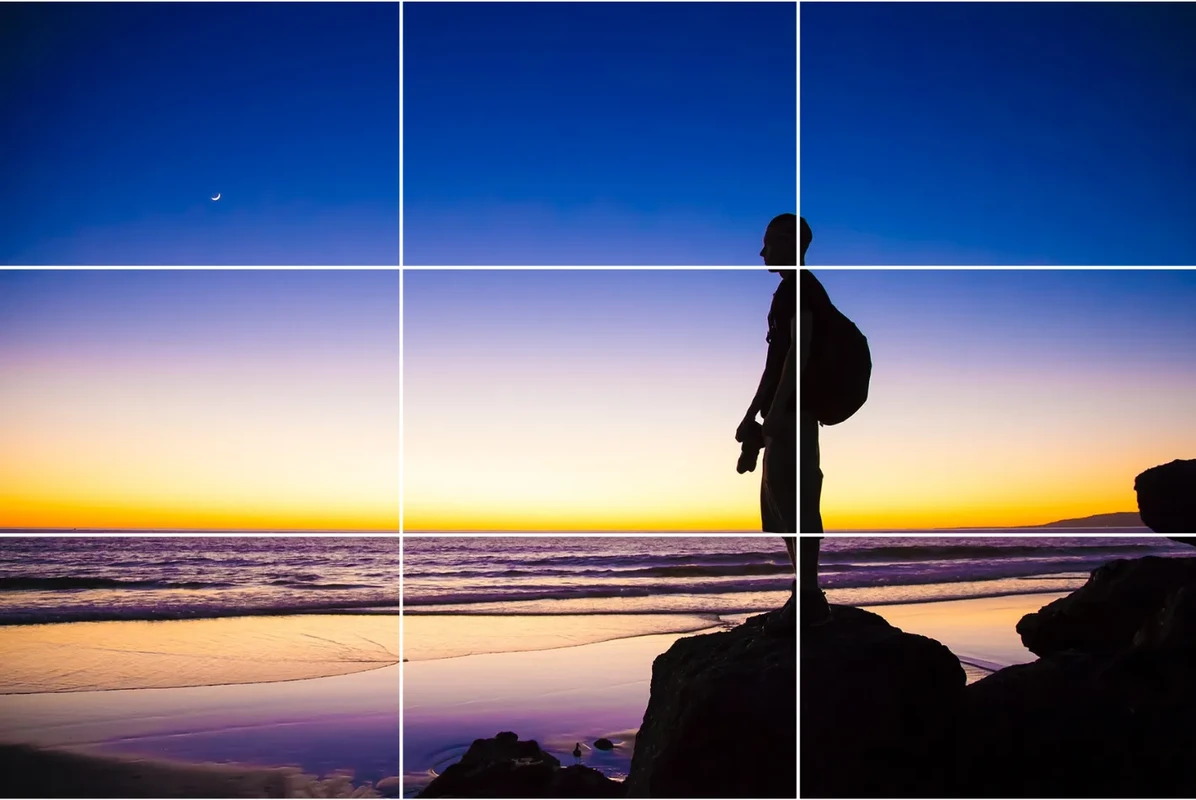
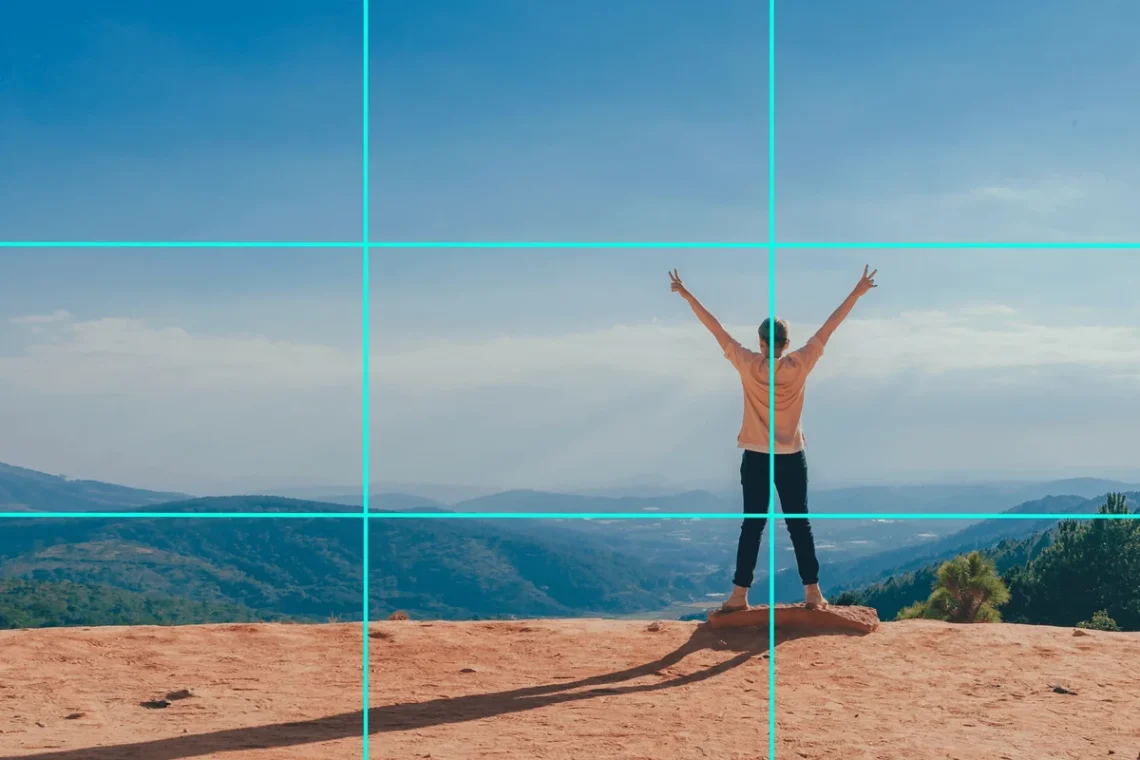
Effective teaching involves using interactive tools, visual aids, and exercises such as comparing rule of thirds compositions with centered ones. Encouraging practice with grid overlays and emphasizing the rule as a guideline rather than a strict law accelerates learning.
- Interactive Exercises: Dave Fuller recommends spending at least 1 hour practicing photos with and without the rule of thirds, comparing the impact to internalize the concept.
- Visual Demonstrations: Using before-and-after images, showing the same subject composed centrally versus on thirds intersections helps beginners see the difference clearly.
- Grid Overlay Practice: Rick McEvoy advocates enabling the grid overlay on cameras or phones during lessons to provide real-time feedback.
Emily Lowrey calls the rule of thirds “probably one of the first ‘rules’ a new photographer will come across,” underlining its foundational status and the value of early mastery.
| Composition Technique | Best Use Case | Visual Effect | Notes |
|---|---|---|---|
| Rule of Thirds | General photography, portraits, landscapes | Creates balance and dynamism | Simple 3×3 grid, easy to apply |
| Centered Composition | Symmetrical subjects, minimalism | Emphasizes symmetry and balance | Breaks rule of thirds effectively |
| Golden Ratio | Fine art, complex compositions | Natural flow, precise harmony | More complex than rule of thirds (0.62 ratio) |
| Fibonacci Spiral | Landscape, narrative images | Guides eye along curved path | Can be combined with thirds grid |
| Horizon on Thirds Line | Landscape photography | Adds interest and balance | Prevents boring image split by centered horizon |
This table compares popular composition techniques, showing how the rule of thirds offers a practical balance between simplicity and visual appeal, while centered and golden ratio methods suit specific artistic goals.
FAQ
What is the rule of thirds in photography?
The rule of thirds divides the frame into a 3×3 grid with two horizontal and two vertical lines, creating nine equal parts. Photographers place key elements along these lines or intersections to achieve balanced, dynamic compositions. This concept is widely recognized as foundational in photographic composition.
Can the rule of thirds be broken?
Yes, breaking the rule of thirds can create tension, minimalism, or highlight symmetry. For example, centering symmetrical subjects often produces stronger images, diverging from the thirds grid intentionally for creative effect.
How do I enable the rule of thirds grid on my camera or phone?
Most cameras and smartphones include a grid overlay option. On iPhones, for example, go to Settings > Camera > Grid to activate the 3×3 composition grid. DSLR cameras often have similar toggles in their menu system under Display or Custom Settings.
Why is placing the horizon line on thirds better than centering it?
Placing the horizon on the upper or lower third line creates more dynamic and balanced images. Centered horizons tend to split the image in half, making compositions appear static and boring, reducing viewer interest.
How does the rule of thirds relate to the golden ratio?
The rule of thirds is a simplified approximation of the golden ratio, dividing the frame into three equal parts (approximately 0.66 each) rather than the more precise 0.62 ratio of the golden section. This simplification makes it easier to apply practically while retaining compositional harmony.