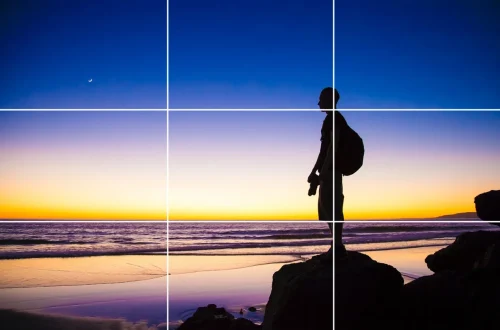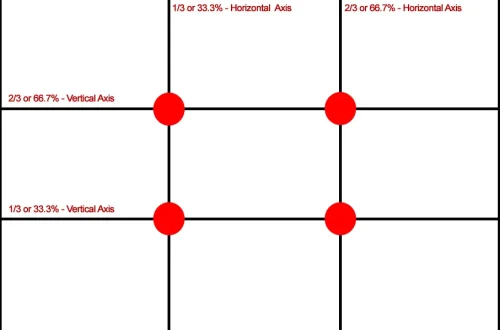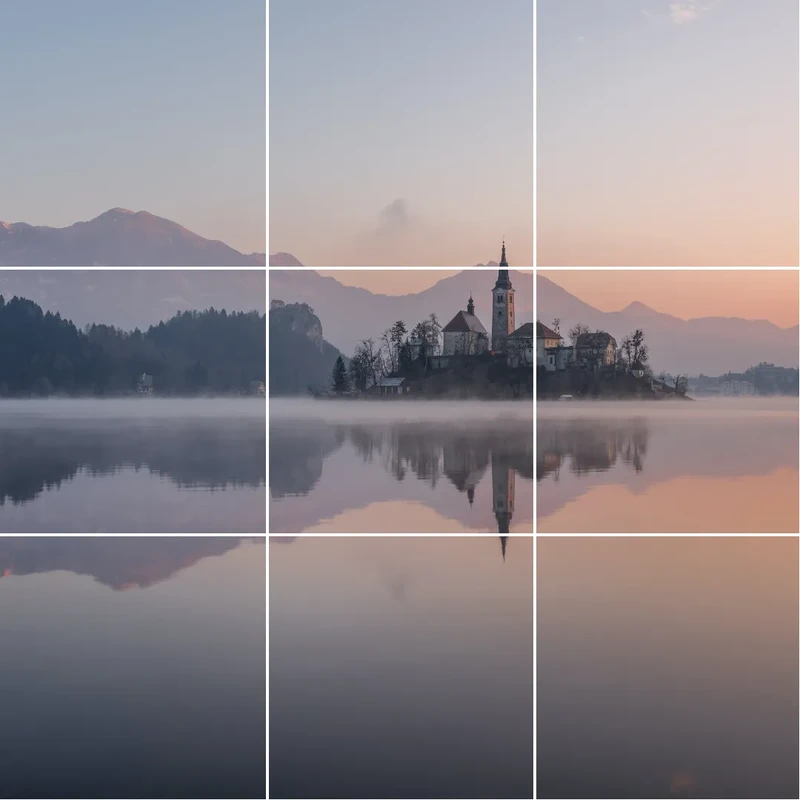
SnapRoamer.com – To use the rule of thirds, imagine your frame is divided into a 3×3 grid by two horizontal and two vertical lines. Instead of centering your subject, place the most important elements—like eyes in a portrait or a horizon line in a landscape—along these lines or at their four intersection points. The rule of thirds is actually a simplified, less strict version of the Golden Ratio (1:1.618).
When the Rule of Thirds Fails: Avoiding Common Composition Mistakes
Compositional errors often occur when a photographer applies the grid without intentionality. According to Rick McEvoy, the difference between a beginner and someone who knows what they’re doing is that beginners break the rules by accident, while experienced photographers break them on purpose.
Rick McEvoy notes that the primary difference between a beginner and a professional is that beginners break rules by accident, whereas experienced photographers break them on purpose. To avoid this, watch for these specific failure modes:
- Centering everything: Attempting to use the grid while still placing the primary subject dead-center often results in static, predictable images.
- Placing the horizon in the middle: In landscape photography, a centered horizon line bisects the frame, often creating an unbalanced split between sky and land.
- Filling the frame excessively: In certain scenarios, the grid becomes a distraction.
The danger of unintentional symmetry
Centered compositions can sometimes feel static or predictable, according to Wallpics. When a subject is placed exactly in the middle, the eye has no reason to “travel” through the frame, which can diminish the sense of movement or depth. If you find yourself centering every shot, you are likely missing the opportunity to create a more dynamic visual narrative.
When extreme close-ups render the grid useless
The rule of thirds is not ideal for scenarios like filling the frame with abstract textures. In these instances, the grid becomes a distraction. This is common in extreme close-ups where the subject occupies the entire frame, making the 3×3 division irrelevant.
Mastering Different Aspect Ratios: From Instagram Reels to Square Crops
The application of the grid changes depending on the shape of your sensor or your final output format. Because phone cameras allow you to see the grid in real-time, they actually make the rule of thirds easier to use for modern social media formats.
- 9:16 Vertical Video: Used for Instagram Reels and TikTok, this tall aspect ratio requires placing subjects on the vertical lines to avoid being cut off by UI elements.
- 1:1 Square: Common in older Instagram feeds, square crops require a tighter focus on the four power points to maintain balance without the luxury of wide horizontal space.
- 4:3 or 3:2 Standard: The traditional landscape or portrait orientations where the 3×3 grid is most intuitive.
Applying the grid to 9:16 vertical video
In vertical video, the vertical lines of the grid are critical for mobile viewers. Positioning subjects along these lines ensures they remain the focus even when text overlays or interface elements appear on the screen edges.
Maintaining balance in 1:1 square compositions
Square compositions lack the wide horizontal expanse of a 3:2 frame. To maintain balance, practitioners often rely heavily on the four power points—the intersections where the grid lines meet—to anchor the subject and prevent the image from feeling “heavy” on one side.
How to Set Up Your Grid on Mobile and DSLR
To enable the rule of thirds grid on your device, access your camera settings. For iPhone, navigate to Settings > Camera > Grid. For Android, open your Camera app, tap the Settings (cog) icon, and select ‘Grid Lines’ or ‘Composition Grid.’ This overlay allows you to align subjects in real-time.
Shortcut: On many professional DSLR and mirrorless cameras, you can toggle the “Grid Display” via the Quick Menu (often accessed by pressing the ‘Q’ button) to quickly switch the overlay on or off during a shoot.
Step-by-Step: Applying the Grid to Different Genres
Tactical approaches to the grid vary by subject. By utilizing the 4 power points—the intersections where gridlines meet—you can direct the viewer’s gaze more effectively.
- Identify your primary subject: Determine the single most important element in the frame.
- Locate the nearest intersection: Instead of placing the subject in the center, move them toward one of the four gridline intersections.
- Align secondary elements: Use the remaining lines to balance the weight of the composition.
Portraiture: Targeting the eyes
In Portrait Rule of Thirds, the goal is to create an emotional connection. It is suggested that you should choose where you want your point of focus to exist before you start shooting, noting that the focus is “always going for the eyes.” For the most engaging portraits, place the subject’s eyes on one of the upper-third intersection points. Additionally, using the rule of thirds helps with negative space; place the subject on an intersection that allows them to look into the open side of the frame, rather than looking toward the edge of the photo.
Landscapes: Positioning the horizon line
Landscape horizon placement involves avoiding the “middle split.” Instead of placing the horizon in the center, place it along the bottom horizontal gridline to emphasize a dramatic sky, or along the top horizontal gridline to emphasize the foreground and land details.
Action: Creating space for movement
When using Moving Subject Placement, you must consider the direction of travel. If a subject is moving from left to right, position them on the left-hand vertical gridline. This provides “lead room” or “active space” in front of the subject, preventing the image from feeling cramped or as if the subject is running out of the frame.
The Technical Breakdown: Rule of Thirds vs. Other Compositional Tools
While the rule of thirds is excellent for fast-paced shooting, other methods offer different results. The rule of thirds creates more dynamic and interesting images than centered compositions, while the Golden Ratio (1:1.618) provides a more organic flow.
| Composition Method | Primary Use Case | Complexity | Visual Impact |
|---|---|---|---|
| Rule of Thirds | General purpose/Fast shooting | Low | Dynamic/Balanced |
| Golden Ratio | Fine art/Highly intentional | High | Natural/Organic |
| Centered Composition | Symmetry/Product shots | Low | Static/Powerful |
| Golden Triangle | Diagonal movement/Action | Medium | Energetic |
The Rule of Thirds is generally better for fast-paced situations, whereas the Golden Ratio (1:1.618) is more complex and requires more intentional framing to achieve its organic flow. While the rule of thirds creates more dynamic and interesting images than centered compositions, the Golden Triangle is often superior when your subject follows strong diagonal lines.
Advanced Workflow: Correcting Composition in Post-Production
If alignment is missed during the shoot, use Post-Production Cropping to adjust the frame. Most professional editing software allows you to overlay a grid to re-align elements.
Using the Photoshop Crop Tool
In Adobe Photoshop, select the Crop tool from the left sidebar. Once active, look for the icon in the top tool options bar to open a window with different compositing techniques. You can then drag the edges of your frame until your subject aligns with the visible rule of thirds grid.
Enabling Overlay Guides in Lightroom
In Adobe Lightroom, you can enable cropping guides to assist in re-composing your shots. Navigate to the Crop tool and look for the Overlay settings to turn on the rule of thirds grid. This allows you to shift the “weight” of an image after the fact, turning a centered, static shot into a professional, off-center composition.
FAQ
Is the rule of thirds a strict law?
No. As Adobe notes, “The rule of thirds is a guideline, not a strict law.” Experienced photographers often break the rule on purpose to create specific tension, emphasize symmetry, or capture unique perspectives that a grid might otherwise restrict.
Where should I place the eyes in a portrait?
To maximize engagement, place the subject’s eyes or face on one of the upper-third intersection points. This technique aligns with natural scanning patterns to draw immediate attention to the subject’s expression.
Why does centering my subject feel boring?
Centered compositions can feel static because they lack visual tension. Moving the subject to a gridline or intersection point creates a more dynamic flow that encourages the viewer’s eye to move across the entire frame.