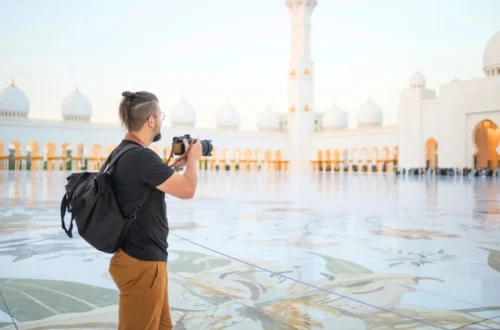
SnapRoamer.com – Photographing sacred rituals on mobile requires a balance of technical stealth and deep cultural respect. To avoid being disruptive, prioritize using ‘Silent Shutter’ modes, disable intrusive flash, and always seek permission before capturing close-up portraits of religious leaders or local residents. Respecting the sanctity of the space is more important than the perfect shot.
In Bali, flash photography during sacred rituals can constitute a criminal offense under Indonesia’s Electronic Information and Transactions Law.
The Mobile Stealth Checklist: Settings for Silent Observation
To photograph sacred rituals discreetly, immediately enable Silent Mode and turn off ‘Raise to Wake’ to prevent sudden screen brightness. Use ‘Live Photo’ or ‘Burst’ modes instead of loud shutter sounds, disable haptic feedback, and lower your screen brightness to the minimum to mitigate ‘screen glow’ in dark sanctuaries.
A common failure mode occurs when a user relies on default settings, resulting in a sudden, loud shutter sound or a bright notification that breaks the meditative atmosphere of a ceremony. Silence is not merely about volume; it is about preventing any sensory interruption. Practitioners of mobile photography should adopt a specific technical configuration before entering a temple or cathedral.
Follow this checklist to ensure your device remains a silent observer:
- Enable Silent Mode: Ensure the physical switch or software toggle is set to mute all system sounds.
- Disable ‘Raise to Wake’: Navigate to your display settings to prevent the screen from lighting up every time you tilt the phone to frame a shot.
- Turn off Haptic Feedback: Vibrations can be felt and heard in quiet environments; disable these in the sound/haptics menu.
- Activate Grid Lines: Access this via camera settings to help straighten horizons and frame compositions without needing to zoom aggressively.
- Set Brightness to Minimum: Manually slide the brightness bar down to prevent light leakage.
Managing the ‘Screen Glow’ in dark cathedrals
In low-light environments like European cathedrals, the blue light emitted from a mobile screen can be as distracting as a camera flash. This “screen glow” creates a visual beacon that pulls attention away from the altar or the ritual. Lowering brightness is essential, but turning off auto-brightness is even more effective to prevent the screen from jumping in luminance during a dark sequence.
The Silent Shutter vs. Live Photo dilemma
While many modern smartphones offer a silent shutter, some operating systems still produce a subtle “click” or haptic vibration. An effective workaround is using ‘Live Photo’ modes, which capture a short sequence of images. This allows you to capture movement—such as the flicker of a candle—without the psychological trigger of a mechanical shutter sound. However, avoid using high-speed ‘Burst’ modes in extremely quiet settings, as the rapid-fire haptic pulses can be perceived as a buzzing nuisance by those in prayer.
Digital Footprint Etiquette: Digital Documenting vs. Performing
The distinction between documenting a moment and performing for an audience is a critical ethical boundary. Many users fall into the trap of “performing” their presence at a ritual by constantly checking their screen or adjusting angles specifically for a social media upload. This behavior shifts the focus from the sanctity of the event to the ego of the observer.
Wedding photographer Gemma Giorgio notes that unplugged ceremonies, where guests are asked to refrain from using devices, typically result in a cleaner and more heartfelt set of images. When guests are not viewing the ritual through a five-inch screen, the emotional authenticity of the event increases. This principle applies to sacred rituals as well; the most profound imagery often comes from those who are fully present rather than those constantly seeking the next upload.
The ethics of the public Story/Reel
Posting a video of a private or sacred moment to a public Instagram Story or TikTok Reel can inadvertently strip a ritual of its intended privacy. What feels like a personal memory to the photographer may feel like a violation of sanctity to the community. Consider whether the ritual is intended for public consumption or if it is a private communion meant to remain within the community.
Why ‘unplugged’ moments create better imagery
A counterintuitive truth in mobile photography is that the less you interact with your device, the better your eventual shots will be. By observing the rhythm of a ceremony without the constant urge to capture every second, you develop a better sense of timing. This allows you to capture the “decisive moment” rather than a series of mediocre, rushed snapshots.
Navigating Global Sacred Spaces and Legal Boundaries
Respecting local laws is the first step in ethical photography. What is considered a minor social faux pas in one country may be a legal violation in another. In Bali, the local security force known as the Pecalang enforces traditional rules that visitors must follow to maintain the spiritual integrity of the island.
The following table outlines the varying restrictions found in major ritualistic and sacred contexts:
| Context/Location | Key Restriction | Legal/Social Consequence |
|---|---|---|
| Bali (Melasti/Nyepi) | Drone use and flash photography | Criminal offense under Indonesian law |
| European Cathedrals (York/St Paul’s) | Tripods and intrusive movement | Removal from premises/Loss of access |
| Indian Festivals (Kumbh Mela) | Respecting the sanctity of Sadhus | Social confrontation/Expulsion |
The legal landscape in Bali has become increasingly strict. Following circulars issued by Governor Koster, there is heightened scrutiny regarding disrespectful behavior at sacred sites. Specifically, as of 2025, drone photography during Melasti (Purification Ceremonies) is strictly prohibited to ensure the sanctity of the procession is not disturbed by overhead surveillance.
Bali: Understanding the 2025 drone and flash restrictions
In Bali, the Pecalang act as the guardians of tradition. If you are caught using a drone during a Melasti procession, you are not just breaking a social rule; you are violating regulations updated for 2025. Furthermore, flash photography is treated with extreme gravity due to its potential to disrupt the spiritual energy of the ritual.
European Cathedrals: Respecting the quiet of York and St Paul’s
In locations like St Paul’s Cathedral or York Minster, the primary concern is often the preservation of silence and the prevention of physical obstruction. While mobile photography is generally permitted, the use of tripods or large movements that block the view of worshippers is typically prohibited. The goal in these spaces is to remain a ghost-like presence within the architecture.
The Human Element: Permission and Portraiture
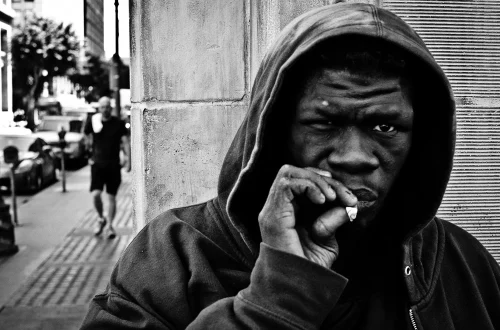
The most sensitive aspect of ritual photography is the human subject. Capturing a landscape is one thing, but capturing a person in a state of vulnerability or devotion requires explicit consent. This applies to everyone from local residents and market vendors to performers and children.
Whenever possible, follow these protocols for portraiture:
- The Non-Verbal Cue: If a direct verbal question is too disruptive, use a gentle smile and a small gesture toward your phone to ask for permission.
- The Eye Contact Rule: If a religious leader or local makes eye contact with you while you are holding your phone, stop immediately.
- Respect the Elders: Always prioritize the comfort of religious leaders and elders; if they appear uncomfortable, lower your device.
Non-verbal cues: The smile and gesture technique
In many cultures, a direct verbal confrontation can be seen as aggressive. A simple nod or a polite gesture toward the camera can communicate your intent to capture a memory without being intrusive. If the person responds with a nod or a smile, you have received a silent “yes.” If they turn away, that is a definitive “no.”
When to put the phone away
There is a fine line between being a witness and being a voyeur. If you find yourself moving closer and closer to a subject to get a “better” angle, you have likely crossed that line. The best practice is to maintain a respectful distance and put the phone away during the most intense or private moments of the ceremony.
Technical Mastery Without Intrusion
High-quality imagery does not require intrusive equipment. Modern smartphone sensors, aided by advanced software, can often match the performance of much larger devices in specific lighting scenarios. In fact, as noted by Hsu, technologies like ToF (Time of Flight) and DVS (Depth Vision Sensor) could allow mobile cameras to start to outperform DSLR cameras in certain depth-sensing and low-light applications.
To achieve professional results without a flash, you must master Low Light Optimization. This involves increasing your ISO and using longer exposure times, which is best achieved by bracing your phone against a stone wall or using a small, handheld stabilizer.
Using Night Mode to replace disruptive flash
Night Mode is your most important tool in a sacred space. Instead of a sudden burst of white light that flattens the scene and distracts worshippers, Night Mode uses computational photography to stack multiple frames. This allows you to capture the natural, warm glow of candles or oil lamps without the harshness of an artificial flash.
Advanced manual controls: Avoiding RAW capture errors
For those using manual control apps, precision is required. While RAW files provide more data for post-processing, they require more light and stability. If you are attempting a long exposure, ensure your device is perfectly still. Even a slight tremor can cause the sensor to fail in capturing the fine details of incense smoke or flowing garments.
Crisis Management: What to do when etiquette is breached
Despite your best intentions, mistakes happen. A flash might go off accidentally, or you might realize you have inadvertently photographed something private. How you handle these moments defines your character as a photographer.
If you find yourself in a situation where you have caused discomfort, follow the “Graceful Exit” protocol. Do not attempt to argue your “right” to take a photo. In a sacred space, the community’s right to worship always supersedes your right to document.
An etiquette expert emphasizes a fundamental rule: “The deceased is not a spectacle.” Photographing a body or a grieving family is not just poor etiquette—it is a violation of the most basic human boundaries.
Shortcut: If you are confronted by a local official or religious leader, immediately lower your phone, offer a sincere apology (a bow is often appropriate), and move away from the central area of the ritual.
The ‘Graceful Exit’ protocol
If a Pecalang or a temple official asks you to stop, the correct response is immediate compliance. Apologize briefly, turn off your device, and relocate to a public or less sensitive area. Attempting to explain “artistic intent” is often viewed as a lack of respect for the local culture.
The ultimate line: Photographing the deceased
In many cultures, such as during the Kumbh Mela in India, certain figures like the Naga Sadhus are highly revered, and their presence is sacred. However, the line is most clearly drawn at death. Whether in a religious context or a private funeral, the deceased must never be treated as a subject for photography. Respecting this boundary is the highest form of photographic etiquette.
FAQ
Can I use a drone to film religious ceremonies in Bali?
Under 2025 regulations, drone photography during Melasti processions is prohibited to respect the sanctity of the ritual and the privacy of the participants.
Is it okay to take photos of people praying if they aren’t looking?
It is best practice to use non-verbal cues like a smile or a gentle gesture toward the camera to ask permission, especially for close-up portraits of religious leaders or local residents.
What should I do if my phone flash goes off accidentally?
Immediately apologize, lower your screen brightness to avoid further distraction, and move to a less central area to avoid further disruption to the ceremony.