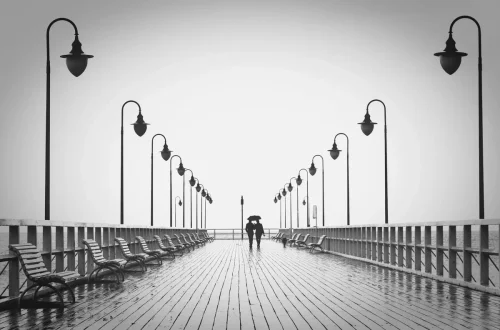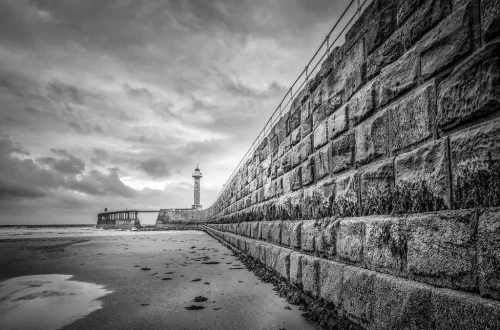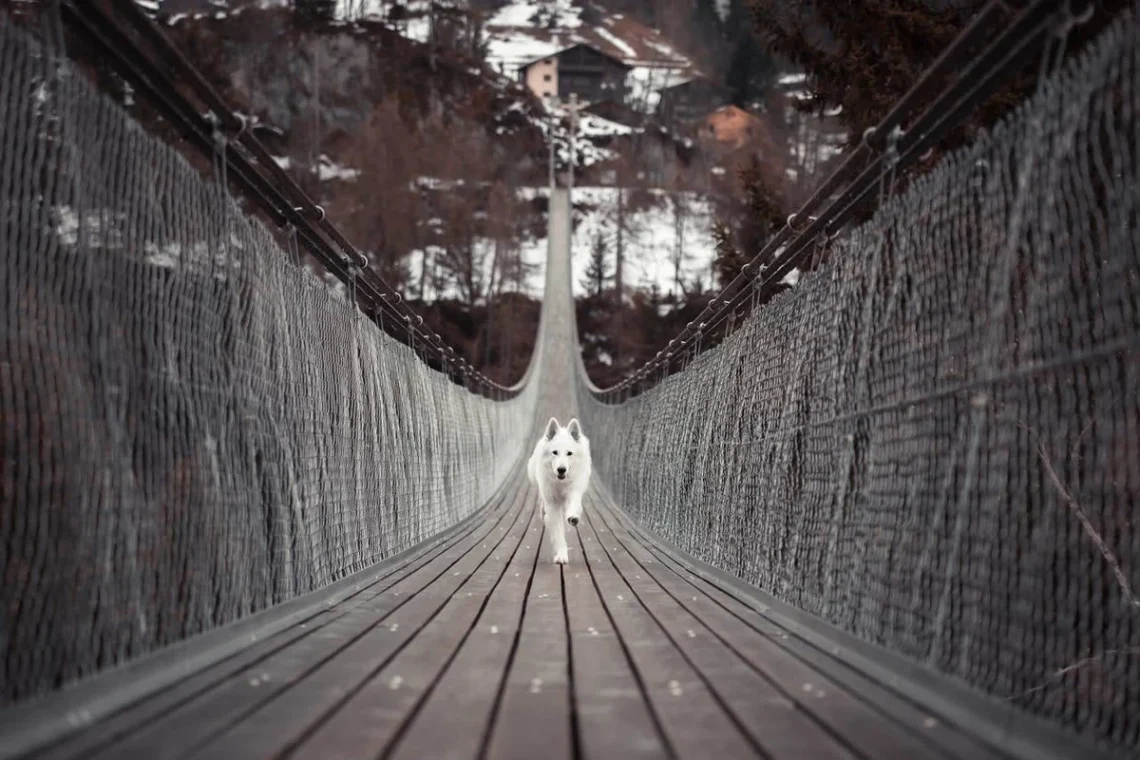
SnapRoamer.com – Leading lines are compositional elements—either natural or man-made—that guide a viewer’s eye through a photograph toward a specific subject or the heart of the image. By utilizing lines like roads, fences, or shadows, photographers can create a sense of depth, movement, and intentionality in their work. Leading lines are the key compositional elements that carry our eye through a photograph, according to digital-photography-school.com.
The Leading Line Troubleshooting Guide: Avoiding the ‘Exit Trap’
To avoid the ‘Exit Trap,’ ensure your leading lines point directly toward your primary subject. As noted by digital-photography-school.com, a leading line that points away from your main subject is likely counterproductive.
When a line directs the gaze toward the boundary of the frame, the viewer’s attention is effectively ejected from the composition. This failure mode often occurs when a photographer identifies a strong line but fails to anchor it with a visual destination. Without a clear subject, the line becomes a path to nowhere, leaving the viewer unsure where to focus.
Identifying ‘Dead-End’ Lines
A “dead-end” line is a compositional error where the visual path terminates without hitting a focal point. This often results in a photo that feels unfinished or lacks impact. To fix this, practitioners often look for ways to reposition the camera so the line intersects with a person, a building, or a distinct landscape feature. If the line simply vanishes into a corner, it fails its primary purpose of guiding the eye.
The Distraction Trap: When secondary subjects hijack the eye
Even if a line points toward a subject, it can still fail if a secondary element is more visually dominant. This happens when a line leads the eye toward a person, but a bright, high-contrast object in the background pulls the attention away. To prevent this, photographers must evaluate the hierarchy of the frame. Common issues include:
- Lines that lead to an empty horizon.
- Lines that compete with a more colorful secondary object.
- Lines that intersect with distracting, cluttered backgrounds.
Psychological Composition: Mapping Lines to Moods
The orientation of a line dictates the emotional resonance of an image. Photographers can use specific geometric structures to influence how a viewer perceives a landscape or portrait.
| Line Type | Psychological Effect | Best Use Case |
|---|---|---|
| Horizontal | Stability and calm | Landscape photography |
| Vertical | Power and confidence | Fashion and portraiture |
| Diagonal | Movement and change | Action and depth |
| Converging | Grandeur and scale | Architecture and vistas |
| S-Curve | Elegance and flow | Nature and winding paths |
The table above illustrates how different geometric structures influence the viewer’s subconscious. For example, while horizontal lines convey stability, vertical lines suggest power and confidence, making them popular in fashion and portrait photography. Diagonal lines provide a sense of movement and change, emphasizing distance from the foreground to the background.
Stability vs. Tension
Horizontal lines are foundational in landscape photography because they represent the horizon and a sense of rest. Conversely, diagonal lines introduce tension. While a horizontal line might feel “safe,” a diagonal line forces the eye to travel across the frame, creating a dynamic energy that prevents the image from feeling static.
Creating Grandeur with Converging Lines
Converging lines occur when multiple lines appear to meet at a single point, often creating a 3D illusion in scenic landscape photography. This technique emphasizes the distance between the foreground and the vanishing point, making a scene feel much larger and more immersive than a flat composition would allow.
The 5 Essential Types of Leading Lines
According to SANDMARC, there are 5 primary types of leading lines: diagonal, vertical, horizontal, converging, and curved. Each variation serves a unique structural purpose.
Mastering these categories allows for more deliberate decision-making. These tools are essential for guiding the viewer’s eye effectively through different environments.
- Horizontal Lines: Provide a sense of peace and equilibrium.
- Vertical Lines: Command attention and imply strength.
- Diagonal Lines: Drive the eye through the frame with energy.
- Converging Lines: Create a sense of immense depth and perspective.
- Curved Lines (S-Curves): Offer a graceful, organic transition through the image.
Converging Lines and the Vanishing Point
Converging lines are particularly effective when used to draw the eye toward a vanishing point. This is frequently seen in railroad tracks or long hallways. By emphasizing the start of a line before letting it fall away into the backdrop, photographers can create a 3D illusion that looks incredible in scenic landscape photography.
The Elegance of S-Curves
S-curves, or curved lines, are often found in nature, such as winding rivers or meandering paths. Unlike the aggressive energy of a diagonal line, the S-curve provides a sense of flow and rhythm. This makes it a preferred choice for photographers aiming to capture a sense of serenity or romanticism in their work.
Mobile-First Workflow: Scouting with Your Smartphone
Planning does not always require a heavy DSLR. Photographers can use a phone to take quick snapshots to adjust location and positioning before setting up a bulky camera.
Smartphones are effective tools for testing how light and lines interact. A mobile device can help find the exact spot where a road or a shadow forms a perfect leading line without the need for a full kit.
Shortcut: On most modern smartphones, enable the “Grid” feature in your Camera Settings to help align your lines with the rule of thirds or to ensure your horizons are perfectly level.
Using Grid Overlays for Precision
grid overlays assist mobile photographers in maintaining alignment. They provide a visual guide to ensure that vertical lines remain upright and horizontal lines do not tilt.
Pre-visualization Techniques
Pre-visualization involves seeing the final photo in your mind before you press the shutter. By using a smartphone, you can experiment with different heights—such as getting low to the ground to make a path appear more prominent—without the physical strain of adjusting a heavy tripod and camera setup.
Post-Processing Masterclass: Artificially Enhancing Lines
Compositional refinement continues in the digital darkroom. You can use editing tools to strengthen existing lines or emphasize specific paths within the frame.
One of the most effective ways to emphasize a line is through contrast. Because many leading lines are not immediately obvious and depend on the photographer’s ability to recognize them, using a wide-angle lens during the shoot can help, but post-processing is where the fine-tuning happens. You can use dodging and burning to make leading lines appear more prominent by brightening the highlights along the line and darkening the surrounding areas.
Dodging and Burning for Contrast
Dodging (lightening) and burning (darkening) are classic techniques that remain vital. By applying these tools selectively along a path, road, or shadow, you can create a “visual track” that forces the eye to follow that specific route. This technique is especially useful when the original line was present but lacked the tonal contrast to stand out.
Using Linear Gradients to Guide the Eye
In software like Lightroom or Snapseed, linear gradients allow you to apply adjustments to specific sections of an image. By using a gradient to subtly darken the edges of a frame or to increase the exposure along a leading path, you can direct the viewer’s attention away from distractions and toward your intended subject.
Critical Pitfalls to Avoid in Composition
To master composition, one must recognize common errors that can degrade image quality.
- Tilted Horizon: An unlevel horizon can make a photo feel “broken” or amateurish.
- Cluttered Background: Too many competing elements can drown out your leading lines.
- Merging Edges: Avoid having subjects appear to grow out of other objects.
A tilted horizon is one of the most frequent mistakes. If your horizon is not actually horizontal, it creates a sense of instability that distracts from the subject. If you find this error after the shoot, it usually takes less than 10 seconds to fix a tilted horizon in post-processing using the straighten tool. Furthermore, ensure your lines do not lead to a cluttered background, as this creates visual noise that competes with your intended focal point.
FAQ
Can shadows act as leading lines?
Yes, shadows can serve as subtle, invisible leading lines that guide the viewer’s eye without the need for physical objects like roads or fences.
How can I make leading lines more obvious in my photos?
Using a wide-angle lens can help exaggerate perspective and make lines more prominent. Additionally, using dodging and burning in post-processing can enhance their visibility by increasing the contrast between the line and its surroundings.
What is the biggest mistake when using leading lines?
The most common mistake is a line that points away from the main subject, which leads the viewer’s eye out of the frame rather than toward the focal point.