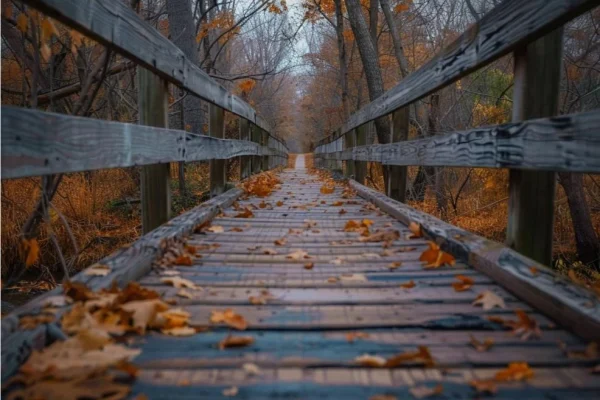
SnapRoamer.com – Leading lines are fundamental compositional tools in travel photography that direct viewers’ attention through an image toward the main subject, enhancing both depth and narrative impact. These lines, whether natural or man-made, act as visual pathways that create a sense of flow and engagement, guiding the eye smoothly across the frame. By positioning elements such as roads, rivers, fences, or architectural features strategically, photographers craft dynamic compositions that convey scale, perspective, and storytelling within travel scenes.
In travel photography, leading lines differ from simple paths by their compositional intent: while a path might merely exist in the scene, leading lines purposefully organize visual information to emphasize focal points and establish a directional flow. This nuanced distinction is critical for photographers aiming to elevate their images beyond snapshots, transforming ordinary vistas into compelling visual journeys.
Types of Leading Lines in Travel Photography
Leading lines in travel photography manifest through a wide range of natural and artificial elements, each contributing distinct visual effects. natural leading lines include rivers winding through landscapes, forest trails, or tree branches arching into the frame. These organic lines often feature subtle curves and irregularities that add softness and depth to compositions. For example, a river’s meandering form can lead the viewer’s eye from foreground to background, establishing a sense of distance and movement.
Conversely, man-made structures such as roads, fences, bridges, and urban architectural elements provide more defined and often straight or diagonal lines. Urban environments offer a rich variety of linear elements—sidewalks, building edges, railings—that photographers like Felipe Silva exploit to create strong geometric compositions. Straight lines emphasize order and stability, while diagonal lines inject energy and dynamism, frequently used to break monotony and add visual tension.
Curved lines, whether natural or man-made, introduce fluidity and rhythm, promoting a more organic visual flow. Diagonal lines, cutting across the frame, typically intensify depth perception and lead the eye powerfully toward the subject or horizon. Photographers such as Lukas Kosslow utilize these diagonal elements in travel settings to create immersive experiences that draw viewers into the scene.
Techniques for Using Leading Lines Effectively in Travel Photography
Strategic placement of leading lines dramatically influences the impact of travel photographs. One effective technique involves positioning lines so they originate from the frame’s corners or bottom edges, naturally guiding the eye inward and upward. This approach leverages the human tendency to scan images starting from edges, creating an intuitive visual journey. For instance, a road beginning at the bottom corner and converging near the center of the frame directs attention precisely and powerfully.
Placing the main subject at the convergence or endpoint of leading lines amplifies compositional strength. This placement anchors the viewer’s gaze and lends significance to the subject, whether it be a distant mountain peak or a solitary traveler. Adjusting angles and adopting low perspectives can exaggerate the length and prominence of lines, emphasizing depth and scale especially in vast landscapes or urban canyons.
Lighting plays a pivotal role in enhancing leading lines. Shadows can form invisible lines that subtly direct the eye, while highlights can accentuate edges and contours. Photographers often exploit early morning or late afternoon light to increase contrast along lines, making them more visually striking. For example, sunlight casting elongated shadows of fences or trees creates secondary lines that reinforce the primary pathways, enriching the composition.
Leading Lines in Diverse Travel Contexts
Urban travel photography offers fertile ground for leading lines through structured environments. Elements such as canals, streets, stairways, and building façades provide repetitive patterns and strong linearity. In Venice, for instance, narrow alleyways and waterways serve as natural leading lines, guiding viewers through crowded, complex scenes toward focal points like piazzas or historic landmarks. Felipe Silva’s urban compositions often highlight these lines for dramatic effect, balancing architectural geometry with human activity.
In natural and landscape travel photography, trails, rivers, and floral patterns create organic leading lines that evoke tranquility or adventure. Mountain paths winding through forests or coastal lines curving along beaches introduce both depth and narrative flow. Lukas Kosslow’s work demonstrates how combining these natural lines with foreground interest—such as rocks or flowers—enhances dimensionality and immerses the viewer into the environment.
Some photographers blend urban and natural elements to craft hybrid compositions. For example, a bridge over a river can combine the man-made linearity of the structure with the organic curves of water flow, creating complex visual pathways. Such interplay enriches storytelling, reflecting travel’s multifaceted experience where human design and nature coexist.
Enhancing Travel Photos Using Leading Lines
Leading lines contribute significantly to visual storytelling by creating flow and a sense of movement within travel images. They establish visual journeys that encourage viewers to explore the photograph, discovering details progressively rather than scanning randomly. This flow is essential for conveying place and atmosphere, transforming static scenes into dynamic experiences.
By directing attention, leading lines also add three-dimensionality, suggesting depth that invites the viewer’s eye deeper into the frame. This effect counters the flatness inherent in two-dimensional media, enhancing realism and immersion. For example, diagonal lines converging at a distant horizon imply vastness, while curved lines suggest softness or continuity.
Moreover, lines can emphasize the emotional tone of a scene. Straight, clean lines might evoke order or modernity, ideal for urban settings, while meandering natural lines often suggest calmness or mystery. Using lines to frame or isolate focal points helps clarify narrative intent, whether highlighting a cultural monument or a lone traveler in nature.
Common Mistakes in Using Leading Lines and How to Avoid Them

One frequent error is incorporating distracting lines that lead the viewer away from the intended subject. Photographers must carefully evaluate which lines serve the composition and which divert attention. For example, a fence line that abruptly changes direction or a road veering off frame edges without connecting to the subject can confuse the eye and weaken impact.
Balancing line prominence with overall composition is crucial. Overemphasizing lines can overshadow other essential elements like texture, color, or subject expression. Effective use of negative space alongside lines prevents overcrowding and maintains visual harmony.
Additionally, using leading lines without considering perspective can result in flattened or awkward images. Adjusting camera height and angle helps maximize the lines’ directional strength while preserving natural proportions. Photographers should also avoid forcing lines artificially, instead seeking organic or authentic pathways that resonate with the scene’s context.
FAQ

What are leading lines in photography?
Leading lines are compositional elements—natural or man-made—that guide the viewer’s eye through an image toward a focal point, enhancing depth and narrative flow.
How do leading lines improve travel photography?
Leading lines create visual pathways that draw attention, establish depth, and add dynamic movement to travel photos, making scenes more engaging and immersive.
What types of leading lines are common in urban travel photography?
Common urban leading lines include streets, sidewalks, building edges, fences, railings, and canals, which provide strong geometric and diagonal lines for composition.
Can natural elements serve as leading lines?
Yes, rivers, trails, tree branches, and mountain ridges serve as organic leading lines, offering curved or diagonal paths that add softness and depth to travel images.
What mistakes should be avoided when using leading lines?
Avoid lines that lead away from the subject, overly dominant lines that disrupt balance, and forced or unnatural lines that reduce compositional authenticity.
Travel photographers looking to refine their compositional skills should experiment actively with leading lines, adjusting perspectives, and combining natural and man-made elements. As a versatile and accessible technique, leading lines enable photographers to craft visually compelling stories that resonate with viewers, enriching the travel narrative through every frame.
For further guidance on mastering leading lines, explore detailed tutorials and professional insights at Digital Photography School’s guide on leading lines and Neil Shelby Long’s travel photography tips.