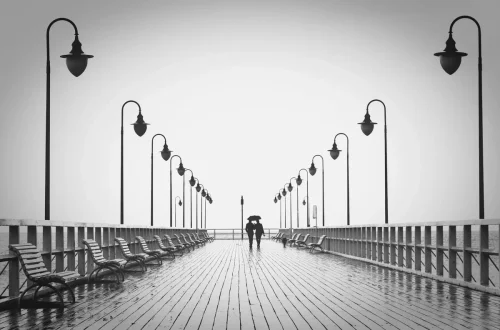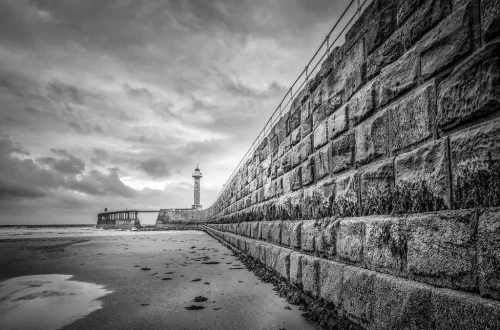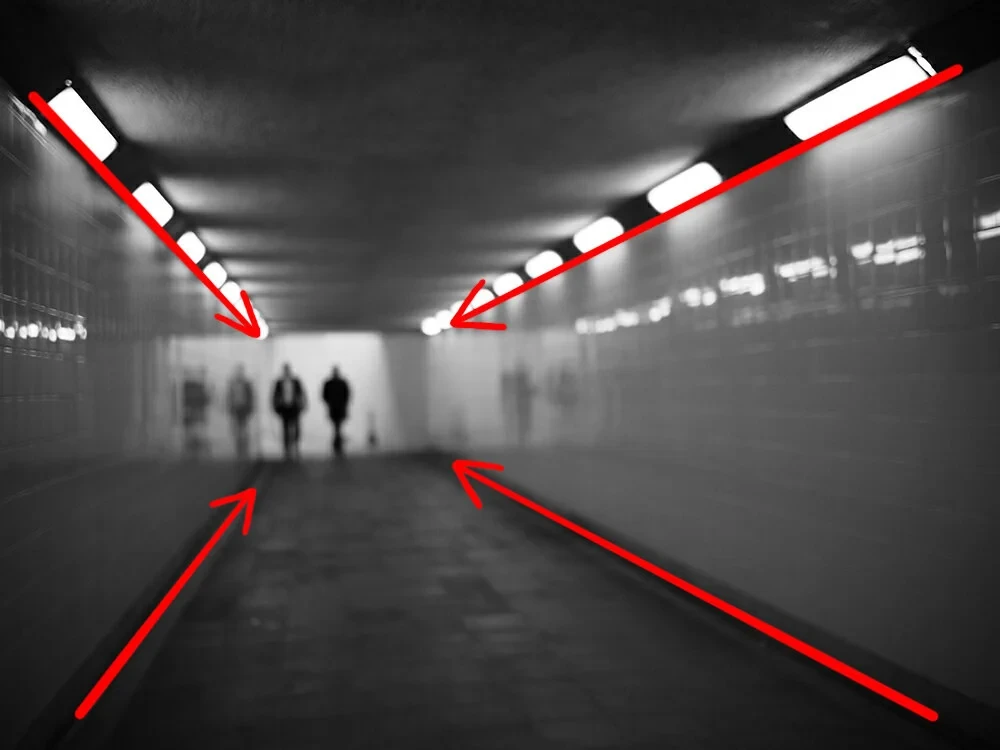
SnapRoamer.com – Leading lines are visual pathways—either natural or man-made—that direct a viewer’s eye toward a specific subject or the heart of a composition. By using elements like roads, fences, or even shadows, photographers create depth, movement, and a sense of narrative within a two-dimensional frame. Leading lines can be as subtle as a shadow or as obvious as a railroad track, serving as the invisible guide for a viewer’s gaze.
Beyond Physical Objects: Mastering Implied and Color-Based Leading Lines
Implied leading lines function through non-physical elements. For example, a subject’s gaze or a pointing gesture can direct attention without a tangible object being present. Additionally, color-based leading lines use high-chroma elements—like a bright red road against a green forest—to create a visual path through color contrast rather than geometric shape.
Photographers often mistake leading lines for purely geometric structures, but the concept is far broader. As Felipe Silva notes, leading lines can be anything, ranging from a road or a line of trees to repetitive objects like railroad tracks. This versatility allows for compositions that feel organic rather than forced.
The Power of the Gaze (Implied Lines)
An implied line functions with directional force even without a physical object. When a subject in a portrait looks toward a specific point in the frame, the viewer’s eye instinctively follows that gaze. This creates a psychological connection between the subject and the secondary element of interest. Failure to align this gaze with a meaningful subject results in a “dead end” where the viewer’s attention wanders aimlessly.
Color Contrast as a Visual Path
Color can function as a geometric substitute. While a physical fence provides a clear path, a sequence of high-contrast colors can achieve the same result. For example, a vibrant object moving through a monochromatic environment creates a trail for the eyes to follow. This technique requires careful management of saturation to ensure the color path does not become a distraction that pulls the eye away from the intended focal point.
- Natural elements: Rivers, shorelines, and rows of trees.
- Man-made structures: Roads, fences, and architectural edges.
- Light and shadow: High-contrast shadows that stretch toward a subject.
- Human interaction: Gestures and eye direction.
One common failure mode occurs when a photographer uses a line that is too visually “loud,” such as a bright neon sign, which competes with the subject rather than leading to it. To avoid this, ensure the line has a lower visual weight than the destination.
The Psychology of Line Direction: What Your Composition Communicates
Photographers select specific geometries to evoke particular reactions. As noted by various experts, the direction of a line dictates the emotional resonance of a photograph. Understanding these psychological triggers is essential for intentional storytelling.
| Line Type | Psychological Impact | Best Use Case |
|---|---|---|
| Horizontal | Stability and calm | Landscape photography |
| Vertical | Power and confidence | Fashion and portraits |
| Diagonal | Movement and change | Dynamic action or depth |
| Curved | Grace and flow | Natural landscapes/S-curves |
The table above illustrates how different geometries alter the viewer’s perception. For instance, Silva explains that horizontal leading lines are mostly used in landscape photography, such as a path leading to a straight river, because they convey a sense of stability and reliability.
Stability through Horizontality
Horizontal lines ground a composition. Silva observes that a path or a dirt road leading to a straight river or a fallen tree can convey stability and reliability. These lines are often ongoing and provide a sense of peace, though a slight tilt can introduce unintended tension.
Dynamic Tension with Diagonals
Diagonal lines are much more dynamic than vertical or horizontal lines. They force the viewer to explore the composition by emphasizing the distance between the foreground and the background. This creates a sense of energy and transition that static lines cannot replicate.
The Grace of the S-Curve
Curved lines, such as bending flower stalks or rolling hills, offer a sense of flow and grace. Unlike the aggressive direction of a diagonal, a curve guides the eye through the entire image in a more rhythmic, wandering fashion. This is particularly effective for creating a sense of journey within a single frame.
Technical Execution: Lens Choice and Camera Settings
Effective composition depends on specific technical choices regarding optics and exposure. The way a lens perceives distance can either amplify or diminish the impact of a line.
A wide-angle lens is a primary tool for this technique. According to Constance Mier, using a wide-angle lens helps make leading lines more obvious by exaggerating the perspective, which makes the lines appear to converge more dramatically toward a vanishing point.
Wide-Angle vs. Telephoto Perspectives
The choice between a wide-angle and a telephoto lens changes the “strength” of the line. A wide-angle lens stretches the distance, making a road appear to rush toward the viewer. Conversely, a telephoto lens—perhaps using a 2x lens multiplier—will compress the scene. While compression can be useful for layering, it often flattens leading lines, making them feel less impactful. If the goal is to emphasize a long path, avoid heavy telephoto compression.
Aperture Control for Subject Isolation
aperture settings dictate how the viewer’s eye transitions from the line to the subject. A wider aperture creates a shallower depth of field to draw attention to the focal point. However, if the aperture is too wide, the leading line itself may become so blurred that it loses its ability to guide the eye.
When managing settings, consider these standard benchmarks:
- Aperture: An f-stop of 11 is often used in landscapes to maintain sharpness along the line, whereas a wider aperture is used for subject isolation.
- ISO: Keeping ISO at 100 ensures maximum image clarity, while higher settings like 1600 ISO may be necessary in low-light environments where shadows act as lines.
The Leading Lines Troubleshooting Guide: Fixing Compositional Errors
Compositional errors can be identified and corrected during the shoot or in post-processing. Recognizing these issues is essential for maintaining a professional image.
Warning: A leading line that does not terminate at a subject is a “visual dead end.” It creates frustration for the viewer, who follows the path only to find nothing of interest at the end.
Post-Processing Fixes: Dodging, Burning, and Cropping
If a line is present but lacks impact, post-processing can help. Techniques like dodging (lightening) and burning (darkening) can be used to increase the contrast of a line, making it pop. If a line is slightly misaligned, a strategic crop in software can often re-orient the line to point more directly at the subject. For example, if a diagonal line is cutting too far into a corner, a tight crop can transform it into a strong compositional element.
Avoiding the ‘Visual Trap’ Dead End
Leading lines typically fail in three ways:
- Misaligned lines: When the line leads away from the focal point instead of toward it.
- Too many lines: When multiple leading lines confuse the viewer and obscure the singular story.
- Lines leading off the page: When horizontal lines lead the viewer’s attention completely off the frame unintentionally.
To prevent the “too many lines” error, practitioners recommend simplifying the scene. If a shot contains a road, a fence, and a row of trees, the viewer may not know where to look. Removing one of these elements through a change in angle or a tighter crop will strengthen the remaining lines.
Real-World Examples and Professional Perspectives
Professional approaches can be observed through an in-depth discussion involving 15 photos. These examples demonstrate how to apply various theories of line usage in practice.
Photographers such as Lukas Kosslow, Felipe Silva, and Ian Plant demonstrate how to balance subtlety with impact. While Silva focuses on the structural reliability of man-made paths, others like Constance Mier emphasize the importance of perspective and lens choice. Professional perspectives often suggest that the most successful images are those where the leading line feels like a natural part of the environment rather than a forced geometric trick. By observing how these experts use convergence and vanishing points, photographers can move from simply “finding lines” to “constructing compositions.”
FAQ
Can shadows act as leading lines?
Yes. According to SANDMARC, shadows can serve as subtle, invisible leading lines that guide the viewer’s eye without the need for physical objects like roads or fences.
What is the best lens for leading lines?
Constance Mier suggests that a wide-angle lens is often best because it helps make leading lines more obvious by exaggerating the perspective.
How do I stop my lines from leading the eye out of the frame?
Ensure your lines terminate at your intended subject. Avoid horizontal lines that lead straight off the edge and use post-processing crops to re-center the focus on the subject at the end of the path.