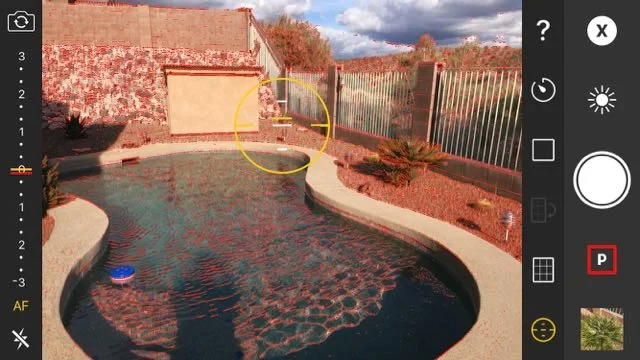
SnapRoamer.com – Achieving sharp focus throughout a landscape photograph demands precise technique and thoughtful equipment use. By mastering hyperfocal distance, aperture settings, focus stacking, and camera stabilization, photographers can ensure maximum depth of field and consistently sharp images from foreground to infinity. This tutorial provides a detailed, step-by-step guide for landscape photographers seeking to optimize focus and sharpness using proven methods and expert insights.
landscape photography challenges often stem from the difficulty in balancing depth of field and image sharpness. The goal is to have the entire scene—from close foreground elements to distant horizons—in crisp focus. However, lens characteristics, diffraction, camera shake, and improper focusing can degrade image clarity. Understanding the interplay between aperture, focusing distance, and stabilization tools is essential to overcome these hurdles.
1. Mastering Hyperfocal Distance for Landscape Sharpness
hyperfocal distance is the focus setting that maximizes sharpness from roughly half that distance to infinity, making it a foundational concept for landscape photographers. Focusing at the hyperfocal distance ensures the greatest depth of field, capturing foreground and background details sharply without relying on very small apertures that risk diffraction blur.
To calculate or determine hyperfocal distance:
For example, with a 24mm wide-angle lens at f/11 on a full-frame DSLR, the hyperfocal distance might be around 1.5 meters. Focusing at this point will render everything from approximately 0.75 meters to infinity acceptably sharp.
2. Selecting Aperture to Maximize Depth of Field While Minimizing Diffraction
Choosing the right aperture balances depth of field and optical sharpness. While narrower apertures increase depth of field, they also introduce diffraction, a phenomenon that softens image details. Landscape photographers typically select apertures between f/8 and f/16 as a compromise, delivering excellent sharpness without significant diffraction penalties.
Key aperture considerations:
Lens performance varies; some lenses maintain sharpness better at smaller apertures. Testing your equipment can reveal the sweet spot for your gear. For example, Varina Patel advocates for f/8 to f/11 when stacking images, prioritizing sharpness and manageable depth.
3. Minimizing Camera Shake: Essential Equipment and Techniques
Even with perfect focus settings, camera shake can degrade image sharpness, especially in landscape photography where long exposures or small apertures are common.
To reduce vibration:
Following these practices ensures the sensor remains steady during exposure, preserving maximum sharpness.
4. Focus Stacking Techniques for Extended Depth of Field
Focus stacking involves capturing multiple images focused at incremental distances and merging them to create a composite with extended depth of field beyond a single shot’s capability. Originally popularized in macro photography, focus stacking is increasingly used in landscape photography to overcome limitations of hyperfocal focusing and aperture constraints.
Practical steps for landscape focus stacking:
Software such as Adobe Photoshop or dedicated stacking programs combine these images, selecting the sharpest areas from each frame to create a seamless final photo.
5. Advanced Focusing Considerations and Practical Tips
Beyond hyperfocal distance and focus stacking, additional techniques and camera settings enhance sharpness in landscape photography:
Troubleshooting Common Issues
Example Workflow: Applying Varina Patel’s Death Valley Method

Varina Patel, a respected landscape photographer, employs a systematic approach combining hyperfocal distance focus and focus stacking:
This workflow balances practical field methods with technical precision for optimal results.
| Technique | Recommended Aperture | Focus Method | Equipment Needed |
|---|---|---|---|
| Hyperfocal Distance Focusing | f/8 to f/16 | Manual focus at hyperfocal distance (approx. 1/3 into scene) | Tripod, remote shutter or timer |
| Focus Stacking | f/8 to f/11 | Multiple manual focus points from foreground to background | Tripod, remote shutter, stacking software |
| Infinity Focusing | f/8 to f/16 | Manual focus set to infinity | Tripod, remote shutter |
FAQ

What is the best aperture to use for landscape photography?
Apertures between f/8 and f/16 are generally optimal for landscapes, balancing depth of field and minimizing diffraction. Using f/8 or f/11 is especially recommended when focus stacking.
How do I calculate hyperfocal distance for my lens?
Hyperfocal distance can be calculated using online charts, smartphone apps, or formulas based on focal length, aperture, and sensor size. Many apps automate this process, providing real-time focus distance recommendations.
Is focus stacking necessary for all landscape photos?
Focus stacking is most beneficial for scenes with extreme depth or when shooting with longer focal lengths and wide apertures. Simple landscapes with moderate depth can achieve sufficient sharpness using hyperfocal focusing and narrow apertures.
How can I avoid camera shake during long exposures?
Use a sturdy tripod, remote shutter release (wired, wireless, or via smartphone apps), disable image stabilization on the tripod, and consider using a timer delay to prevent vibrations.
When should I focus at infinity instead of hyperfocal distance?
Infinity focus is suitable for scenes with minimal foreground interest or when capturing distant horizons. However, it sacrifices foreground sharpness and is less effective for compositions requiring sharpness throughout the frame.
By integrating hyperfocal distance focusing, careful aperture selection, camera stabilization, and focus stacking, landscape photographers can elevate image sharpness and depth. Continuous experimentation with these techniques tailored to specific scenes and equipment enhances photographic precision and artistic expression.
For further detailed insights on landscape focusing challenges and solutions, visit Wildeye Magazine’s guide on landscape focus and explore Behind the Shutter’s focus stacking tutorial.