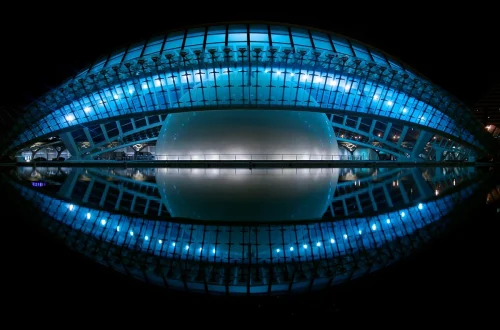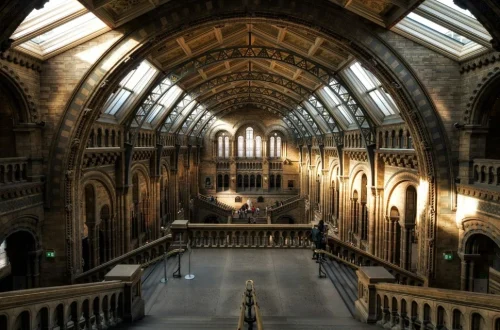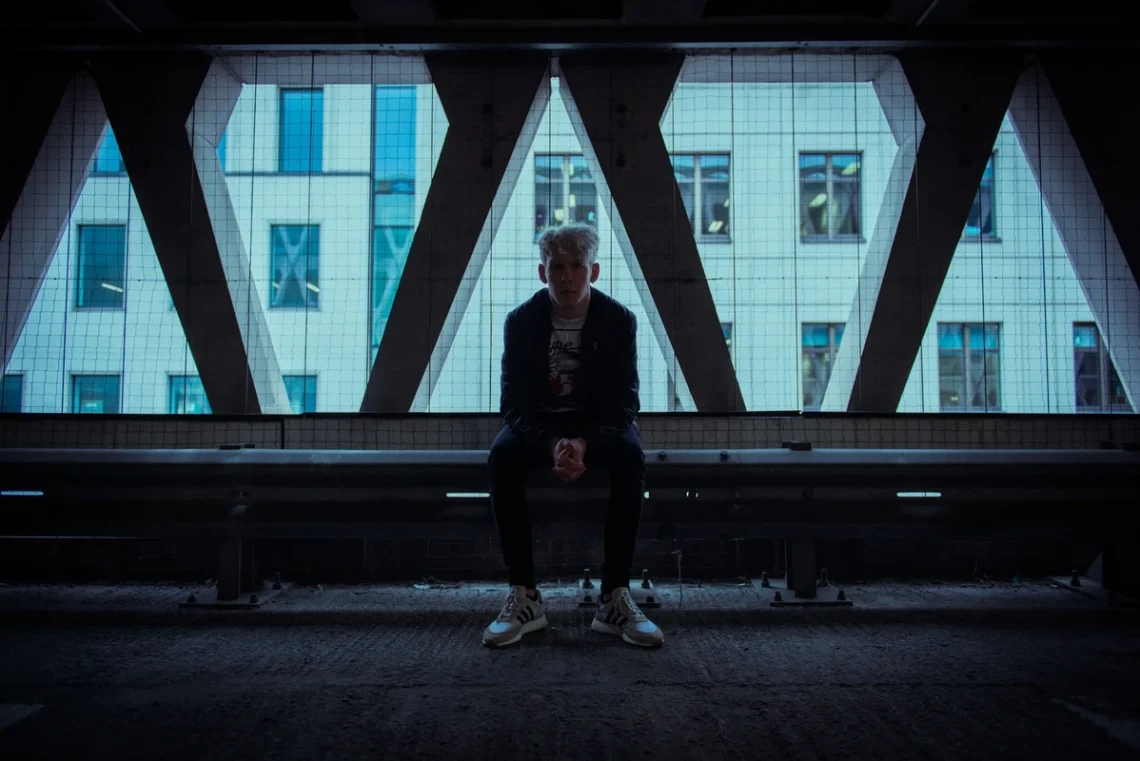
SnapRoamer.com – According to Adobe, “composition in photography is simply the way elements are arranged in a scene to make the photo ‘work’.” Symmetry is a method used to transform a relatively banal scene into a visually appealing image by mirroring sides across a central axis.
“Symmetry allows you to introduce a sense of order into a world of chaos,” states Glenn Guy of travel photography Guru.
The ‘Anti-Boring’ Framework: Avoiding the Clinical Trap
Using perfect symmetry without variation can result in static or dull images. While our brains are naturally drawn to symmetry, finding it aesthetically pleasing and visually satisfying, a lack of nuance can lead to a loss of authenticity in contexts where such patterns are uncommon in nature.
The Danger of the ‘Dead Center’ Trap
A common failure mode in symmetrical composition occurs when a subject is placed exactly in the middle of the frame without any secondary elements to support it. When a photo is placed dead center of the photo, the audience does not experience any movement at all, according to the New York Institute of Fashion Studies (NYFA).
Using Intentional Imperfection to Add Depth
Symmetry does not always have to mean a perfect reflection. To move beyond basic patterns, practitioners can utilize the following strategies:
- Deliberate Asymmetry: Introduce a single element off-center to disrupt a pattern, which adds tension and intrigue to the frame.
- Slight Variations: Incorporating minor imperfections can add interest and depth to images, preventing them from looking like artificial stock photography.
- Pattern Breaking: Identify a repeating symmetrical pattern and find the one element that deviates from it to create a natural focal point.
The Symmetry Rescue Guide: Correcting Near-Miss Compositions
To rescue a near-symmetrical shot, use post-processing tools like Lightroom or Photoshop to perform perspective correction, horizontal/vertical flipping, or precise cropping. These techniques fix slight tilts or lens distortions that prevent a subject from appearing perfectly balanced across the central axis.
Symmetry and asymmetry are the two main types of composition. Almost all photos will be one or the other, according to Tony Eveling.
Shortcut: In many professional editing suites, using the Transform tool or the Lens Correction panel allows for rapid alignment of vertical and horizontal axes.
Core Mechanisms of Symmetrical Composition
Achieving balance requires specific techniques. Photographers use central axis focus, leading lines, and depth symmetry to direct the viewer’s gaze toward a specific focal point.
Mastering the Central Axis
The central axis serves as the invisible spine of the image. By employing central axis focus, photographers place the primary subject at the heart of the frame to command immediate attention. This technique is highly effective for architectural photography where the structure itself dictates the balance.
Using Leading Lines to Guide the Eye
Leading lines are essential for preventing the “dead center” feeling. By using centered lines and patterns, you can guide the viewer’s gaze toward the focal subject, creating a sense of journey through the frame. This mechanism ensures that even a centered subject feels part of a larger, more dynamic environment.
Creating Depth through Symmetrical Layers
To avoid a flat appearance, photographers use depth symmetry. This involves arranging elements from the foreground to the background symmetrically. When you balance the visual weight of a foreground object with a background element of equal importance, you create a 3D effect that pulls the viewer into the scene.
Symmetry creates stability through these specific mechanisms:
- Balanced Elements: Ensuring visual elements on both sides of the central axis have equal weight.
- Central Axis Focus: Placing the subject at the heart of the frame.
- Leading Lines: Using patterns to direct the eye.
- Depth Symmetry: Symmetrical arrangement across the Z-axis (foreground to background).
Symmetry vs. The Rule of Thirds
The choice between composition styles dictates the image’s energy. While symmetry creates stability, the rule of thirds provides movement.
| Composition Type | Visual Characteristic | Psychological Effect | Best Use Case |
|---|---|---|---|
| Symmetrical | Mirroring of sides across an axis | Stability, order, and calm | Architecture and formal portraits |
| Asymmetrical | Significantly different sides | Tension, energy, and movement | Action shots and candid street photography |
| Rule of Thirds | Subject placed on lines or intersections | Dynamic balance and flow | Landscapes and natural scenes |
The rule of thirds utilizes a three-by-three grid, dividing the frame into nine equal sections. This creates four points of intersection where subjects can be placed to create more interesting images than simple centering. In contrast, symmetry focuses on the central axis to achieve balance.
Lessons from the Masters: From Taj Mahal to Annie Leibovitz
The Taj Mahal stands as a quintessential example of architectural symmetry. Photographers can also find symmetrical patterns in historical locations like Bruges, Belgium, where one might spend days exploring the old city architecture.
Renowned photographers like Henri Cartier-Bresson and Ansel Adams mastered the use of symmetry to create powerful, balanced compositions. However, the most advanced practitioners, such as Annie Liebovitz, demonstrate that “an artist has to learn the rules before they can break them.” Her work shows how incorporating or intentionally breaking symmetry can add a layer of psychological depth to a portrait.
Technical Execution: Gear and Alignment
Symmetry is a core technique used consistently by some of the best photographers in the world, but it requires technical precision. Achieving perfect alignment is difficult with handheld shots, as even a minor tilt can disrupt the entire composition.
Warning: Be aware of lens distortion. Wide-angle lenses can cause “barrel distortion,” which curves straight lines near the edges of the frame, making symmetrical architectural shots appear warped and unbalanced.
To ensure success, use a tripod to maintain a level horizon and utilize the grid lines feature on your camera’s LCD or viewfinder. This allows you to align the central axis with the physical lines of your subject before you even press the shutter.
FAQ
Does symmetry always make a photo look better?
Not necessarily. While symmetry creates stability, using it without variation can result in static or clinical images. Adding slight imperfections or breaking the pattern can add necessary tension and interest to the composition.
What is the difference between symmetry and the rule of thirds?
Symmetry focuses on mirroring elements across an axis to create stability. In contrast, the rule of thirds uses a 3×3 grid to position subjects on lines or intersections, which typically creates more dynamic movement than centering.
How can I find symmetry in nature?
Look for reflective surfaces like water or glass, or search for natural patterns and central axes in landscapes and organic forms. Using leading lines can also help reveal hidden symmetries in seemingly chaotic environments.