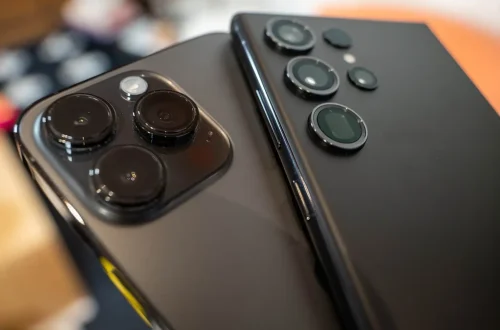
SnapRoamer.com – smartphone landscape photography has advanced significantly with recent innovations in camera hardware and optical accessories. Among the top contenders for capturing expansive and detailed outdoor scenes are the Samsung Galaxy S25 Ultra’s built-in ultra-wide lens and the Moment 18mm Wide T-Series attachable lens. These options highlight the evolving synergy between native smartphone capabilities and high-quality lens attachments, offering photographers a range of choices for creating striking landscape images with natural perspective and exceptional clarity.
The Samsung Galaxy S25 Ultra integrates a 200MP main sensor paired with a 23mm f/1.7 equivalent lens, complemented by a dedicated ultra-wide lens alongside dual telephoto lenses offering 3x and 5x optical zoom. This configuration enables versatile framing options from sweeping vistas to distant details, providing a professional-grade tool for landscape photography. Meanwhile, the Moment 18mm Wide T-Series lens extends a smartphone’s native field of view to approximately 100 degrees with minimal distortion, delivering an authentic wide-angle experience favored by photographers seeking enhanced composition flexibility beyond built-in optics.
Built-in Smartphone Lenses Optimized for Landscape Photography
Recent flagship smartphones have pushed native camera lens capabilities to new heights, particularly in the ultra-wide and telephoto categories vital for landscape photography. The Samsung Galaxy S25 Ultra stands out thanks to its 200MP sensor, which significantly improves image resolution and detail capture. Its ultra-wide lens provides a field of view close to 120 degrees, allowing users to fit broad scenes into a single frame without the need for additional hardware. The phone’s dual telephoto lenses, with 3x and 5x optical zoom, enable detailed capture of distant landscape elements, making it a versatile all-in-one device for outdoor photographers.
Apple’s iPhone 15 Pro Max features an ultra-wide lens with enhanced low-light performance and advanced computational photography features such as sensor-shift stabilization and macro capabilities. Its ultra-wide lens reaches approximately 120-degree field of view, suitable for immersive landscape shots. Google’s Pixel 9 Pro similarly offers a competitive ultra-wide camera with a high-resolution sensor and wide aperture, optimized for dynamic range and color accuracy under various lighting conditions.
The Vivo X100 Pro differentiates itself with a premium telephoto lens co-engineered with Zeiss optics, providing up to 5x optical zoom with minimal distortion or chromatic aberration. This telephoto strength is particularly useful for landscape photographers aiming to isolate distant subjects or capture intricate natural details without sacrificing image quality.
Comparing focal lengths among these devices reveals a broad spectrum of landscape capabilities:
| Smartphone | Ultra-Wide Lens FOV | Main Lens Focal Length (35mm equiv.) | Telephoto Zoom |
|---|---|---|---|
| Samsung Galaxy S25 Ultra | ~120° | 23mm f/1.7 | 3x & 5x optical zoom |
| Apple iPhone 15 Pro Max | ~120° | 24mm f/1.78 | 3x optical zoom |
| Google Pixel 9 Pro | ~120° | 24mm f/1.85 | 5x optical zoom |
| Vivo X100 Pro | ~114° | 24mm f/1.9 | 5x optical zoom (Zeiss) |
This range demonstrates how modern flagship smartphones provide comprehensive focal length options optimized for landscape photography, balancing wide-angle expansiveness and zoomed-in detail.
Attachable Wide-Angle Lenses for Enhanced Landscape Photography
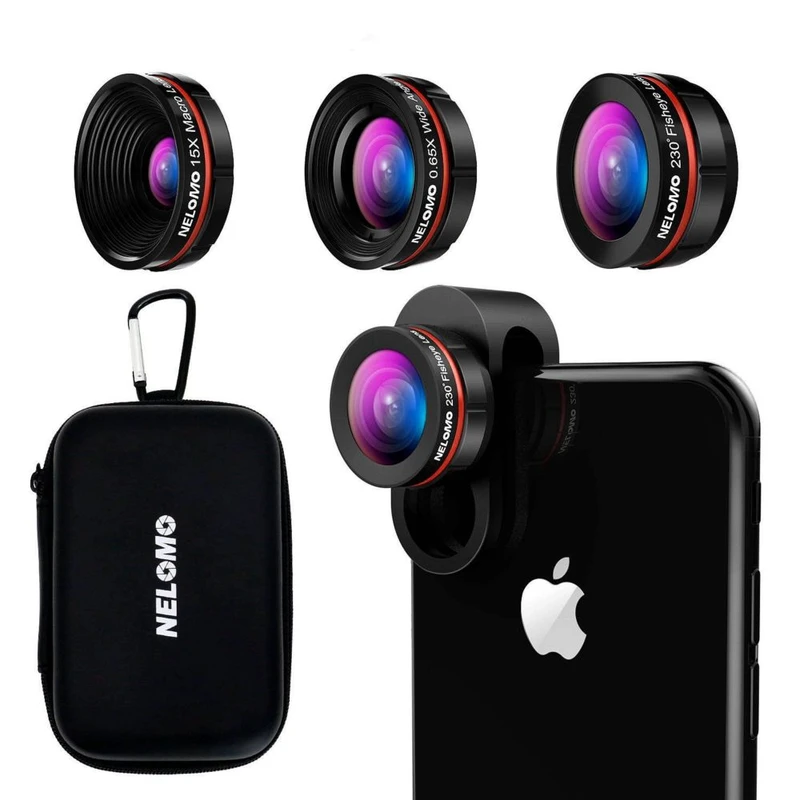
While built-in ultra-wide lenses have improved considerably, attachable wide-angle lenses remain a popular choice for photographers seeking even greater field of view and optical quality. The Moment 18mm Wide T-Series lens is widely regarded for its premium glass elements sourced from Leica, delivering sharpness, contrast, and minimal distortion unmatched by many native smartphone lenses. Offering approximately a 100-degree field of view, this lens enhances the smartphone’s composition versatility, especially for dramatic landscapes, architectural shots, and creative perspectives.
Compatibility with newer smartphones is generally seamless for Moment’s T-Series lenses, which use precision mounting systems to align perfectly with the device’s native camera array. However, older smartphones or models with protruding camera modules may require specific adapters or alternative lens series like Moment’s M-Series, which caters to compact designs.
The benefits of attachable lenses like Moment’s wide-angle options over native ultra-wide lenses include:
Other attachable lens brands such as ShiftCam and Apexel also offer wide-angle lenses with varying degrees of optical quality and price points. ShiftCam’s designs emphasize portability and multi-lens kits, while Apexel provides budget-friendly options that, while less sharp, still improve framing possibilities for casual users.
Photography Techniques Leveraging Wide-Angle Smartphone Lenses
Mastering landscape photography with ultra-wide and attachable lenses involves applying composition and technical strategies tailored to the lens’s characteristics. Utilizing a wide field of view encourages inclusion of prominent foreground elements, creating depth and leading lines that draw the viewer into the scene. For example, positioning natural features like rocks, trees, or pathways in the foreground enhances spatial perception and scale.
Panorama mode remains an effective technique to capture scenes exceeding even the broadest ultra-wide lens limits. Modern smartphones combine multiple images with computational stitching, producing high-resolution panoramas that preserve detail and color consistency across wide vistas.
Aperture management is crucial for landscape shots, where a deep depth of field is typically desired to keep foreground and background elements sharp. While many smartphone lenses have fixed apertures, smartphones like the Samsung Galaxy S25 Ultra mitigate this limitation through computational focus stacking and enhanced sensor resolution. Photographers should pay attention to focus points and leverage manual focus or tap-to-focus features to ensure maximal sharpness throughout the frame.
Limitations and Considerations in Smartphone Landscape Lenses
Despite advances in smartphone camera technology, certain constraints remain. The fixed aperture on flagship phones like the Samsung S25 Ultra limits control over depth of field and low-light performance compared to traditional DSLRs. While computational photography compensates for some of these limitations, it cannot fully replicate the optical advantages of adjustable aperture lenses.
Attachable lenses present their own challenges. Budget-friendly options often suffer from chromatic aberration, vignette, and distortion, degrading image quality. Even premium lenses like those from Moment can introduce slight alignment issues or require careful calibration to avoid focus errors. Notably, some ultra-wide lenses amplify edge softness, necessitating post-processing correction.
image stabilization is another critical factor. Phones like the iPhone 15 Pro Max and Samsung Galaxy S25 Ultra employ advanced optical and sensor-shift stabilization to reduce blur during handheld landscape shooting. Attachable lenses do not inherently provide stabilization, relying on the phone’s native systems, which may be less effective at wider focal lengths.
Cost considerations influence user choice: flagship smartphones with advanced lenses cost significantly more than entry-level phones paired with attachable lenses. However, competitive attachable lenses can cost several hundred dollars, narrowing the affordability gap.
Future Directions in Smartphone Landscape Photography
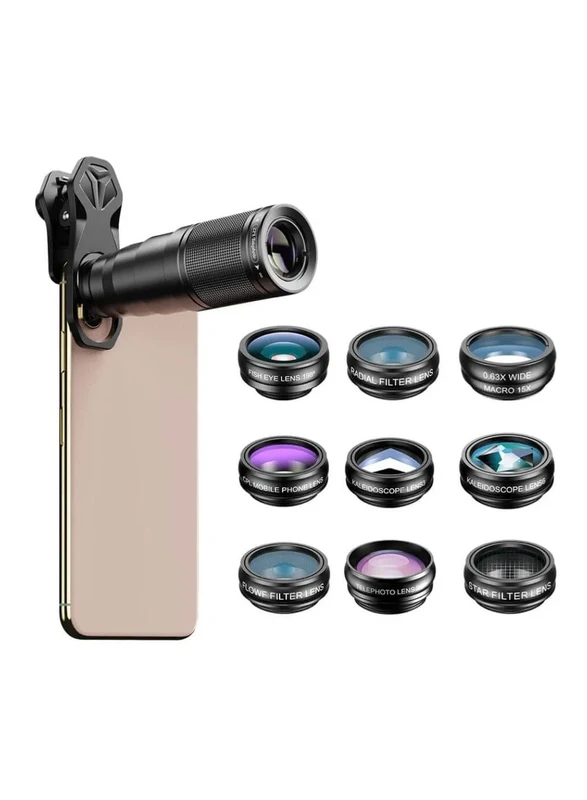
Emerging trends in smartphone photography suggest continued convergence between native camera hardware improvements and attachable lens innovation. Sensor technology advancements, such as larger pixel sizes and stacked sensor designs, promise better dynamic range and low-light capture, enhancing landscape image quality intrinsically.
Simultaneously, lens manufacturers are experimenting with anamorphic and specialty lenses to introduce cinematic and artistic effects previously unattainable on smartphones. Integration of AI-driven distortion correction and real-time image enhancement will further empower photographers to push creative boundaries.
For users in 2026 seeking the best balance between versatility, quality, and cost, the Samsung Galaxy S25 Ultra’s ultra-wide lens combined with select attachable lenses like the Moment 18mm Wide T-Series offers a compelling solution. Photographers prioritizing telephoto detail may also explore options like the Vivo X100 Pro with Zeiss optics for greater compositional flexibility.
Amateur Photographer’s guide to the best smartphones for landscape photography and Moment’s lens compatibility and selection guide provide additional expert insights and user reviews.
FAQ
What focal length is best for smartphone landscape photography?
Wide-angle lenses with focal lengths between 18mm and 24mm (35mm equivalent) are ideal for capturing expansive landscapes. These allow broad field of view while maintaining natural perspective and minimal distortion. Ultra-wide lenses beyond 100 degrees provide dramatic scenes but may introduce edge softness.
Are attachable wide-angle lenses better than built-in smartphone lenses?
Attachable lenses can offer superior optical quality and wider fields of view compared to some built-in lenses, especially on mid-range smartphones. However, flagship phones like the Samsung Galaxy S25 Ultra have highly capable native ultra-wide lenses that reduce the necessity for add-ons except for specific creative effects or ultra-wide extremes.
How does image stabilization affect landscape photography on smartphones?
Image stabilization reduces motion blur during handheld shooting, crucial for sharp landscape photos in low light or at slower shutter speeds. Phones with advanced optical or sensor-shift stabilization, such as the iPhone 15 Pro Max and Samsung Galaxy S25 Ultra, provide better handheld landscape image quality. Attachable lenses rely on the phone’s stabilization.
Can I use anamorphic attachable lenses for landscape shots?
Yes, anamorphic lenses create distinctive horizontal lens flares and wider aspect ratios, adding cinematic qualities to landscape photos. However, they require post-processing and may introduce distortion not suitable for all landscape compositions.
Is the Vivo X100 Pro good for landscape photography?
The Vivo X100 Pro excels in telephoto zoom with Zeiss optics, allowing detailed capture of distant landscape features. Its ultra-wide lens is slightly narrower than some competitors, but overall it offers a balanced set of lenses suitable for versatile landscape photography.
—
Smartphone landscape photography continues to evolve with the integration of advanced native lenses and high-quality attachable optics. Understanding the strengths and limitations of options like the Samsung Galaxy S25 Ultra’s ultra-wide lens and the Moment 18mm Wide T-Series attachment enables photographers to select tools that best suit their creative vision and technical requirements. As sensor and lens technologies advance, the potential for capturing breathtaking landscapes on smartphones will expand, offering greater opportunities for both amateur and professional photographers.