SnapRoamer.com – The Moment Wide 18mm lens stands out as a leading external wide-angle lens for smartphones in 2026, delivering approximately double the field of view compared to standard smartphone lenses while maintaining exceptional image clarity and minimal distortion. Compatible with flagship devices such as the Apple iPhone 14 Pro Max, 15 Pro Max, Samsung Galaxy S24 Ultra, and Google Pixel 9 Pro, this lens has gained prominence among professional photographers and vloggers aiming to enhance mobile photography and cinematic videography. Its optical performance addresses the limitations of native ultra-wide lenses, especially in scenarios requiring immersive framing or tight interior shots, positioning it as a versatile accessory for content creators.
Smartphone manufacturers have increasingly integrated ultra-wide lenses into their camera systems, with devices like the iPhone 15 Pro Max and Samsung Galaxy S24 Ultra offering native ultra-wide capabilities that cover focal lengths around 13-15mm equivalent. However, external lenses such as the Moment Wide 18mm extend these capabilities further by providing a wider field of view with controlled distortion and superior sharpness. This article offers a comprehensive review of the Moment Wide 18mm lens, compares it with built-in smartphone lenses, explores competing wide-angle lens kits, and provides technical guidance on selecting and using wide-angle lenses for mobile photography and vlogging.
Technical Specifications and Compatibility of the Moment Wide 18mm Lens
The Moment Wide 18mm lens is engineered with multi-element optics designed to reduce chromatic aberration and barrel distortion, common issues in wide-angle photography. Its 18mm equivalent focal length roughly doubles the horizontal field of view of standard smartphone lenses, expanding from approximately 75 degrees to over 120 degrees. The lens features a premium optical glass construction with specialized anti-reflective coatings to minimize lens flare and ghosting, critical for backlit and high-contrast shooting conditions.
Compatibility extends across a broad range of smartphones, including Apple’s iPhone 14 Pro Max and 15 Pro Max, Samsung Galaxy S24 Ultra, Google Pixel 9 Pro and 8a, and select models from Vivo and other Android brands. Integration with the Moment Lens System requires either dedicated Moment phone cases that provide a secure mount or universal clip-on adapters for phones without compatible cases. This mounting system ensures precise alignment, critical for maintaining image quality and minimizing vignetting at the edges.
Field of View Advantages and Optical Performance
The expanded field of view provided by the Moment Wide 18mm lens outperforms most built-in ultra-wide lenses, which typically have focal lengths around 13-15mm but can exhibit more pronounced distortion and softness at the edges. Independent tests by NYT Wirecutter and PetaPixel demonstrate that the Moment lens maintains sharpness from center to edge, with barrel distortion limited to under 5%, substantially lower than many competing external lenses that often exceed 10-15% distortion.
This optical precision enables users to capture immersive shots in tight spaces, such as interior architecture or vehicle cabins, without compromising image quality. Additionally, vloggers benefit from the wider framing that accommodates group shots or dynamic action scenes—such as mountain biking—while maintaining natural proportions and minimal fisheye effects.
User Experience and Community Feedback
Professional photographers and content creators, including notable users like @cameracaleb, emphasize the Moment Wide 18mm lens’s robust build quality and consistent performance across various lighting conditions. User testimonials highlight its utility in travel photography and vlogging, where the lens’s ability to capture expansive scenes with minimal distortion enhances storytelling. The Moment community actively shares sample images and videos under hashtags like #MomentWide, providing real-world validation of the lens’s capabilities.
However, some users note that the premium price point—often above $100 per lens—may be a barrier for casual users. Additionally, while the Moment mounting system offers superior alignment, it requires specific cases for optimal compatibility, which may limit use with certain smartphone models or require additional investment.
Comparison with Built-In Smartphone Ultra-Wide Lenses
Flagship smartphones like the iPhone 15 Pro Max and Samsung Galaxy S24 Ultra include native ultra-wide lenses with focal lengths around 13-15mm, offering excellent convenience and integration with computational photography features such as night mode and HDR. However, these native ultra-wide lenses tend to have narrower fields of view compared to the Moment Wide 18mm lens and sometimes exhibit more pronounced distortion or softness in the corners.
The Samsung Galaxy S24 Ultra’s ultra-wide sensor, for example, captures approximately 120 degrees of view but experiences edge softness in low light. The iPhone 15 Pro Max’s ultra-wide lens includes advanced software corrections but remains limited by its fixed focal length and aperture constraints. External lenses like Moment’s provide a tangible increase in field of view and optical versatility, particularly for users who prioritize wide framing and image clarity over computational enhancements.
Investment in an external wide-angle lens becomes advantageous for users who frequently shoot in confined environments or require cinematic perspectives unattainable with built-in lenses. Conversely, casual users or those prioritizing convenience may find the native ultra-wide lenses sufficient.
Other Notable Wide-Angle Lens Options and Kits
Several competing wide-angle lens kits warrant consideration alongside the Moment Wide 18mm lens. Apexel offers a 0.45x wide-angle lens known for its portability and affordability, though it exhibits higher levels of distortion and softer edges compared to Moment’s offering. The ShiftCam LensUltra series targets professional users with multi-element optics and modular design but commands a higher price and bulkier setup.
For cinematic video content, Freewell’s anamorphic lenses provide a distinct widescreen aspect ratio with characteristic lens flares, favored by mobile filmmakers seeking a filmic aesthetic. Additional accessories like the DJI Osmo Pocket 3 lens and telephoto options from NEEWER and MIAO LAB complement wide-angle setups, enabling diverse focal lengths for varied shooting scenarios.
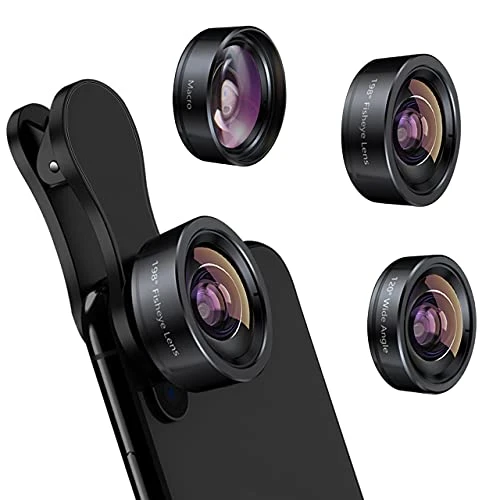
Lens kits such as the Keywing Phone Lens Kit and Xenvo Pro Lens Kit bundle wide-angle, macro, and fisheye lenses in compact packages, appealing to enthusiasts seeking versatile yet budget-friendly solutions. However, these kits often sacrifice optical precision in favor of cost, resulting in more noticeable distortion and chromatic aberrations.
Technical Considerations for Selecting Wide-Angle Lenses
Distortion management is paramount when choosing a wide-angle lens. Barrel distortion, characterized by curved lines near the edges, can detract from architectural and landscape photography unless corrected in post-processing. The Moment Wide 18mm lens maintains distortion below 5%, a significant improvement over many clip-on lenses that often exceed 10%.
Focal length directly influences framing and image perspective. An 18mm equivalent focal length offers a balance between expansive coverage and manageable distortion, whereas ultra-wide lenses below 15mm may introduce fisheye effects unsuitable for all use cases. Users must consider the intended shooting scenarios—tight interior spaces, landscapes, or vlogging—to select an appropriate focal length.
Compatibility extends beyond physical mounting systems to include lens-to-camera software interaction. Moment’s proprietary app enhances lens calibration and manual controls, optimizing image capture. Conversely, universal clip-on lenses may lack such integration, potentially impacting autofocus and exposure accuracy.
Practical Tips for Maximizing Wide-Angle Lens Use
Minimizing distortion starts with conscious composition techniques, such as avoiding placing straight lines at the extreme edges of the frame where distortion is most pronounced. Centering subjects and maintaining a level horizon line further reduce visual anomalies. Utilizing grid overlays on smartphone camera apps can assist in alignment.
Wide-angle lenses excel in scenarios featuring expansive landscapes, group portraits, and confined spaces like interiors or vehicles. For vloggers, the wider field of view enables capturing more context without repositioning the camera.
Post-processing tools, including Adobe Lightroom and Snapseed, offer distortion correction profiles tailored for specific lenses, enabling users to fine-tune images and videos. Applying these corrections preserves image quality while addressing residual optical imperfections.
Market Trends and Innovations in Smartphone Wide-Angle Lenses

Recent advancements focus on enhancing lens coatings that reduce flare and ghosting, improving image contrast and color fidelity under challenging lighting. Manufacturers increasingly leverage multi-layer coatings and nano-textured surfaces to achieve these gains.
Integration with smartphone camera software is advancing, with lens manufacturers collaborating on calibration data to enable real-time distortion correction and enhanced autofocus performance. Moment’s app exemplifies this trend by offering manual controls and lens-specific profiles.
Looking ahead, modular lens systems may evolve to incorporate adjustable focal lengths or hybrid optical-digital zoom, further blurring the lines between built-in and accessory lenses. The expanding demand for cinematic mobile content will drive innovation in anamorphic and ultra-wide lens designs optimized for smartphones.
| Lens | Focal Length (Equivalent) | Field of View | Distortion Level | Compatibility |
|---|---|---|---|---|
| Moment Wide 18mm | 18mm | Approx. 120° | Low (<5%) | iPhone 14/15 Pro Max, Samsung S24 Ultra, Pixel 9 Pro, Vivo X100 Pro |
| Apexel 0.45x Wide-Angle | ~15mm (variable) | Approx. 110° | Moderate (10-15%) | Universal clip-on |
| ShiftCam LensUltra Series | Varies (14-18mm range) | 110°-120° | Low to Moderate | Moment case compatible & universal |
| Built-in iPhone 15 Pro Max Ultra-Wide | 13mm | Approx. 120° | Moderate (software-corrected) | Native iPhone |
| Built-in Samsung Galaxy S24 Ultra Ultra-Wide | 13mm | Approx. 120° | Moderate to High | Native Samsung |
Frequently Asked Questions

What makes the Moment Wide 18mm lens superior to smartphone built-in ultra-wide lenses?
The Moment Wide 18mm lens offers a wider field of view than most built-in ultra-wide lenses while maintaining lower distortion and higher edge sharpness. Its multi-element glass and coatings ensure clearer images with minimal barrel distortion, making it ideal for immersive photography and vlogging in tight spaces.
Is the Moment Wide 18mm lens compatible with all smartphones?
While the Moment Wide 18mm lens supports many flagship models like iPhone 14/15 Pro Max, Samsung Galaxy S24 Ultra, and Pixel 9 Pro, it typically requires a compatible Moment phone case or a universal clip-on mount. Compatibility depends on the phone’s camera layout and case availability.
How does wide-angle lens distortion affect image quality, and can it be corrected?
Wide-angle lenses can introduce barrel distortion, where straight lines curve near the edges. This effect can reduce image fidelity, especially in architectural photography. Distortion can be minimized in-camera by using lenses with superior optics or corrected during post-processing with software that applies lens profiles.
Are external wide-angle lenses worth investing in if my smartphone already has an ultra-wide lens?
External lenses like the Moment Wide 18mm provide a significantly wider field of view and often better optical quality than built-in ultra-wide lenses, which can be beneficial for content creators who require immersive framing or work in confined spaces. Casual users may find native lenses sufficient.
What practical shooting tips improve results when using wide-angle smartphone lenses?
To minimize distortion, avoid placing key subjects near image edges and keep the camera level. Use grid overlays for composition, shoot subjects centrally, and apply distortion correction in post-processing if necessary. Wide-angle lenses excel in landscapes, interiors, and group shots.
The Moment Wide 18mm lens represents a significant step forward in smartphone wide-angle photography and videography, combining optical excellence with broad compatibility. As smartphone camera technology continues to evolve, accessory lenses like Moment’s will remain vital tools for creators seeking to push the boundaries of mobile imaging.
For further technical reviews and detailed comparisons, consult the Moment official lens guide and the NYT Wirecutter’s smartphone lens reviews.