SnapRoamer.com – Travel photography demands gear that balances portability, stability, and durability—qualities that lightweight carbon fiber tripods excel at delivering. Among the myriad options, models like the SIRUI Lightweight Carbon Fiber Tripod Traveler 5C, Peak Design Travel Tripod, and 3 Legged Thing Bucky stand out for their engineering focused on travel convenience without compromising load capacity or stability. These tripods typically support camera setups weighing up to 20 pounds while minimizing bulk and pack size, a critical factor for backpackers and professional photographers alike. Carbon fiber’s superior strength-to-weight ratio compared to aluminum enables these tripods to maintain rigidity during long exposure and telephoto lens use, which are common in travel photography scenarios.
Tripod selection involves more than just weight; understanding the interplay between materials, load capacity, packability, and head types is crucial. For travel photographers, quick setup and tear-down times directly impact shooting efficiency, especially in dynamic environments. The integration of advanced ball heads or fluid heads, compact leg designs with multiple sections, and reliable quick-release mechanisms are key differentiators across leading lightweight tripods. The balance between cost and performance also varies, with premium models offering enhanced build quality and features, while budget-friendly options deliver respectable stability at lower price points.
Key Features of Lightweight Travel Tripods
Carbon fiber has become the material of choice for travel tripods due to its exceptional strength-to-weight ratio and vibration damping properties. Unlike aluminum, carbon fiber reduces the overall tripod weight by up to 30-40%, which translates into significant ergonomic benefits during extended hikes or urban exploration. The material’s resistance to corrosion and temperature fluctuations also enhances durability in diverse environments. However, carbon fiber tripods typically carry a higher price tag, influencing purchasing decisions depending on budget constraints.
Load capacity is a critical factor, particularly for photographers using heavy DSLR or mirrorless rigs with telephoto lenses or video gear. Experts advise selecting tripods with a load rating at least three times the combined weight of the camera and accessories to ensure stability during wind or uneven terrain. For example, the Peak Design Travel Tripod supports up to 20 pounds, accommodating professional cameras and lenses like the Canon RF 100-500mm without compromise.
Design aspects such as leg sections and packability directly affect portability. Tripods with fewer leg sections tend to be sturdier but less compact, while those with multiple sections pack smaller but may sacrifice some rigidity. Quick-release heads and twist-lock leg mechanisms enhance setup speed, which is crucial for capturing fleeting moments during travel. Additionally, the choice between ball heads and fluid heads depends on the intended use—ball heads offer versatile positioning for still photography, whereas fluid heads provide smooth panning for video applications.
Top Lightweight Tripods for Travel Photography
The SIRUI Lightweight Carbon Fiber Tripod Traveler 5C is renowned for its blend of portability and load support. Weighing approximately 1.5 kilograms, it collapses to just 39 centimeters, making it ideal for tight packing in backpacks. Its 8-kilogram load capacity supports mid-range DSLR setups with telephoto lenses, suitable for most travel photography needs. User reviews highlight its robust leg locks and stability on uneven surfaces, critical for outdoor shoots.
Peak Design’s Travel Tripod redefines compactness, folding down to the height of a large water bottle at 39.6 centimeters. Constructed with high-modulus carbon fiber, it offers a 20-kilogram load capacity, accommodating heavy professional gear. Its unique leg-locking system integrates seamlessly with the ball head, enabling rapid transitions between shooting positions. Photographers praise its durable build and ergonomic design, although the premium price reflects its advanced engineering.
The 3 Legged Thing Bucky and Leo 2.0 models cater to professionals requiring maximal stability. Bucky’s carbon fiber composition and wide stance provide excellent vibration dampening, supporting up to 18 kilograms. Leo 2.0 enhances this with a higher maximum height and improved leg locking. Both models feature versatile ball heads and modular accessories, favored by wildlife and landscape photographers who prioritize stability in challenging terrain.
Manfrotto’s BeFree GT tripod balances weight and durability, weighing around 1.3 kilograms and supporting up to 10 kilograms. Its aluminum legs with carbon fiber inserts reduce weight without significantly increasing cost. The tripod folds compactly to 41 centimeters, fitting into travel bags with ease. The BeFree GT’s intuitive flip-locks and ergonomic grip make it accessible for photographers transitioning from entry-level gear to more serious setups.
Benro’s GoPlus Travel Tripod stands out as a budget-friendly option delivering solid performance. Its all-aluminum construction results in a slightly heavier 1.6 kilograms but maintains a respectable 10-kilogram load capacity. The tripod’s five leg sections allow it to fold down to 38 centimeters, competitive with higher-end carbon fiber models. Reviewers commend its stability for the price, noting it as a practical choice for hobbyists and travelers on a budget.
Ulanzi’s travel tripod lineup, including the Falcam TreeRoot, Zero F38, and TT09, offers versatile options tailored for both photography and videography. The TT09, for instance, integrates a fluid head facilitating smooth panning essential for travel videos, while the Zero F38 is optimized for lightweight mirrorless cameras. These tripods emphasize modularity and quick setup, appealing to content creators seeking hybrid solutions.
Specialized Tripods for Travel Video and Astrophotography
Video-oriented travel tripods prioritize fluid head technology and enhanced stability during motion. Ulanzi’s TT09 and Zero F38 models incorporate fluid heads with adjustable drag control, enabling smooth camera movements critical for cinematic footage. Their carbon fiber build reduces fatigue during handheld operation, while sturdy leg construction maintains stability on uneven terrain.
For astrophotography, where long exposure stability is paramount, the Feisol CT series delivers exceptional performance. The CT-3342 carbon fiber tripod combines a maximum load capacity of 15 kilograms with vibration-absorbing legs that minimize micro-movements during extended exposures. Its height and leg angle versatility accommodate various shooting positions, essential for capturing night skies. Astrophotographers frequently cite Feisol tripods as reliable tools for remote and rugged locations due to their durability and precision engineering.
Practical Considerations for Selecting a Travel Tripod
Matching tripod specifications with camera and lens weight is fundamental. Photographers using heavy telephoto lenses or multi-axis gimbals should prioritize tripods with load capacities exceeding 15 kilograms to avoid compromising image sharpness. Conversely, those with lightweight mirrorless systems can benefit from ultra-compact tripods with lower load thresholds, maximizing portability.
Setup speed is a deciding factor during travel where changing locations and lighting conditions demand rapid adjustments. Tripods featuring twist-lock legs and integrated quick-release plates reduce setup time considerably. The Peak Design Travel Tripod’s patented magnetic ball head system exemplifies this trend, allowing seamless switching between tripod and handheld modes.
Price versus features remains a pivotal balance. Premium carbon fiber tripods like the Peak Design and 3 Legged Thing models command prices exceeding $500, justified by advanced materials and innovative designs. In contrast, options like the Benro GoPlus and Manfrotto BeFree GT offer value-oriented alternatives without sacrificing core functionality, suitable for amateurs or budget-conscious travelers.
Forward-Looking Trends in Travel Tripod Design
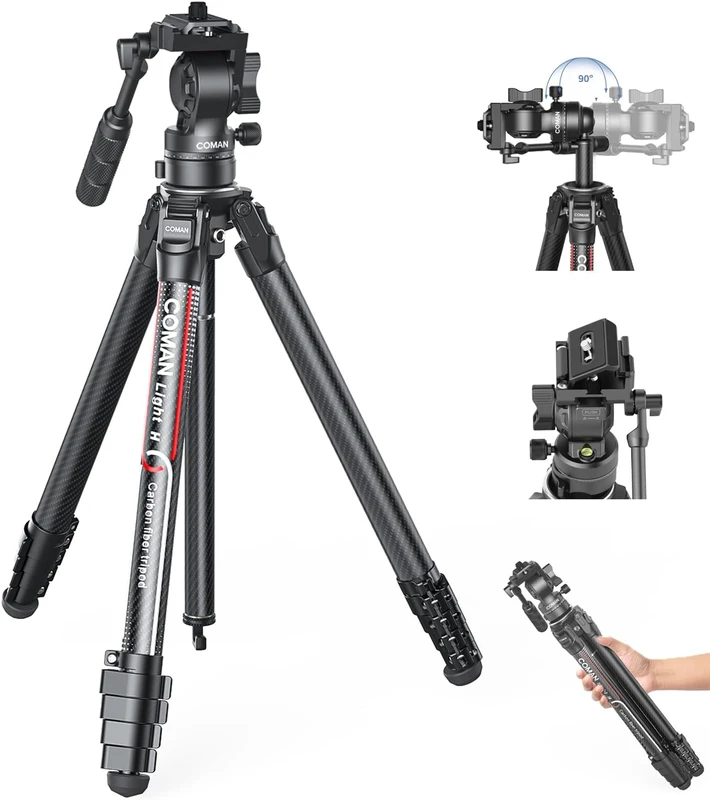
The integration of AI-assisted leveling and modular accessories is emerging in high-end tripods, with brands experimenting with sensor-based stabilization for enhanced image quality in challenging environments. Lightweight materials beyond carbon fiber, such as graphene composites, are under research to further reduce weight while maintaining structural integrity. Additionally, manufacturers are focusing on eco-friendly production methods, responding to increasing consumer demand for sustainable gear.
Photographers are also shifting toward hybrid solutions that combine still photography and video capabilities, prompting tripod designs to evolve with interchangeable heads and adaptive leg systems. These innovations aim to streamline the user experience, reducing gear redundancy during travel.
| Tripod Model | Material | Load Capacity (kg) | Folded Length (cm) | Weight (kg) | Price Range (USD) |
|---|---|---|---|---|---|
| SIRUI Traveler 5C | Carbon Fiber | 8 | 39 | 1.5 | ~$300-$350 |
| Peak Design Travel Tripod | Carbon Fiber | 20 | 39.6 | 1.56 | ~$600-$700 |
| 3 Legged Thing Bucky | Carbon Fiber | 18 | 44 | 1.6 | ~$450-$500 |
| Manfrotto BeFree GT | Aluminum/Carbon Fiber Mix | 10 | 41 | 1.3 | ~$250-$300 |
| Benro GoPlus Travel | Aluminum | 10 | 38 | 1.6 | ~$150-$200 |
| Ulanzi TT09 | Carbon Fiber | 8 | 42 | 1.5 | ~$250-$300 |
| Feisol CT-3342 | Carbon Fiber | 15 | 46 | 1.8 | ~$650-$700 |
FAQ
What is the advantage of carbon fiber tripods over aluminum for travel photography?
Carbon fiber tripods offer a superior strength-to-weight ratio, reducing overall weight by up to 40% compared to aluminum while providing enhanced vibration damping. This makes them more comfortable to carry during travel and more stable for long-exposure shots.
How do I choose the right load capacity for my travel tripod?
Select a tripod with a load capacity at least three times the combined weight of your camera body, lens, and accessories. This ensures stability and prevents vibrations, especially when using telephoto lenses or heavy video equipment.
Are ball heads or fluid heads better for travel photography?
Ball heads provide quick and flexible positioning ideal for still photography, while fluid heads offer smooth, controlled movements suited for video shooting. The choice depends on whether your travel primarily involves photography or videography.
Can I use a lightweight travel tripod for telephoto lens photography?
Yes, provided the tripod’s load capacity supports the weight of your telephoto lens and camera. Carbon fiber tripods like the Peak Design Travel Tripod and 3 Legged Thing Bucky are engineered to handle heavy telephoto setups with adequate stability.
What features improve the setup speed of travel tripods?
Features such as twist-lock leg mechanisms, integrated quick-release plates, and compact ball head designs contribute to faster setup and tear-down times, enhancing usability in fast-paced travel environments.
Selecting a lightweight travel tripod involves balancing multiple factors—material technology, load capacity, portability, and price. Photographers should align their choice with their shooting style, gear weight, and travel conditions. As carbon fiber tripods continue to evolve with innovative design and material advances, they remain indispensable tools for capturing high-quality images on the move.
For detailed reviews and the latest models, visit best lightweight backpacking tripods and explore the engineering behind premium options at Peak Design Travel Tripod official site.