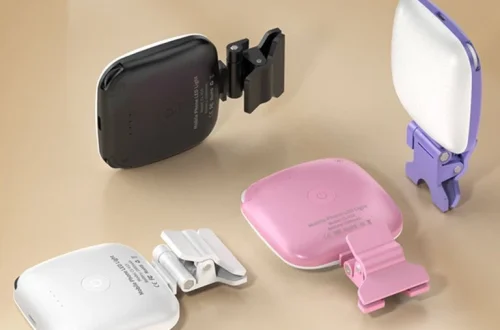
SnapRoamer.com – Compact lighting for travel photography involves using pocket-sized LED panels, RGB tubes, or mini flashes to supplement ambient light without the bulk of studio gear. The goal is to balance portability with enough lumen output and color accuracy (CRI) to illuminate subjects effectively in diverse environments. The COLBOR PL8B stands out as a primary example of extreme portability, weighing only 187g.
The Travel Lighting Decision Matrix: LED vs. Flash
Choosing between continuous LED and flash depends on your travel style. Use continuous LEDs (like Lume Cube or COLBOR) for vlogging and seeing results instantly. Use compact flash (like Godox or Profoto) for high-speed outdoor portraits and maximum power to overpower sunlight.
Continuous lights are the easiest to use because you know exactly what you are getting, providing an instant preview of the light’s position and intensity. This “what you see is what you get” workflow eliminates the guesswork found in strobe photography. However, users may find that low-power units lack the intensity required to compete with natural daylight.
The Vlogger’s Choice: Continuous LED
For creators focusing on video or hybrid photography, continuous sources like Lume Cube or NEEWER mini lights are standard. These units are ideal for mobile vlogging and quick selfie fill light. While they lack the raw burst power of a strobe, they allow for immediate adjustments to shadows and highlights. If a user needs more coverage, full-size panel lights offer higher lumen output and broader soft light coverage, making them better suited for stationary studio setups or professional interviews.
The Portraitist’s Choice: Compact Flash
Photographers capturing high-speed action or bright outdoor portraits often require the instantaneous power of a flash. Professional systems from Profoto or Godox provide the necessary intensity to freeze motion. High-speed sync (HSS) is a critical technique here, allowing for faster shutter speeds even in bright light conditions to maintain a shallow depth of field. While more complex to master, flash remains the superior choice for overpowering the sun.
| Light Type | Best Use Case | Key Advantage | Portability |
|---|---|---|---|
| Mini LED | Vlogging & Selfie Fill | Instant preview | Pocket-sized |
| Full-size Panel | Interviews & Studio | Broad coverage | Bulkier/Stationary |
| Compact Flash | Outdoor Portraits | Overpowers sunlight | Medium |
When selecting gear, travelers must weigh the high power of a flash against the intuitive nature of an LED. The right choice depends on whether you prioritize raw punch or rapid-fire content creation.
Weight vs. Lumen: Finding Your Efficiency Sweet Spot
Efficiency in travel photography is measured by the ratio of light output to the weight added to a backpack. The COLBOR PL8B demonstrates this extreme, providing illumination at a mere 187g. When evaluating gear, travelers must distinguish between the raw lumen output of a flashlight and the controlled output of a photography light.
A J5 Tactical V1-Pro flashlight provides 300 lumens, which can serve as an emergency light source, but it is not a specialized photographic tool. In contrast, specialized kits like the Harlowe Max 120W LED video light setup offer massive power but are unsuitable for light hiking. For those seeking a middle ground, the Harlowe Mini II operates in a 20W power range, while the Max Air Portable LED Light Kit provides 40W. Understanding these wattage and lumen values prevents the mistake of carrying heavy 120W setups when a 20W portable unit would suffice for most ambient light supplementation.
Mastering Color: CCT and the Importance of CRI
High Color Rendering Index (CRI) ensures skin tones look natural. Look for lights with a CRI of 95+ (like ESDDI) and adjustable color temperatures ranging from warm 2500K to cool 8500K to match various environments and prevent color casts.
color temperature is measured in Kelvin (K). A lower value, such as 2500K, produces a warm yellow light, while a higher value, such as 8500K, produces a cool, blue-toned light. The COLBOR CL60R offers a versatile range, spanning from a warm 2700K to a cool 6500K. This flexibility is vital when shooting in environments with mixed lighting, such as a hotel room with warm incandescent bulbs and cool window light.
Understanding Kelvin Scales
To ensure clean images, photographers should match their light to the ambient environment. For example, a light set to 2500K provides a warm yellow tone, whereas a setting of 8500K produces a cool white light. Most modern travel lights allow users to toggle between CCT (Correlated Color Temperature) and RGB modes through their onboard interface.
Why CRI Matters for Skin Tones
The Color Rendering Index (CRI) measures how accurately a light source reveals the true colors of an object compared to natural sunlight. A light with a CRI of 97, such as the COLBOR CL60R, ensures that skin tones remain vibrant and lifelike. In contrast, lights with low CRI can make subjects appear sickly or grey. For professional-grade results, ESDDI lights are noted for maintaining a CRI of 95+.
The Stealth Factor: Lighting Without Drawing Attention
In many travel destinations, maintaining a low profile is essential for street photography or visiting sensitive cultural sites. Using large, conspicuous rigs can be intrusive or even unsafe.
A large flash or bright LED panel can disrupt the atmosphere of a crowded market. For discreet illumination, travelers often use tools like Pelican headlights for hands-free light during night hiking. Even a J5 Tactical flashlight, priced at approximately $14, can provide a subtle burst of light for a quick shot without signaling a professional shoot is in progress.
Photographers can use several improvised techniques to mitigate harsh shadows:
- Bouncing Light: If using a flash, point it at a white ceiling or wall rather than directly at the subject to spread the light.
- Fabric Diffusion: Use a thin, translucent white cloth or even a napkin to cover the LED panel, which softens the light output.
- Reflectors: Use a small piece of white cardstock to bounce the light back into the shadowed side of a face.
These improvised tools can boost brightness significantly, though they differ from professional gear like barn doors or honeycomb grids. For a traveler, using a simple piece of white paper to transform a harsh mini-LED into a soft fill light is an essential skill.
Shortcut: To extend battery life on most LED panels, reduce the brightness to 50% or lower the color temperature to a warmer setting, which often draws less power than high-intensity cool white modes.FAQ
How do I fix incorrect color temperature in travel photos?
To achieve an accurate measurement for your specific environment, use the camera’s manual white balance function. According to industry best practices, taking a photo of a gray card—which may have a light reflection of approximately 17.68 percent—can help the camera recognize the Kelvin value correctly.
Can I use a flashlight for photography?
Yes, compact flashlights like the J5 Tactical (300 lumens) can serve as emergency fill light, but they lack the soft, controlled output of dedicated LED panels. They are best used for very quick, high-contrast shots where softness is not a priority.
What is the benefit of RGB mini lights?
RGB lights provide 360° color control and special effects like ‘party’ or ‘police car,’ making them ideal for creative background lighting and mood setups in travel content. They allow you to add a splash of color to a scene without needing multiple light sources.