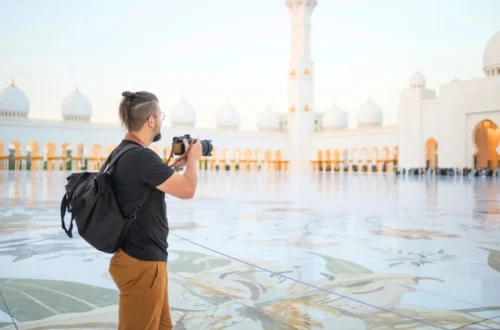
SnapRoamer.com – Smartphone street photography requires balancing the legal reality that there is no right to privacy in public spaces in the United States with the ethical mandate to respect human dignity. As noted by the “Do Street Photography” philosophy, practitioners should aim to be street photographers without being “a dick.” This means prioritizing a subject’s comfort over the shot and maintaining respectful boundaries.
Vivian Maier once described herself as “a sort of spy,” a sentiment that defines the tension between candid observation and social intrusion. This internal conflict between being an observer and a participant is magnified when using a device that is ubiquitous in social interaction.
The ‘Non-Photographer’ Camouflage: Blending into the Urban Fabric
To avoid social stigma, use ‘non-photographer’ camouflage by mimicking common smartphone behaviors. Instead of holding your phone like a camera, hold it at chest level as if navigating via GPS or texting. Use the volume button as a physical shutter trigger to avoid tapping the screen, which can look suspicious or ‘eager’ to bystanders.
Social discomfort often arises when a photographer exhibits agitated body language. According to James Maher, eye contact can trigger an evolutionary response that makes a person notice you immediately. Moving with excessive eagerness or appearing in a rush can cause bystanders to perceive the behavior as predatory rather than artistic.
Mastering the ‘Fake Phone Call’ maneuver
One effective technique to mitigate suspicion is the “Fake Phone Call” maneuver. This involves holding the device to the ear or at chest level while appearing to engage in a conversation. This allows the photographer to sidle up to a subject or frame a shot while maintaining the appearance of a standard mobile user. To execute this effectively, use the physical volume button as a shutter trigger, which prevents the distinctive tapping motion on the screen that signals an intentional photo capture.
Body language: Avoiding the ‘agitated’ look
To maintain a presence that does not disrupt the environment, photographers should implement specific physical habits. Avoid these common pitfalls:
- Direct eye contact: Looking directly at a subject can make them feel watched. Instead, use the “Look Through” method, where you aim the device at a scene but appear to be looking at something slightly behind or beside the subject.
- Sudden movements: Rapidly raising a phone to eye level is a high-signal movement.
- Aggressive stance: Standing in the middle of a walkway or blocking pedestrian flow creates immediate friction.
Successful street photography often involves appearing uninterested in the scene. By adopting the posture of a tourist checking a map or a commuter waiting for a bus, the photographer achieves a level of anonymity that a large DSLR cannot match.
The Digital Handshake: Social Media and Post-Capture Ethics
Moving a captured image from a local device to a global platform expands the ethical implications of the work. Even when a shot is legally permissible, respecting another person’s wishes is more important than the legality of the upload.
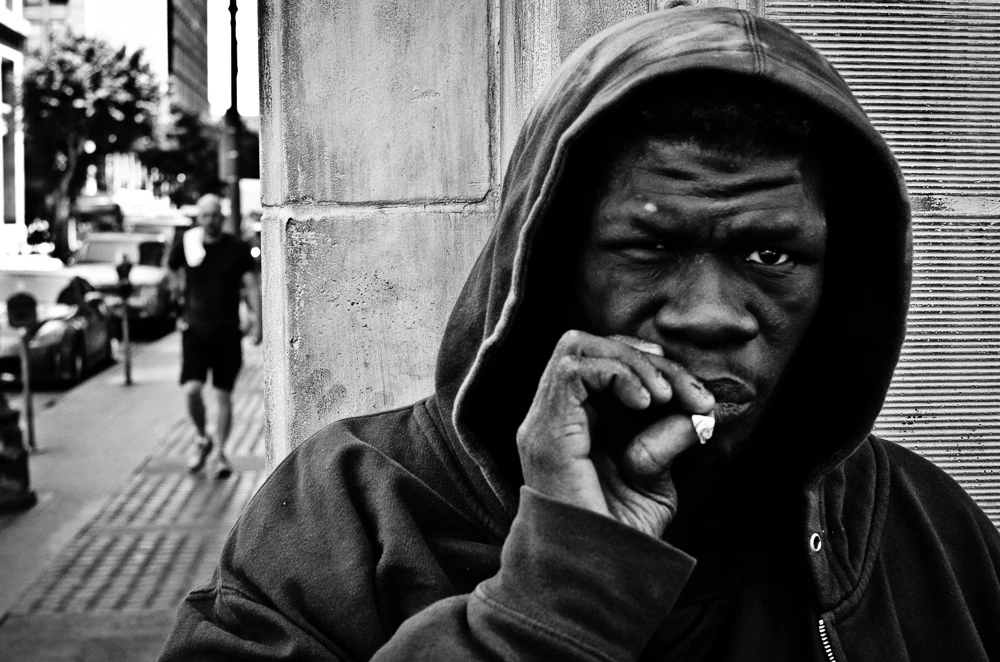
A significant ethical pitfall involves the depiction of vulnerable populations. Photographing homeless people can be exploitative, especially when images are used purely for engagement or “likes” on social media platforms. Even if a subject does not explicitly object, the power imbalance inherent in photographing someone in a moment of hardship requires extreme sensitivity and restraint.
When to blur: Protecting identity in the age of facial recognition
Mobile devices are uniquely suited for capturing moments in public transportation settings. When a photo captures a private moment that feels intrusive, applying an intentional blur can preserve the artistic essence of the scene without compromising the subject’s anonymity. This technique can be achieved by locking focus on a close object and using the exposure adjustment slider to blur the background.
Handling DM requests for photo removal
If a subject contacts a photographer via Direct Message (DM) to request the removal of an image, the most professional response is compliance. While legal frameworks in the United States generally protect the right to show and sell street photography as art, the social contract of photography suggests that a request for removal should be honored. Prioritizing human connection over a single frame prevents the escalation of conflict and upholds the reputation of the photographic community.
Legal Realities vs. Moral Imperatives
In the United States, there is generally no legal right to privacy in public spaces. However, ethical street photography dictates that respecting a subject’s wishes—such as deleting a photo upon request—is more important than exercising your legal right to capture the image.
The Nussenzweig v. DiCorcia ruling serves as a cornerstone for street photographers, protecting the ability to show and sell street photography as art. This legal protection ensures that the act of capturing public life is not criminalized. However, legal permission is not a moral blank check. There is a distinct difference between what a court allows and what a respectful member of society does.
Practitioners often find that the “legal vs. ethical” debate is a false dichotomy. While you may have the right to keep a photo of a person walking down a sidewalk, if that person expresses discomfort, the ethical choice is to prioritize their dignity. This approach avoids the “predator” label and ensures that street photography remains a respected art form rather than a source of public irritation.
Technical Etiquette: Managing Your Device in Public
Technical settings can inadvertently break a photographer’s anonymity. Using a flash or allowing a shutter sound to play during a candid moment can instantly transform a scene into a confrontation.
To maintain stealth, the device must be configured to be as silent as possible. Most modern smartphones allow for deep customization of notification and shutter sounds. Using a physical button to trigger the shutter is often more discreet than interacting with the touchscreen, which can emit light or sounds that alert bystanders.
Shortcut: Use the Volume Button as a physical shutter trigger to avoid the visual cue of tapping the screen.
Silent Mode: Preventing the ‘shutter sound’ giveaway
The most common technical failure in street photography is the accidental “shutter sound” giveaway. Even in “Silent Mode,” some devices may still emit a haptic vibration or a subtle mechanical click. Ensuring that all system sounds are completely suppressed is a prerequisite for candid work. This is especially critical in quiet environments like museums or libraries where any noise is magnified.
Using the Volume Button for stealthy shutter release
Beyond sound, the physical motion of tapping a screen can be a tell-tale sign. By mapping the shutter function to the volume buttons, a photographer can keep their hands in a natural position—such as holding the phone at chest level—while still capturing the frame. This reduces the “camera-ready” posture that often triggers subject awareness.
The AI Ethics Layer: Editing vs. Falsifying
The rise of mobile AI-driven editing tools introduces a new gray area in street photography. While traditional darkroom techniques focused on enhancing what was present, modern generative AI can add or remove elements entirely. This creates a tension between artistic expression and the documentary “truth” of the street.
Ethical street photography relies on the authenticity of the moment. Using tools to adjust the Exposure Adjustment Slider in a native camera app to correct for lighting or to create an intentional blur is generally accepted as standard practice. However, using generative fill to remove a distracting person or an object from a scene moves the work from “street photography” into the realm of digital illustration.
The line between exposure adjustment and generative manipulation
The distinction lies in the intent of the modification. Adjusting the light, contrast, or color to better reflect the mood of the scene is an extension of traditional photography. Conversely, altering the physical contents of the frame—such as removing a trash can or a passerby—falsifies the historical record of that moment. For those documenting the human condition, maintaining the integrity of the scene is paramount.
Maintaining the ‘truth’ of the street moment
When using mobile apps like Snapseed for cropping or color correction, photographers should aim to enhance the existing reality rather than manufacture a new one. The goal of street photography is to tell a story about the world as it is. If the “truth” of the moment is lost to excessive AI manipulation, the work loses its primary value as a candid observation of life.
Smartphone vs. Traditional Gear: The Discretion Advantage
While high-end gear is a common interest, the smartphone offers unique social advantages. The primary difference lies in the “social footprint” each device leaves behind.
A traditional professional setup can be intimidating. For example, a high-end Sony system with various accessories can easily cost 4000 AUD or more. Such a setup signals “professional photographer” to everyone in the vicinity, which can immediately end the possibility of candid, unposed shots. In contrast, the smartphone is a tool of the masses, allowing the photographer to blend into the crowd.
| Criterion | Smartphone | Traditional Camera (e.g., Leica/Sony) |
|---|---|---|
| Street Photography Utility | High (Simplicity & Accessibility) | High (Image Quality & Control) |
| Social Footprint | Minimal (Blends in) | Significant (Draws attention) |
| Cost/Complexity | Low (Most already own one) | High (Can exceed 4000 AUD) |
| Discretion | Excellent | Moderate to Low |
Ultimately, as noted by Joe Van Wyk, it is not about the equipment; it is about the moments you capture and the stories you tell. The smartphone’s ability to facilitate mindful photography—focusing on the moment rather than the technical minutiae—makes it a formidable tool for the ethical street photographer.
FAQ
Is it legal to take photos of people on the street with my phone?
In the United States, there is generally no right to privacy in public spaces, meaning you can legally photograph people. However, ethical practice suggests respecting requests to delete images to avoid unnecessary conflict and maintain social harmony.
How can I take candid photos without looking creepy?
Avoid direct eye contact and use the “Look Through” method. Mimic a casual user by holding your phone as if you are texting or navigating via GPS, rather than aiming it directly at subjects with a focused, intense gaze.
Should I delete a photo if someone asks me to?
Yes. While you may have the legal right to keep the image, prioritizing human respect and the comfort of the subject over a single photograph is the hallmark of an ethical and professional street photographer.