SnapRoamer.com – The best lightweight lighting gear for backpacking photographers prioritizes a high lumen-to-gram ratio, combining versatile continuous LED panels for real-time feedback with high-output headlamps for navigation. Key essentials include ultra-compact RGB lights like the Ulanzi SL02, solar-powered charging systems, and specialized mounting solutions to avoid the weight of traditional tripods. A single Peak Design Capture Clip weighs only 84g, transforming how photographers access gear on the move.
The Weight-to-Lumen Math: Deciding What to Pack
To optimize your kit, calculate the ‘Weight-to-Lumen Ratio’ by dividing total lumens by the weight in grams. Prioritize gear that offers high output (like the 2800lm Fenix PD36R Pro) while maintaining a low gram count, ensuring you don’t sacrifice essential illumination for unnecessary bulk during long treks.
Calculating your efficiency score
Backpacking requires a mathematical approach to gear selection. Instead of simply packing the brightest light, photographers should evaluate how much illumination they receive per gram of pack weight. For example, a high-performance flashlight like the Fenix PD36R Pro provides 2800lm of light. When compared to larger, heavier professional lighting rigs, this compact unit offers a superior ratio for those moving between campsites and shooting locations.
Scoring efficiency requires evaluating specific hardware metrics:
- Lumen Density: The total output divided by the weight in grams.
- Runtime Utility: The duration of light provided at specific modes, such as the Nitecore MH12S which offers 1500 hrs of runtime on ultra-low mode.
- Power Versatility: The ability to recharge via standard USB-C or solar inputs.
The diminishing returns of high-lumen tactical lights
A common misconception is that a higher lumen count always equates to better photography. In reality, a tactical light with extreme output can create harsh, unflattering shadows that are difficult to correct in post-processing. Furthermore, heavy-duty lights often suffer from a specific failure mode: rapid battery depletion when run at maximum brightness, leaving a photographer in total darkness before a shoot is complete. Using a light that is too powerful for the subject often results in “blown-out” highlights that lose all texture.
Scenario-Based Kit Builders: From Astro to Wildlife
Photographers must select gear based on the specific environmental demands of the shoot, such as the difference between a mountain ridge and a rainforest.
The Astro-Photographer Kit: Red light and long exposures
To preserve night vision, practitioners recommend using a headlamp with a dedicated red light setting. This prevents pupil constriction, allowing for safer navigation around gear without losing the ability to see faint celestial details. For light painting, using external sources to illuminate specific landscape elements can add dimension to long exposures.
The Wildlife Content Creator Kit: Fast RGB fill and mobility
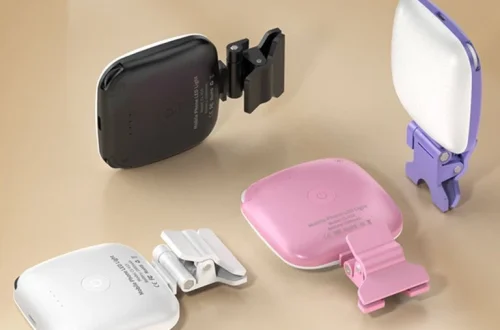
Wildlife photographers often face the challenge of low light during dawn or dusk. For these scenarios, mobility is the priority. An ultra-compact RGB light, such as the Genaray Mochi, provides a cost-effective solution at just $29. This allows for quick, color-accurate fill light without the bulk of a traditional studio setup. When working in unpredictable weather, specialized protection is required; even a simple camera rain cover or a gallon freezer zip-lock bag can prevent moisture from damaging sensitive electronics.
| Gear Type | Primary Use Case | Weight/Power Metric | Key Advantage |
|---|---|---|---|
| Continuous LED | Portraits & Video | Ulanzi/Genaray (Compact) | Real-time visual feedback |
| Speedlights | High-speed action | Westcott FJ80 II (80Ws) | Overpowers ambient light |
| Headlamps | Navigation/Astro | Nitecore (High runtime) | Hands-free operation |
| Solar Power | Long-term charging | Goal Zero Nomad 20 | Sustainable energy source |
The table compares essential gear, from the 80Ws Westcott FJ80 II to the 2.28 lbs Goal Zero Nomad 20, to help balance power against pack weight.
Continuous LED vs. Flash: The Backpacking Trade-off
The choice between continuous LED and flash depends on whether the priority is visual control or the ability to overpower ambient light.
Why LEDs win for real-time visual feedback
The primary advantage of continuous LED lighting is the ability to see exactly how shadows fall and how colors interact before the shutter is pressed. This is particularly useful when using bi-colour lighting to create depth. By choosing a fixed white balance biased toward the key light’s temperature, a photographer can let a cooler backlight appear as a blue-tinted separation, adding professional dimension to a portrait. However, photographers must avoid Auto White Balance in these setups, as the camera will attempt to neutralize the intentional temperature contrast, effectively undoing the depth effect.
When the Westcott FJ80 II’s 80Ws power is non-negotiable
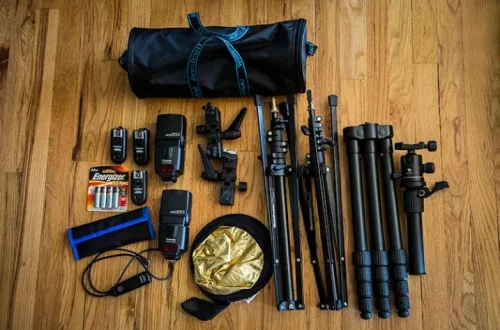
While LEDs offer control, they often lack the “punch” required to overpower bright ambient light. In scenarios where you must freeze motion or shoot in high-contrast environments, a dedicated speedlight is necessary. The Westcott FJ80 II, for instance, provides 80Ws of power, offering a level of luminance that small LED panels cannot match. For backpacking, the trade-off is clear: you gain the ability to overpower the sun or harsh midday light, but you accept the added weight and complexity of a flash system.
Power Management and Thermal Failure Modes
Environmental variables can impact energy availability. A failure to account for temperature or charging logistics can render a kit useless mid-expedition.
Combatting battery drain in sub-zero temperatures
Cold weather significantly accelerates battery drain. To mitigate this, photographers should employ the technique of carrying extra batteries in an inner jacket pocket to utilize body heat and maintain chemical stability.
Solar charging strategies with Goal Zero Nomad 20
For long-duration expeditions, relying solely on internal batteries is insufficient. Combining a solar panel, such as the Goal Zero Nomad 20, with a portable power bank is the most efficient way to maintain energy. While the Nomad 20 weighs approximately 2.28 lbs, it provides a sustainable way to recharge essential devices. Industry analysts note that for lighting, editing, or commercial work, a portable power station or a robust solar-to-power-bank pipeline is superior to relying on camera batteries alone, which only go so far.
Rigging and Mounting Without the Tripod Weight
A heavy tripod is often the first item removed from a minimalist backpacking kit, but this creates a stability challenge when using external lights. Relying on improvised mounts can lead to “toothpick” stability, where the gear is too flimsy to support the weight of the camera and lens.
Marc Bergreen has noted that “Beware of ultralight versions, having your camera rest on toothpicks is never a good idea.” To avoid this, photographers must calculate the weight of their heaviest camera and lens combination and ensure any mounting solution meets the manufacturer’s load capacity rating.
Shortcut: To quickly secure a light to a backpack strap or a tree branch, use a small carabiner combined with a lightweight mounting clamp rather than attempting to balance the unit on a ledge.
One creative solution for stable, lightweight mounting is utilizing ultralight camping chairs as stable light platforms. These chairs provide a much more consistent base for a light stand or a small LED panel than uneven ground, without the massive weight penalty of a professional tripod.
FAQ
How do I prevent my camera batteries from dying in the cold?
Keep extra batteries in an inner jacket pocket to utilize body heat, as extreme cold significantly accelerates battery drain and can cause sudden power loss during critical shots.
Is it better to use a flash or an LED panel for backpacking?
LED panels are lighter and offer real-time visual feedback, which is excellent for portraits. However, flashes like the Westcott FJ80 II provide higher power (80Ws) to effectively overpower ambient light in high-contrast scenarios.
Can I use a solar charger to power my lighting gear?
Yes, combining a solar panel like the Goal Zero Nomad 20 with a power bank is the most efficient way to maintain energy for long-duration shoots while minimizing the need to carry heavy spare batteries.