SnapRoamer.com – To optimize background blur in travel food photography, use a wide aperture (low f-number like f/2.8) to create bokeh, increase the distance between your subject and the background, and use a longer focal length. For the best results at a 45-degree angle, aim for an aperture between f/2.8 and f/5.6.
80% of food photographers rely on Aperture Priority (AV) to manage depth of field effectively.
Avoiding the ‘Too Shallow’ Trap: When Blur Destroys Food Texture
The ‘too shallow’ trap occurs when an aperture is so wide that the front edge of the plate or the essential textures of the food fall out of focus. To prevent this, use a slightly higher f-number (f/4 to f/5.6) or increase your distance to the subject to maintain sharpness on the main dish.
A common failure mode in travel photography is the loss of appetizing detail. When the aperture is set to an extremely wide setting, such as f/1.4, the depth of field becomes so thin that only a microscopic sliver of the dish remains sharp. This results in a photo where the sauce or garnish looks like a blurry smudge rather than a textured ingredient.
The f/2.8 vs f/5.6 dilemma
Choosing between f/2.8 and f/5.6 depends entirely on the geometry of your shot. While f/2.8 provides intense isolation, it risks making the plate look disconnected from the environment. Conversely, moving to f/5.6 increases the area in focus. This ensures that the entire subject, from the front rim of the bowl to the back of the protein, remains legible to the viewer.
Maintaining texture in macro-style shots
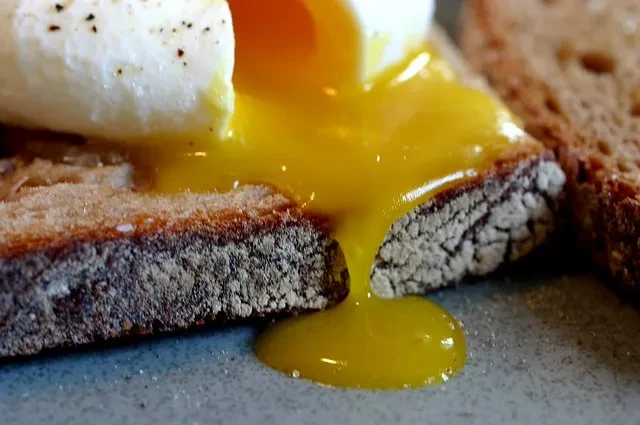
When shooting close-up, the physics of light change. To avoid a “blurry mess” failure, practitioners often adjust their settings via the camera menu to ensure the focus plane is perfectly aligned with the most important texture. If the aperture is too wide, the very texture that makes the food look delicious—such as the crust on a piece of bread—is the first thing to disappear.
Street Food vs. Fine Dining: Managing Chaos and Light
Bustling night markets require different strategies than controlled dining rooms. In high-traffic areas, the goal is to isolate the dish from the chaotic movement of people and neon signs in the background.
Apply these specific techniques to manage complex environments:
- Night Market Isolation: Use a wide aperture to turn distant street lights into soft bokeh balls, which masks the visual clutter of a crowded market.
- Restaurant Light Management: In dim settings, use reflectors like white paper, menus, or even small boxes to bounce available light onto the food. This helps soften shadows that might otherwise look muddy.
- Frontal Light Utilization: As noted by Beets & Bones, using frontal light can be effective if your goal is to wash out the background, keeping the colors in focus bright and vibrant.
A frequent error in street photography is camera shake blur. This occurs when a photographer attempts to use a wide aperture in low light but fails to maintain a fast enough shutter speed, or attempts to hand-hold the camera without proper stabilization. This results in a lack of sharpness across the entire frame, regardless of the aperture setting.
The Mechanics of Bokeh: Aperture, Focal Length, and Distance
Bokeh is achieved by using a fast lens at its widest aperture (e.g., f/2.8 or wider) to create a soft, out-of-focus background. You can intensify this effect by increasing your focal length (zooming in) and increasing the physical distance between your food subject and the background elements.
Understanding the interplay of these variables is essential for consistent results. According to Nikon, “Bokeh is defined as ‘the effect of a soft out-of-focus background that you get when shooting a subject, using a fast lens, at the widest aperture, such as f/2.8 or wider.'” This definition highlights that the lens’s speed is a primary driver of the effect.
The relationship between f-numbers and DOF
The relationship between the f-number and Depth of Field (DOF) is inverse. Beets & Bones explains: “The more open the diaphragm, the smaller your depth of field (items in focus). And vice versa – the less open diaphragm is, the larger the area in focus is.” A very open diaphragm is represented by a small f-number like 1.4, while a very closed diaphragm might be 16.
Depth of field is governed by these three variables:
- Aperture Width: A wider aperture (smaller f-number) results in a shorter DOF.
- Focal Length: A greater focal length results in a shorter DOF.
- Subject Distance: A greater distance to the subject results in a longer DOF.
Why sensor size matters for background separation
The physical size of the sensor plays a role in how easily a photographer can manipulate blur. Industry analysts note that larger sensors make it easier to blur a foreground and/or background at a given aperture. This is why full-frame systems often produce a more pronounced separation than smaller sensor formats when using the same f-stop.
Prime vs. Zoom: The Traveler’s Gear Decision Matrix
For a traveler, the choice between a prime lens and a zoom lens involves a trade-off between optical quality and logistical convenience. While zooms offer versatility, primes are often the preferred choice for achieving the highest quality bokeh.
| Lens Type | Background Blur Quality | Travel Flexibility | Weight/Portability |
|---|---|---|---|
| Prime Lens | Stronger and creamier bokeh | Lower (fixed focal length) | Typically smaller and lighter |
| Zoom Lens | Generally less pronounced | Higher (variable focal length) | Often heavier and bulkier |
The weight of the gear is a critical factor for long-haul travel. For example, the Tamron 35-150mm F/2–2.8 Di III VXD weighs approximately 1,165g, which is a significant consideration for a single lens in a backpack. In contrast, a prime lens like the AFS 50 mm F 1.8G can be found for around 200 USD and offers much greater portability.
However, zooms provide a distinct advantage in speed. In busy environments, the ability to change your composition without physically moving can be the difference between catching a dish before it cools or missing the shot entirely. Subroto Mukerji notes that prime lenses help master composition faster because the focal length is constant, forcing the photographer to learn the frame through “zooming with feet.”
Mastering Composition: Angles and Layering Techniques
Professional results rely on how you arrange elements within the frame. Using specific layering and angles can transform a simple plate of food into a visual story.
Use these methods to create depth:
- Layering: This involves offering up a foreground, middle ground, and background to add depth to the visual story.
- Framing: Using objects like cutlery or fabric to frame the main dish tells the viewer exactly where to look.
- Angle Selection: For a 45-degree camera angle, an aperture between f/2.8 and f/5.6 is appropriate to separate the food from the background without losing the dish’s essence.
When shooting at a 90-degree angle (top-down), the concept of background blur changes significantly. In a flat-lay, the “background” is actually the surface the food sits on. To achieve blur here, you must create distance between the food and the surface, or use a very shallow depth of field to blur the edges of the frame.
FAQ
What is the best aperture for food photography?
For a 45-degree camera angle, an aperture between f/2.8 and f/5.6 is ideal to separate food from the background without losing too much detail or making the food look disconnected from the environment.
How can I get more bokeh with a zoom lens?
You can intensify the bokeh effect by increasing your focal length (zooming in) and increasing the physical distance between your food subject and the background elements.
Why is my food photography blurry?
The blur could be caused by camera shake from a slow shutter speed or an aperture that is too wide, which causes the focus to miss the essential textures of the food.