SnapRoamer.com – Street photography legality depends on the distinction between artistic and commercial use. While most Western countries permit photographing people in public for art, the EU’s GDPR and various Asian privacy laws (like India’s DPDP) create strict boundaries regarding the distribution of identifiable data and commercial exploitation without explicit consent.
In South Africa, violating privacy laws (POPIA) can lead to up to 10 years of imprisonment.
The Smartphone Surveillance Trap: Legal Risks of Discreet Capture
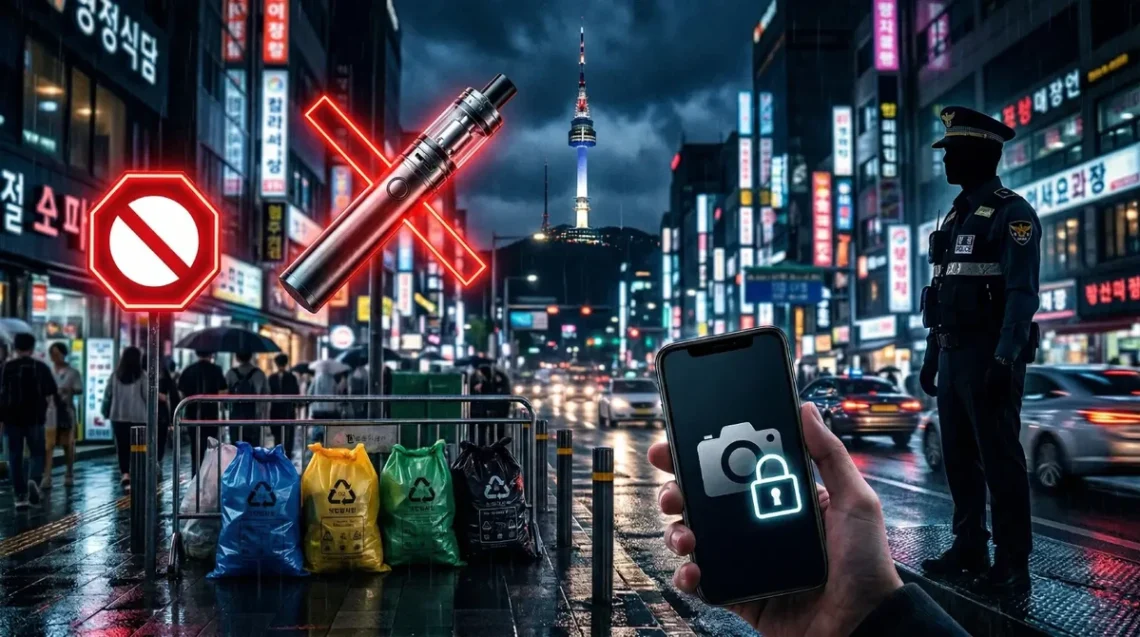
Using a smartphone for street photography increases legal risk because its discreet nature can trigger ‘surveillance’ or ‘hidden camera’ statutes. Unlike a DSLR, a phone’s ability to capture audio (Live Photos) or use stealth modes may lead authorities in jurisdictions like Singapore or Australia to classify the act as illegal surveillance rather than artistic expression.
Live Photos and the Audio Privacy Conflict
Modern mobile features present a specific failure mode for photographers. While a 35 mm or 50 mm lens on a traditional camera captures a static image, a smartphone using “Live Photos” or similar video-capture modes also records ambient audio. This technical nuance can transform a legal photograph into an illegal audio recording in certain jurisdictions. Practitioners report that authorities may view the unintended capture of private conversations as a breach of wiretapping or eavesdropping laws, even if the photographer’s primary intent was purely visual.
The ‘Hidden Camera’ classification in restrictive regimes
In some regions, the small form factor of a phone allows for “shooting from the hip” with extreme ease, but this can backfire. Under Singapore Statutes, the line between a hobbyist and a surveillance actor is thin. If a device is used in a way that mimics a concealed camera, it may trigger legal scrutiny. This is a counterintuitive risk: the very tool designed to make photography more accessible can inadvertently categorize the user as a security threat rather than an artist.
The Digital Search Protocol: Handling On-Site Confrontations
The Institute of Photography notes that it is your right as a photographer to take a photo of whatever subject you like, providing your subject is not in a place where they might reasonably expect privacy, such as their own home. However, when a subject or authority challenges you, the interaction requires immediate tactical adjustment.
Serge van Neck suggests that “If you’re following the rules, you’re not doing anything illegal, immoral or fattening.” To maintain this standing during a confrontation, use social engagement. A smile, a nod, or a quick chat can turn a skeptical glance into a collaborative experience. Avoid defensive posturing; instead, demonstrate transparency.
Shortcut: If an authority asks to see your device, do not immediately unlock the entire phone. Use the “Search” function or specific photo albums to show only the relevant images to prevent unnecessary exposure of private data.
- Identify the concern: Determine if the issue is the act of photography or a specific location.
- Offer a demonstration: Show the image on the screen to prove it is artistic in nature.
- Maintain composure: Use calm, non-confrontational language to de-escalate the situation.
To secure your digital footprint, use your phone’s “Info” or “Details” menu to remove precise GPS coordinates. This step mitigates the risk of authorities accessing sensitive location data during a manual inspection.
Global Privacy Frameworks: From GDPR to DPDP
Global privacy laws vary by approach: the EU uses a comprehensive GDPR model focusing on identifiable personal data, while the US employs a fragmented, sectoral approach. In Asia, regimes like India’s DPDP and China’s state-centric model prioritize social harmony and state interests over individual privacy rights.
The European Union operates under the GDPR, which treats identifiable images as personal data. This means that if a person in your street photo is clearly recognizable, you may require their consent before sharing that image online. This is a significant departure from the more permissive environments found in parts of the United States, where 40 percent of states have implemented varying consumer privacy laws, but general public photography remains widely protected for artistic purposes.
| Region | Regulatory Body | Primary Legal Focus | Max Penalty/Risk |
|---|---|---|---|
| European Union | GDPR | Personal Data/Identifiable Imagery | High (Compliance-based) |
| Australia | OAIC | Privacy Act/Data Breaches | 1.8 million AUD |
| India | MeitY | DPDP Act/Data Protection | 250 crores per instance |
| Brazil | Planalto | LGPD/Data Privacy | 50 million BRL per infraction |
| Singapore | Singapore Statutes | Privacy/Surveillance | 1 million SGD or 10% turnover |
| USA | Various (State-level) | Sectoral/Consumer Privacy | Up to $50,000 in Florida |
The table highlights specific financial liabilities, such as the 1.8 million AUD maximum fine for data breach non-compliance under the Australian OAIC. These figures represent the direct economic risks inherent in global street photography.
In India, the MeitY-regulated DPDP Act introduces significant financial stakes, with penalties reaching 250 crores per instance. Similarly, in Brazil, the Planalto-governed framework allows for fines of up to 50 million BRL per infraction. These emerging privacy maturities in India and Brazil represent a shift toward more structured, high-stakes enforcement that photographers must respect.
Artistic vs. Commercial Use: The Line You Cannot Cross
Legal failure often occurs when the boundary between art and commerce is blurred. The Institute of Photography states that the legality of your work depends on how the final image is monetized.
In the United States, Adorama notes that street photography is legal for artistic purposes—you can sell prints, use them in articles, or include them in books. However, you cannot use those same images for commercial or advertising purposes without explicit permission. If a person’s face is used to endorse a brand or a service, you have crossed into commercial territory, which necessitates a model release.
Selling prints vs. advertising products
Selling a limited edition print of a candid street scene is generally considered an artistic endeavor. Conversely, if a company uses that same image in a social media campaign to sell smartphones, the subject of the photo can sue for violation of their right of publicity. This is a common pitfall for mobile photographers who share high-quality work on social media platforms that may be used for sponsored content.
The necessity of model releases
Commercial applications require a legal document granting permission to use an individual’s likeness. Without this signed consent, images cannot be used to promote products or services.
The High Cost of Non-Compliance: Penalties by Region
Legal consequences for privacy violations are not uniform and can range from administrative fines to criminal prosecution. The severity depends heavily on the local regulatory body and the specific nature of the violation.
In Australia, the OAIC oversees the Privacy Act, where the maximum fine for a data breach non-compliance is 1.8 million AUD. For larger entities, a data breach involving a turnover of 3 million AUD triggers mandatory disclosure requirements. In the United States, penalties vary wildly by state: Connecticut may impose $5,000 per willful violation, while Florida can reach $50,000 per violation. This fragmentation requires travelers to be aware of local statutes before they begin shooting.
In more restrictive environments, the risk is not just financial. As previously noted, South Africa’s POPIA can result in 10 years of imprisonment. In Malaysia, a breach of the PDPA can result in a fine of 300,000 MYR. These figures highlight that non-compliance is a high-stakes gamble that can impact personal liberty as much as a bank account.
Mobile-First Ethics: Sanitizing Your Workflow
Managing the digital footprint of subjects is a key component of professional practice. Adorama suggests using post-capture mitigation to handle potentially sensitive images.
To maintain a high ethical standard, consider the following workflow:
- Use blurring apps: If a photo captures a person in a vulnerable or upsetting situation, use mobile applications to blur faces or identifiable features before uploading to social media.
- Sanitize metadata: Before sharing images publicly, use your phone’s “Info” or “Details” menu to remove precise GPS coordinates.
- Manage cloud sync: Be aware that “Auto-Cloud Sync” can immediately upload identifiable images to servers, which may complicate your data privacy standing in certain jurisdictions.
- Respect the subject: If someone asks you to delete a photo, doing so immediately is often the best way to prevent a legal escalation.
The legendary photographer Vivian Maier once remarked, “I am a sort of spy.” While her approach was characterized by a candid, almost invisible presence, modern digital tools require a more conscious approach to privacy. By managing your metadata and being mindful of the “Live” features of your smartphone, you can honor the spirit of street photography while respecting the evolving global landscape of privacy rights.
FAQ
Is it legal to take photos of people in public without asking?
In the UK, it is completely legal to photograph members of the public in public places, including on public transport. However, in the EU, the GDPR may require consent if the subject is clearly identifiable and the image is being shared or distributed, as identifiable imagery is considered personal data.
What is the difference between artistic and commercial use?
Artistic use includes activities like selling fine art prints, publishing books, or including photos in journalistic articles. Commercial use involves using the image to promote, sell, or advertise a product or service, which requires consent.
Can I be arrested for street photography in a foreign country?
Yes. Arrests can occur if you trespass on prohibited government property, such as railway yards or military bases, or if your smartphone usage is classified as illegal surveillance under local statutes, such as those found in Singapore.