SnapRoamer.com – Smartphone tripods have become essential tools for mobile photographers and videographers aiming to elevate their content quality. Selecting the right tripod involves careful consideration of compatibility, stability, portability, adjustability, and accessory support. Key features such as secure phone mounts, robust material construction, versatile tripod heads, and integrated Bluetooth shutter remotes directly impact performance across varied shooting environments.
Ensuring a tripod fits a wide range of smartphone sizes—including devices with bulky cases—requires adjustable phone holders typically equipped with spring-loaded clamps or sliding arms. These mounts must provide firm grip without risking damage to the phone, accommodating modern smartphones with screen sizes often exceeding 6.5 inches diagonally. Tripods like the Joby GorillaPod 1K Kit excel here, offering flexible, silicone-gripped clamps that maintain stability with diverse phone models. Compatibility with both iOS and Android smartphones is a baseline expectation, especially when using Bluetooth shutter remotes to trigger the camera remotely.
Stability remains paramount in tripod selection. Tripods constructed from aluminum or carbon fiber blends strike an optimal balance between strength and weight, critical for maintaining steadiness during long exposures or video recording. The NEEWER TS003 model, for instance, employs anodized aluminum legs combined with polymer joints to enhance durability and reduce vibration. Anti-slip rubber feet and vibration-damping materials further prevent camera shake on uneven surfaces, a necessity for outdoor or travel photography where terrain varies. Load capacities exceeding 0.5 kg ensure support not only for smartphones but also lightweight accessories such as LED lights or microphones.
Portability is a defining characteristic for users who shoot on the move. Mini tripods and flexible tabletop models offer compactness without sacrificing essential functionality. The Ulanzi ST-27, a popular flexible tripod, folds down to a pocket-friendly size yet features bendable legs that secure the tripod to irregular surfaces like tree branches or railings, enabling creative angle exploration. Weather resistance and corrosion-proof coatings are increasingly common, safeguarding tripods against moisture and dust encountered during outdoor shoots. This durability extends the lifespan of the tripod and maintains performance reliability in diverse environments.
Tripod head mechanisms significantly influence ease of use and framing precision. Ball heads provide smooth, multi-angle rotation, allowing photographers to quickly adjust the smartphone’s orientation with a single locking knob. Pan-tilt heads, favored for controlled incremental adjustments, enable separate control over vertical and horizontal axes but tend to be bulkier. For smartphone users needing rapid repositioning during dynamic shoots, ball heads offer superior versatility. Many premium tripods combine ball heads with quick-release plates for fast mounting and dismounting, streamlining workflow.
Accessory mounting options are vital for content creators integrating additional equipment. Cold shoe mounts and standard 1/4-inch screw threads enable attachment of microphones, LED lights, or secondary cameras. This modularity is essential for enhancing audio and lighting quality or capturing multi-angle footage. The Joby GorillaPod 1K Kit stands out with integrated cold shoe mounts on its ball head, providing seamless accessory integration without compromising stability. Tripods lacking these mounts require separate adapters, which can introduce instability or inconvenience.
Bluetooth shutter remotes compatible with iOS and Android devices enhance shooting efficiency by minimizing camera shake and facilitating hands-free operation. These remotes typically connect via Bluetooth Low Energy (BLE), offering low latency and reliable triggering within ranges up to 10 meters. Their inclusion is particularly beneficial for solo photographers or vloggers using tripods in static or dynamic setups. Some remotes incorporate timer functions and burst modes, expanding creative possibilities.
Use cases for smartphone tripods span travel, outdoor adventures, professional studio setups, and casual content creation. Travel photographers prioritize lightweight, foldable tripods with flexible legs to adapt to unpredictable surfaces. Outdoor videographers benefit from vibration-damping features and weather-resistant materials to maintain image quality in rugged conditions. Tabletop tripods support product photography and live streaming, where stable, adjustable positioning is crucial. Creative shooting techniques leverage flexible tripod legs to wrap around poles or uneven terrain, enabling novel perspectives.
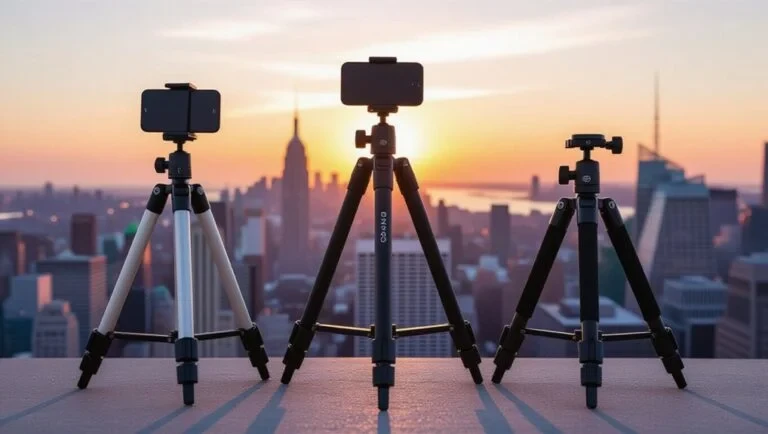
Several models consistently receive favorable reviews in professional tests. The Joby GorillaPod 1K Kit garners praise for its flexible, grippy legs, stable ball head, and accessory compatibility. The Ulanzi ST-27 offers a budget-friendly flexible tripod with decent build quality and versatility. The NEEWER TS003 mini tripod combines lightweight aluminum construction, adjustable heads, and portability suitable for casual and semi-professional use. Compared to traditional DSLR tripods, these smartphone-specific tripods emphasize compactness and device-specific mounts while maintaining essential stability and adjustability.
| Feature | Joby GorillaPod 1K Kit | Ulanzi ST-27 | NEEWER TS003 |
|---|---|---|---|
| Material | Aluminum & Polymer | Aluminum & Silicone Grips | Anodized Aluminum & Polymer |
| Phone Mount | Spring-loaded Clamp with Silicone Pads | Adjustable Clamp with Rubberized Grips | Spring-loaded Clamp |
| Tripod Head | Ball Head with Cold Shoe Mount | Ball Head | Pan-Tilt Head |
| Load Capacity | Up to 1 kg | Approx. 0.5 kg | Up to 1.2 kg |
| Portability | Foldable, Flexible Legs | Compact, Flexible Legs | Compact, Foldable |
| Accessory Mounts | Cold Shoe + 1/4″ Screw Thread | 1/4″ Screw Thread | Cold Shoe + 1/4″ Screw Thread |
| Bluetooth Remote | Included, iOS & Android Compatible | Optional | Optional |
The table above summarizes key specifications of leading smartphone tripods, illustrating distinctions in materials, mounting systems, and included accessories. Each model presents unique advantages tailored to different user priorities, from maximum flexibility to professional-grade stability.
Compatibility with Smartphones
smartphone tripods must accommodate a broad spectrum of device sizes and shapes. Adjustable phone holders featuring spring-loaded clamps are industry standards, offering reliable grip regardless of phone thickness or case design. Silicone or rubber padding on clamps prevents scratches and enhances friction, reducing risk of slippage during use. Phones exceeding 7 inches diagonally or those with rugged protective cases require wider adjustment ranges, making modular holders advantageous.
Compatibility considerations extend beyond physical fit. Bluetooth shutter remotes paired with tripods must support both iOS and Android operating systems to ensure broad usability. Many remotes utilize universal Bluetooth protocols but verify manufacturer specifications to confirm seamless integration. Furthermore, tripods designed with quick-release mounts simplify transitions between devices, appealing to content creators who switch frequently between smartphones and small cameras.
Stability and Load Capacity
Stability is crucial for capturing sharp images and steady videos. Tripods constructed from aluminum or carbon fiber deliver superior rigidity compared to polymer-only designs, minimizing flex under load. Carbon fiber variants typically weigh less while maintaining high strength, though at a premium cost. Rubberized or silicone feet enhance grip on smooth or inclined surfaces, preventing slips that compromise shot quality.
Load capacity ratings indicate the maximum supported weight the tripod can hold without risking collapse or excessive vibration. Smartphone tripods generally support between 0.5 kg to 1.2 kg, sufficient for phones plus lightweight accessories like microphones and lights. Exceeding these limits can degrade stability and increase wear. Vibration damping features, such as shock-absorbing joints or elastic mounts, further reduce micro-movements, critical for long-exposure or 4K video recording.
Portability and Durability
Portability enables photographers and videographers to carry their equipment effortlessly across various environments. Mini tripods and flexible leg designs fold into compact forms suitable for backpacks or handbags. Lightweight materials like aluminum alloys and carbon fiber contribute to ease of transport without compromising structural integrity. Weather resistance, including corrosion-proof finishes and sealed joints, protects against moisture and dust ingress, extending the tripod’s service life.
Flexible tripods such as the Joby GorillaPod and Ulanzi ST-27 feature bendable legs coated with silicone grips, allowing attachment to irregular surfaces like poles or branches. This versatility supports creative shooting angles otherwise difficult to achieve. Tabletop tripods prioritize low profile and stable footing on flat surfaces, ideal for product photography or live streaming.
Tripod Head Types and Adjustability
Tripod heads dictate how smoothly and precisely users can position their smartphones. Ball heads offer omnidirectional rotation with a single locking mechanism, enabling swift framing adjustments. Pan-tilt heads split control into two axes—horizontal panning and vertical tilting—facilitating fine-tuned incremental movements, favored in video production. However, pan-tilt heads tend to add bulk and weight.
Some tripods incorporate quick-release plates on ball heads, allowing fast mounting and removal of smartphones or cameras without realigning settings. This feature accelerates workflow in fast-paced shooting environments. Adjustable height is another consideration; telescoping legs or center columns permit elevation changes to suit various perspectives and lighting conditions.
Accessory Mounting Options
Cold shoe mounts and 1/4-inch screw threads expand tripod functionality by enabling attachment of supplementary gear. Cold shoe mounts accommodate microphones, LED lights, or monitors, crucial for enhancing audio-visual quality in video production. Standard 1/4-inch screw threads provide universal compatibility with a wide range of accessories including smartphone holders, action cameras, or secondary devices.
Tripods integrating these mounts—such as the Joby GorillaPod 1K Kit—streamline accessory setup without requiring adapters that may compromise stability. Multiple mounting points facilitate simultaneous attachment of several devices, supporting complex shooting arrangements often demanded by professional content creators.
Bluetooth Shutter Remote Controls
Bluetooth shutter remotes significantly improve shooting efficiency by allowing users to trigger the camera without physically touching the smartphone—reducing motion blur and enabling hands-free operation. Most remotes support both iOS and Android smartphones via Bluetooth Low Energy (BLE) protocols, ensuring fast pairing and low latency.
Advanced remotes offer features like timed delay shots, burst mode, and extended range, broadening creative possibilities. Inclusion of a remote with a tripod package adds value, although standalone remotes remain widely available for users upgrading existing setups. Compatibility verification remains essential to avoid connectivity issues, particularly with newer smartphone models.
Use Cases and Practical Tips
Travel photographers benefit from lightweight, compact tripods that fit easily into luggage, such as the Ulanzi ST-27 or compact mini tripods. Flexible legs enable securing the tripod to unconventional supports, expanding compositional options in outdoor settings. Outdoor videographers prioritize vibration damping and weather resistance to maintain quality in challenging conditions.
Creative shooting techniques include wrapping flexible tripod legs around poles or railings to capture unique angles. Tabletop tripods support product photography and live streaming setups where stable, low-height positioning is needed. For urban environments, quick-adjust ball heads facilitate fast reframing in dynamic scenes.
Recommended Models and Brands
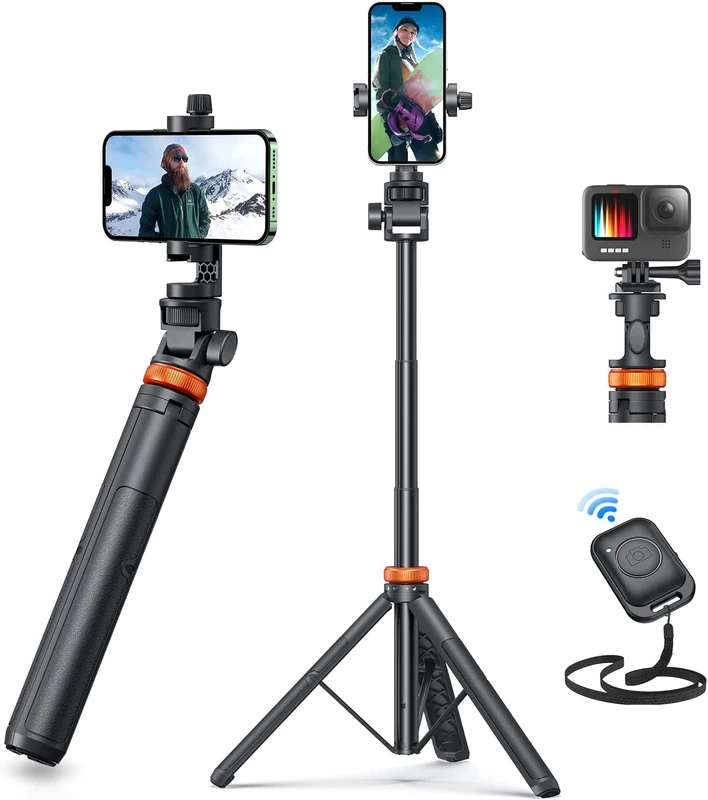
The Joby GorillaPod 1K Kit is widely regarded as a top-tier smartphone tripod, offering a balanced mix of flexibility, durability, accessory integration, and included Bluetooth shutter remote. Its aluminum and polymer construction delivers strength with portability, while the cold shoe mount expands accessory compatibility.
Ulanzi’s ST-27 tripod caters to budget-conscious users seeking a flexible, portable solution with adequate build quality and grip. It is well-suited for casual travel and outdoor photography but lacks integrated remote controls.
NEEWER’s TS003 mini tripod combines lightweight anodized aluminum with a pan-tilt head, offering precise adjustments favored in studio or tabletop contexts. Its higher load capacity supports a broader range of accessories, though it is less flexible than bendable leg tripods.
Compared to traditional DSLR tripods, these smartphone-focused models prioritize compactness and device-specific features, reflecting evolving mobile content creation demands.
Neewer’s guide to phone tripods provides detailed product evaluations, while The New York Times Wirecutter offers expert-backed reviews and stability metrics essential for informed purchasing decisions.
FAQ
What size smartphone fits most tripods?
Most smartphone tripods accommodate devices between 2.3 to 3.7 inches wide, covering the majority of modern phones including those with cases. Adjustable spring-loaded clamps or sliding arms enable secure fit for larger phones up to 7 inches diagonal.
How important is the tripod head type for smartphone photography?
Tripod head type affects ease of framing and shooting style. Ball heads provide quick, multi-angle rotation ideal for photography, while pan-tilt heads allow precise control favored in video. Choice depends on user preference and shooting scenarios.
Can I use a smartphone tripod for small cameras or DSLRs?
Many smartphone tripods support lightweight cameras up to around 1 kg, but are not designed for heavier DSLRs. For professional cameras, dedicated DSLR tripods with higher load capacities and sturdier construction are recommended.
Do Bluetooth shutter remotes work with all smartphones?
Most Bluetooth shutter remotes are compatible with both iOS and Android devices using BLE protocols, though verifying compatibility with specific phone models and camera apps is advisable to ensure reliable function.
What materials offer the best balance of strength and portability for tripods?
Carbon fiber offers excellent strength-to-weight ratio but is typically more expensive. Aluminum alloys provide robust durability at moderate weight and cost. Polymer materials reduce cost and weight but may sacrifice some rigidity.
Smartphone tripods continue evolving alongside mobile technology, integrating advanced materials and multifunctional designs to meet diverse creative demands. Prioritizing compatibility, stability, and accessory support will ensure users select tripods that enhance their photography and videography capabilities across environments.