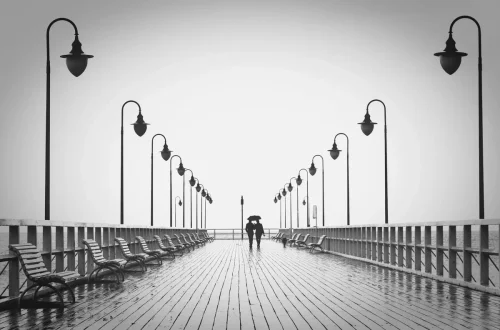
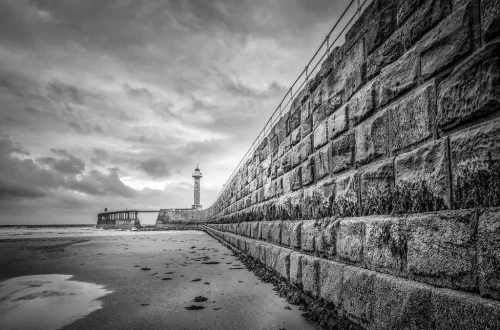
SnapRoamer.com – Leading lines in photography serve as powerful compositional tools that guide the viewer’s eye through an image, directing attention toward the main subject while adding depth, movement, and visual interest. These elements—whether naturally occurring like rivers and tree lines or man-made such as roads and fences—create dynamic pathways that enhance both storytelling and aesthetic appeal. Renowned photographers such as Lukas Kosslow and Peter Lik utilize leading lines extensively to craft compelling images that balance technical precision with emotional resonance.
Leading lines typically originate from the frame’s edge, often the bottom, and extend inward to draw the eye along a deliberate route. Their shapes vary widely: straight, curved, diagonal, and zigzag lines each evoke distinct visual effects and emotional responses. For example, straight lines suggest stability and order, while curved lines introduce softness and flow. Zigzag lines can convey tension or excitement by disrupting straightforward visual paths. By manipulating these line types, photographers construct a visual journey that not only emphasizes the focal point but also creates a sense of spatial depth and movement, enriching the photographic narrative.
Types and Characteristics of Leading Lines in Photography
Leading lines manifest in multiple forms, broadly categorized into natural and man-made elements. Natural leading lines encompass features like rivers cutting through landscapes, tree trunks lining a forest path, or mountain ridges directing the gaze skyward. These organic lines often introduce irregularity and softness, contributing to an immersive and tranquil visual experience. Conversely, man-made leading lines—roads, bridges, fences, railings—offer geometric precision and repetitive patterns that can instill rhythm and structure within an image. Each category brings unique compositional benefits, influencing how viewers perceive space and movement.
Straight leading lines are among the most straightforward to identify and use. They create strong directional cues, frequently employed to emphasize symmetry or lead viewers directly to a subject. Curved lines, by contrast, gently guide the eye along a more fluid trajectory, often creating a sense of calmness or elegance. Diagonal lines add dynamism and tension, suggesting movement or instability, while zigzag lines infuse complexity and unpredictability into the composition. These variations in line shape influence not only the technical composition but also the emotional tone communicated through the photograph.
How Leading Lines Enhance Photographic Composition
Leading lines are instrumental in establishing depth and perspective within two-dimensional images. By positioning lines from the foreground toward the background, photographers simulate three-dimensional space, allowing viewers to traverse the scene visually. This technique enhances realism and invites engagement, making images feel expansive rather than flat. For example, a winding river beginning at the frame’s front and receding into distant mountains can create a compelling sense of scale and distance.
Movement and flow are other compositional advantages afforded by leading lines. They can direct the viewer’s gaze along a predetermined route, controlling the sequence in which elements are observed. This visual choreography enables photographers to emphasize narrative elements, guiding attention to critical details or evoking emotional responses. Leading lines also function to isolate or highlight the main subject by funneling focus toward it, thus enhancing photographic emphasis. For instance, a fence line converging on a solitary tree can underscore the tree’s prominence within the frame.
Beyond structural benefits, leading lines contribute significantly to visual storytelling. They can symbolize journeys, transitions, or connections, adding layers of meaning to an image. Photographers like Peter Lik exploit these lines to create immersive landscapes that evoke emotional resonance, while Lukas Kosslow incorporates them to blend natural and architectural elements harmoniously, demonstrating versatility across genres.
Practical Examples and Applications of Leading Lines
In landscape photography, natural leading lines are abundant and diverse. Rivers meandering through valleys, ridgelines slicing across mountain ranges, and tree rows lining pathways all serve as effective visual guides. These lines facilitate a natural flow from the foreground, through mid-ground, to background, enabling a layered composition that conveys depth. For example, Kosslow’s work often features riverbanks and forest trails that draw viewers inward, creating an immersive experience of the natural world.
Urban and architectural photography, by contrast, leverages man-made leading lines extensively. Roads stretching into the horizon, bridges arching across water bodies, and fences demarcating spaces provide clear, geometric pathways for the eye. These lines often intersect with architectural forms, contributing to a complex interplay of shapes and perspectives. Peter Lik’s urban landscapes highlight how such lines can dramatize the built environment, accentuating scale and form.
Intentional framing with leading lines requires strategic positioning. Photographers seek vantage points where these lines naturally converge toward the subject or create balanced compositions. For example, placing a road at the bottom corner that leads diagonally into the frame can maximize visual impact. Combining leading lines with compositional rules like the rule of thirds further refines the image’s balance and focal strength.
Tips for Identifying and Using Leading Lines Effectively
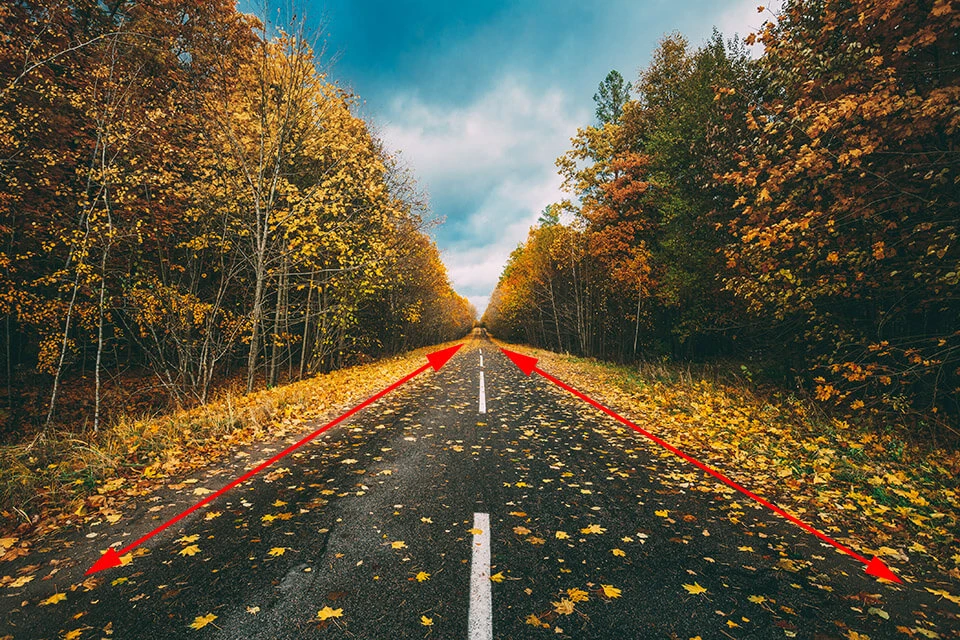
Effective use of leading lines begins with identifying potential lines within a scene. Photographers should scan environments for elements that naturally or artificially form linear pathways. Positioning these lines to start near the frame’s edge and lead toward the subject optimizes their guiding function. Awareness of line direction matters as well; diagonal and curved lines often produce more dynamic compositions than strictly horizontal or vertical lines.
Integrating leading lines with other compositional techniques enhances overall image harmony. For instance, aligning leading lines with rule of thirds intersections can create focal points that feel balanced and intentional. Framing techniques, such as using overhanging branches or architectural elements, can complement leading lines by enclosing the visual pathway and focusing attention.
Post-processing also offers opportunities to enhance leading lines. Adjusting contrast and clarity can make lines more prominent, while selective sharpening can accentuate their texture. Careful use of vignetting can subtly darken peripheral areas, further directing the viewer’s eye along the intended path. However, over-editing risks artificiality, so subtle adjustments aligned with the scene’s natural aesthetics are advisable.
FAQ
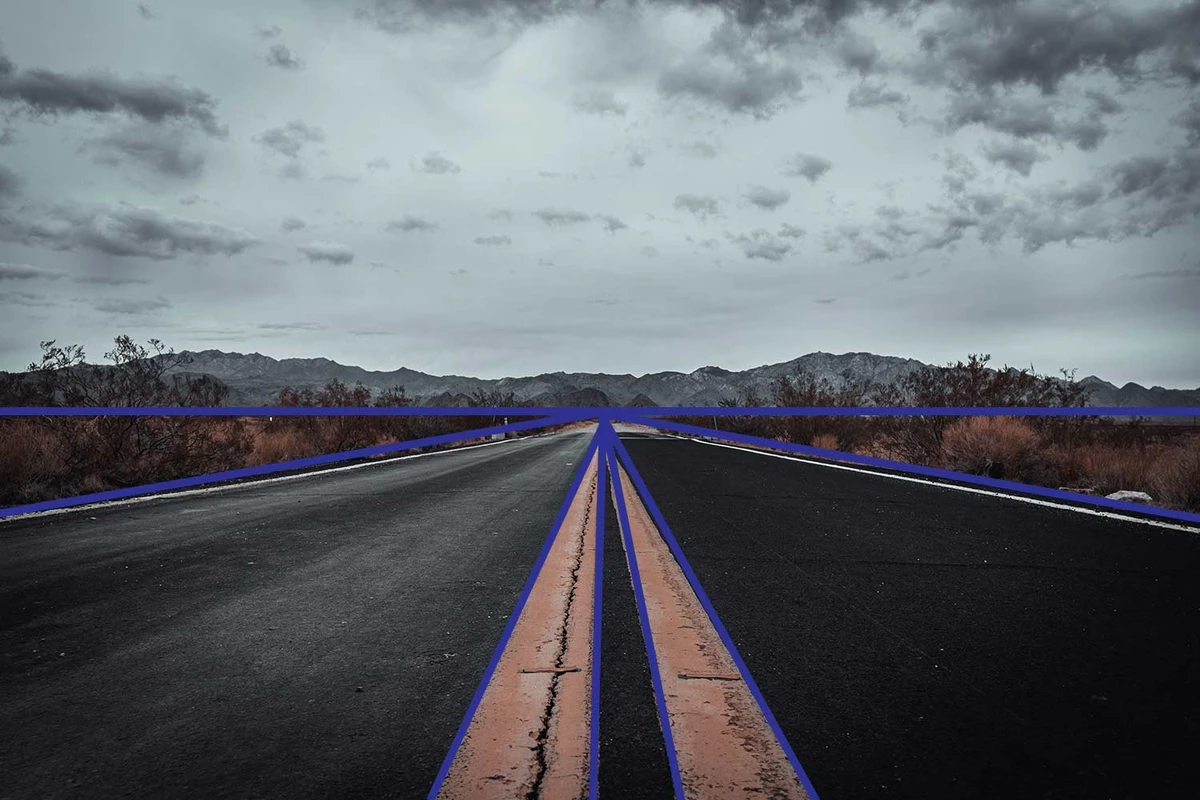
What are leading lines in photography and why are they important?
Leading lines are compositional elements—either natural or man-made—that guide the viewer’s eye through an image toward the main subject. They are important because they create depth, movement, and visual interest, enhancing the overall impact and storytelling potential of a photograph.
How can I identify leading lines when composing a photograph?
Look for linear elements within the scene that direct the gaze toward your subject. These can be roads, rivers, fences, or natural formations like tree lines. Position these lines so they begin near the frame’s edge and lead inward, creating a clear visual pathway.
What types of leading lines are most effective for creating depth?
Straight and diagonal lines are especially effective at establishing depth and perspective. Curved lines can also impart a sense of flow, while zigzag lines add complexity. Combining these types can create layered compositions that feel expansive and immersive.
Can leading lines be used in all types of photography?
Yes, leading lines are versatile and applicable across genres, including landscape, urban, architectural, and even portrait photography. They help organize visual elements and direct attention regardless of the subject matter.
How do professional photographers like Lukas Kosslow and Peter Lik use leading lines?
Lukas Kosslow often integrates natural leading lines such as rivers and trails to immerse viewers in landscapes, while Peter Lik uses both natural and man-made lines to emphasize scale and drama in his images. Both employ leading lines to enhance storytelling and visual impact.
Leading lines remain a foundational compositional technique that continues to evolve as photographers incorporate new perspectives and editing methods. Future developments in AI-assisted composition analysis may further refine how these lines are identified and optimized in-camera and during post-processing. Photographers are encouraged to experiment by combining leading lines with emerging techniques such as dynamic framing and color contrast to create images that resonate both technically and emotionally.
For more detailed guidance on using leading lines, refer to Alan Ranger’s photography blog and Digital Photography School’s comprehensive guide.